
A product can survive manufacturing, quality checks, and customs documentation — and still arrive at the buyer's warehouse damaged, damp, or rejected. In export trade, packaging is not an afterthought; it is a commercial and legal part of the product. Buyers reject shipments over poor packing, carriers disclaim liability for inadequately packed goods, and some markets will not even let non-compliant wooden packaging through the port. This guide explains the types of packaging used in exports, the difference between packing and packaging, what makes packaging export-grade, the ISPM-15 wood rule, marking basics, and how to balance cost against protection.
The Three Levels of Packaging
Export packaging works in layers, each with a distinct job:
Primary packaging is the layer in direct contact with the product. Think of the bottle holding shampoo, the blister pack around tablets, the pouch containing coffee, or the box a pair of shoes sits in on the retail shelf. Its jobs are containment, preservation, and presentation — it is what the end consumer handles.
Secondary packaging groups primary units together for handling and branding. The carton holding 12 shampoo bottles, the shrink-wrapped tray of pouches, or the printed display box containing multiple retail units. It protects during inland handling and carries branding and barcodes for the retail chain.
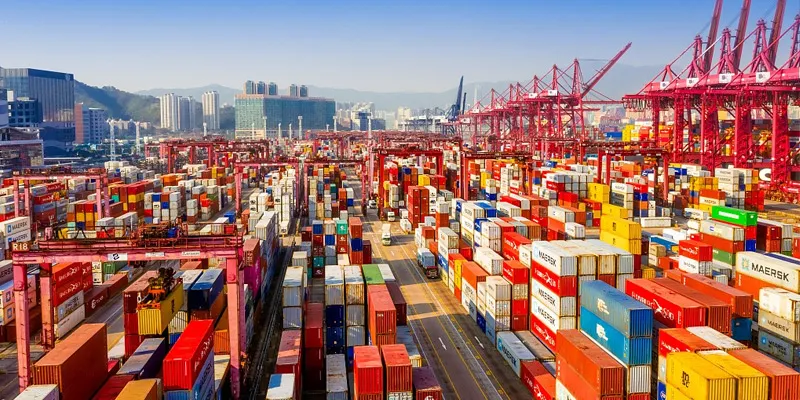
Tertiary (transport) packaging is the outermost layer built for the journey: corrugated export cartons, wooden crates, pallets, stretch wrap, and container-level protection. Nobody buys the product for this layer, but it absorbs the shocks, stacking loads, moisture, and rough handling of a multi-week voyage. For exporters, tertiary packaging is where most damage claims are won or lost.
A useful test: if the packaging level fails, what breaks? Primary failure spoils the product; secondary failure hurts handling efficiency; tertiary failure destroys the shipment.
Packing vs Packaging: What's the Difference?
The terms are often used interchangeably, but in trade they mean different things:
- Packaging refers to the materials and design — the cartons, crates, cushioning, and wrapping selected for the product.
- Packing refers to the process and method — how goods are placed, cushioned, sealed, and secured inside that packaging, and how packages are arranged in the container.
Excellent packaging with sloppy packing still produces damage. Exporters should specify both: the packaging specification (materials, strengths, dimensions) and the packing method (cushioning layout, stacking pattern, sealing, container loading plan). When a buyer complains about damage, the first question is always whether the packing method matched the packaging spec.
What Makes Packaging Export-Grade?
Domestic packaging often fails internationally because the journey is harsher. Export-grade packaging accounts for:
Moisture and humidity. Sea voyages involve condensation inside containers ("container rain"). Export cartons need adequate burst strength and moisture resistance; desiccants, VCI papers for metals, and waterproof liners protect against humidity damage.
Stacking and compression. Containers are stacked and cargo shifts. Corrugated cartons should be rated for the stacking load (edge crush test values matter), and pallets should be sized to the container footprint to prevent movement.
Handling shocks. Forklifts, port handling, and transshipment drops are rougher than domestic courier handling. Cushioning (foam, bubble, corrugated inserts) must be engineered for the product's fragility, not just added as an afterthought.
Pest and contamination control. Food, pharma, and agricultural products need packaging that prevents infestation and contamination across climates and long transit times.
Regulatory compliance. Beyond ISPM-15 for wood (below), some products need UN-certified packaging for dangerous goods, food-grade certifications for food contact materials, or specific labelling regimes.
The ISPM-15 Rule for Wooden Packaging
ISPM-15 is the international phytosanitary standard for wood packaging material (pallets, crates, dunnage) used in international trade. Its purpose is to stop the spread of wood-borne pests. Key requirements:
- Solid wood packaging must be heat-treated or fumigated by an authorised facility.
- Treated wood must bear the IPPC mark — the wheat-sheaf logo with country code, producer number, and treatment code (e.g., HT for heat treatment).
- The mark must appear on at least two opposite faces of the packaging unit.
Shipments arriving with non-compliant or unmarked wood packaging can be held, treated, re-exported, or destroyed at the importer's expense, depending on the destination country's rules. Practical advice: buy pallets and crates only from suppliers who provide ISPM-15-compliant, marked material, and verify the marks before loading. Manufactured wood products like plywood and MDF are generally exempt since processing eliminates the pest risk.
Labelling and Marking Basics
Export packages must communicate clearly to everyone who handles them — many of whom will never see your invoice. Standard practice includes:
Shipping marks. Consignee details, port of destination, package numbers (e.g., 1 of 24), and any buyer-specified codes, stencilled or labelled on at least two faces of each package.
Handling symbols. Internationally recognised pictorial marks: "this side up," "fragile," "keep dry," "do not stack," temperature limits. Use the standard ISO symbols rather than text alone, since handlers may not read your language.
Product and regulatory labels. Product name, quantity, weight (gross and net), country of origin ("Made in India"), and any destination-market labelling requirements (language, certifications, warnings).
Pallet and container marks. Pallet IDs, container and seal numbers cross-referenced to the packing list, so any missing unit is immediately traceable.
Consistent marking also speeds customs examination and reduces the chance of your cargo being the one pulled aside for unclear documentation.
The Cost vs Protection Trade-Off
Over-packaging wastes money and freight (you pay to ship air and cardboard); under-packaging invites damage claims that dwarf any savings. Right-sizing is a commercial skill:
- Match packaging to the Incoterm and route. A CIF shipment where you bear risk until the destination port justifies stronger packaging than an EXW sale where the buyer arranges everything.
- Know your product's fragility profile. Drop-test and vibration-test representative packed units before committing to a packaging spec for large orders.
- Standardise carton sizes to pallet and container dimensions — fewer sizes mean better cube utilisation and lower per-unit freight.
- Negotiate packaging into product costing, not as an afterthought margin squeeze. Buyers respect exporters who quote packaging transparently.
- Track damage claims by packaging type. Data on which specs produce claims is the fastest route to an optimal packaging standard.
- Consider returnable packaging for regular high-volume lanes — higher upfront cost, lower lifetime cost.
A rule of thumb many exporters use: packaging should cost enough that you never think about it after dispatch. If packaging decisions keep causing anxiety, the spec is probably too thin.
Frequently Asked Questions
What are the three types of packaging?
Primary (product-contact), secondary (grouping/retail), and tertiary or transport packaging (export cartons, crates, pallets) — each serving containment, handling, and journey protection respectively.
What is the difference between packing and packaging?
Packaging is the materials and design; packing is the process of placing and securing goods within them. Both must be specified for export shipments.
Is ISPM-15 mandatory for all exports?
It applies to solid wood packaging material (pallets, crates, dunnage) used in international trade. Non-compliant wood packaging can be rejected or destroyed at destination. Plywood and MDF are generally exempt.
What markings are required on export cartons?
At minimum: shipping marks (consignee, destination, package numbering), handling symbols, product/weight details, and country of origin. Buyer-specific marks should be confirmed in the purchase order.
How do I reduce packaging costs without risking damage?
Standardise carton sizes to container dimensions, match the spec to the route and Incoterm, test packed units, and track damage claims to refine the standard over time.
Does packaging affect customs clearance?
Indirectly but really — unclear marking and non-compliant wood packaging are classic reasons for cargo holds and examinations. Clean, compliant packaging keeps cargo moving.
Final Word
Packaging is the only part of your product the buyer judges before opening the box — and the only thing standing between your goods and a very long, very rough journey. Get the three levels right, nail the packing method as well as the materials, comply with ISPM-15, mark everything clearly, and right-size the cost. Do this consistently and packaging shifts from a cost centre to a quiet competitive advantage: fewer claims, faster clearance, and buyers who trust that what you ship is what arrives.