
How to find buyers for export in Southeast Asia — Singapore, Malaysia, Thailand, Vietnam and Indonesia: country profiles, the India–ASEAN FTA, logistics hubs and buyer channels.
How to Find Buyers for Export in Southeast Asia: Singapore, Malaysia, Thailand, Vietnam, Indonesia
Southeast Asia is one of the most practical first regions for Indian exporters. It is close, it is growing, its buyers are used to dealing with Indian suppliers, and a free trade agreement already covers most of the goods India sells there. Yet many exporters still treat the region as a single market — and then wonder why a strategy that worked in Singapore falls flat in Indonesia. This guide explains how to find buyers for export in Singapore, Malaysia, Thailand, Vietnam and Indonesia: what each market buys, how the India–ASEAN FTA helps, where to meet buyers, and how to turn a first enquiry into a repeat order.
1. Why Southeast Asia suits Indian exporters
The Association of Southeast Asian Nations (ASEAN) is a market of more than 680 million people with a rising middle class, rapid industrialisation and deep trade links with India. For a small exporter, the region has four clear advantages. First, distance: sea freight from Chennai or Kolkata to Singapore takes about a week, so lead times and freight costs are far lower than for Europe or the Americas. Second, tariffs: the India–ASEAN free trade agreement gives preferential duty on a wide range of goods. Third, familiarity: Indian products — from textiles and pharmaceuticals to engineering goods and spices — are already established in these markets, so buyers know what to expect. And fourth, diversity: five very different economies sit within a few hours' flying time of each other, so you can test one market and expand to the next without starting from scratch.
The region also rewards exporters who adapt. Each country has its own language, business culture, import rules and consumer tastes. A product that sells in Singapore's supermarkets may need different packaging, certification or pricing to sell in Jakarta. Treat each country as its own market, and Southeast Asia becomes five opportunities instead of one gamble.
2. Country profiles: Singapore, Malaysia, Thailand, Vietnam, Indonesia
Singapore
Singapore is a small domestic market of about 6 million people, but it is the region's trading hub. Its buyers are trading houses, multinational procurement offices and distributors who re-export across Asia. Key imports from India include refined petroleum products, gems and jewellery, engineering goods, chemicals, food products and pharmaceuticals. Singapore charges 0% duty on almost all goods, documentation is efficient, and buyers pay reliably. It is the best first market for a new exporter — and the best base for reaching the rest of ASEAN. The catch: competition is intense, and buyers expect polished documentation and quick responses.
Malaysia
Malaysia is a balanced industrial and consumer market with strong electronics, automotive and palm-oil industries. It imports engineering goods, auto components, machinery, processed food, pharmaceuticals and raw materials from India. For food, beverages, cosmetics and pharmaceuticals, Halal certification is often essential — Malaysia's Halal standards are among the strictest in the world, and certified products command a premium. Business is conducted in English and Malay, and relationships matter: a face-to-face meeting at a trade fair often opens doors that emails cannot.
Thailand
Thailand is the "Detroit of the East" for automobiles and a global food-processing hub. It imports auto parts, metal fabrications, agricultural machinery, chemicals, pharmaceutical inputs and animal feed from India. Buyers include Tier-1 and Tier-2 automotive suppliers and food processors in the Eastern Economic Corridor. Many Thai SMEs prefer communicating in Thai, so a local agent or distributor who speaks the language is a real advantage. Quality and consistency matter more than the lowest price — Thai buyers will pay for a supplier who delivers on time, every time.
Vietnam
Vietnam is the region's fastest-growing manufacturing economy, producing electronics, garments and footwear for the world. It imports raw cotton, synthetic fabrics, yarns, pharmaceutical ingredients, steel and machinery from India. Buyers are export-oriented factories that need reliable raw material supply at competitive prices — they judge suppliers on price, speed and consistency. Payment is usually by letter of credit for new relationships. Vietnam's growth means new buyers appear constantly, but it also means competition from Chinese and Korean suppliers is fierce.
Indonesia
Indonesia is Southeast Asia's largest market, with more than 275 million people. It imports sugar, spices, grains, pharmaceuticals, machinery and chemicals from India. Buyers include large conglomerates, state-owned enterprises and infrastructure contractors. Importers must hold specific licences, so working with an established importer or distributor is often essential. Indonesia rewards patience: building a relationship takes longer than in Singapore, but the scale of orders — and the loyalty of a good distributor — can be worth it.
3. India–ASEAN FTA benefits and rules of origin
The ASEAN–India Free Trade Area (AIFTA) is the agreement that makes the region so attractive. Under it, import duties on a large share of traded goods are reduced or eliminated — but only if your product qualifies as originating in India. The general rule is that at least 35% of the product's FOB value must be Indian or ASEAN content (the regional value content rule), together with a change in tariff sub-heading. To claim the benefit, you need a Certificate of Origin (Form AIFTA) issued through the DGFT portal, with the HS code, invoice and shipment details matching exactly.
Check the duty rate for your HS code in each country before you quote — a product that enters Singapore duty-free may still face a tariff in Indonesia. And remember that the agreement is being reviewed: duty schedules and rules of origin can change, so verify the live position with your export promotion council or customs broker before committing to a price.
4. Logistics hubs and transhipment via Singapore
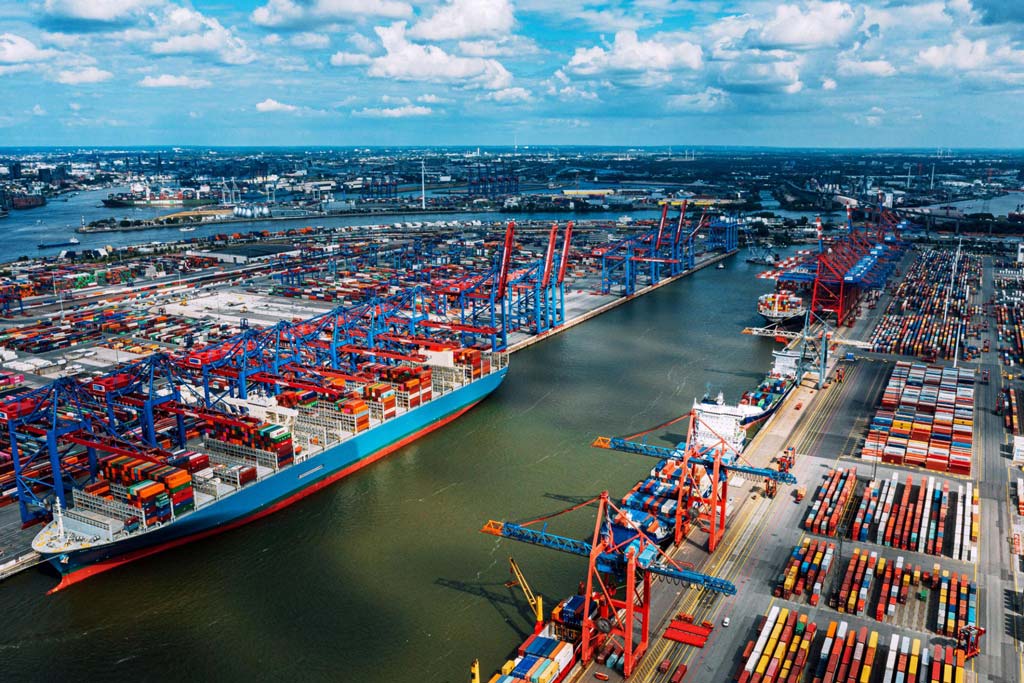
Singapore's port is one of the busiest in the world, and it is the natural gateway to ASEAN. Shipping a full container to Singapore and breaking bulk there — splitting it into smaller consignments for Malaysia, Thailand, Vietnam and Indonesia — is often cheaper and faster than shipping direct to each market. Singapore's free trade zones let you store goods duty-free, re-pack and re-label them, and re-export to neighbouring countries on short-haul feeder services of two to four days.
For smaller exporters, this hub model is a practical way to serve several markets from one shipment. You can also use Singapore-based distributors who already hold stock and serve the region — they buy in volume and pay reliably. When quoting, compare the cost of direct shipment against the hub route: for mixed orders to several countries, the hub usually wins.
5. Buyer channels: trade fairs, distributors and e-commerce importers
There are three proven ways to meet Southeast Asian buyers. First, trade fairs: Food & Hotel Asia (FHA) in Singapore, THAIFEX–Anuga Asia in Bangkok, SEMICON Southeast Asia in Penang, Vietnam Expo in Hanoi and Ho Chi Minh City, and Manufacturing Indonesia in Jakarta. A small booth — or even just attending as a visitor — puts you in front of buyers who are actively sourcing. Second, distributors: a good local distributor already has the licences, the warehouse and the customer relationships. Look for distributors whose portfolio complements yours, agree on clear territory and targets, and avoid open-ended exclusivity. Third, e-commerce and B2B importers: online marketplaces and B2B platforms are now a major sourcing channel, especially for consumer goods. List your products with clear specifications, photos and prices, and respond to enquiries within a day — speed is often what separates the supplier who gets the order from the one who does not.
6. How to find buyers in Southeast Asia
The fastest way to find export buyers in the region is to combine these channels with a buyer directory. Instead of cold-emailing companies at random, search for verified importers by product and country, see what they buy, and contact them directly. Use the TodayAdviser buyer directory to find buyers for export in Singapore, Malaysia, Thailand, Vietnam and Indonesia, and post your requirement (RFQ) so Southeast Asian buyers looking for your product can find you. When you post, include your HS code, specifications, pack sizes, minimum order quantity and target price — specific listings attract serious enquiries. Each genuine enquiry also sharpens your pricing and tells you which markets are actually buying.
Frequently asked questions
Which Southeast Asian country is easiest for a first-time Indian exporter?
Singapore. Duty is 0% on almost all goods, documentation is efficient, buyers pay reliably, and it doubles as a hub for the rest of ASEAN. Start there, then expand to Malaysia or Thailand.
What is the India–ASEAN FTA and how do I use it?
It is the free trade agreement between India and ASEAN that reduces or eliminates duties on many goods. To claim the benefit you need a Certificate of Origin (Form AIFTA) showing your product meets the rules of origin — generally 35% regional value content plus a change in tariff sub-heading.
Do I need Halal certification to sell food in Malaysia or Indonesia?
For food, beverages, cosmetics and pharmaceuticals, Halal certification is effectively essential in Malaysia and very important in Indonesia. Check the requirements for your product category before you ship.
How do I verify a buyer in Vietnam or Indonesia before shipping?
Check the company's registration, ask for trade references, start with a small trial order or a letter of credit, and consider ECGC cover. A genuine buyer will not object to verification.
Which trade fairs should I attend first?
Match the fair to your product: FHA Singapore for food, THAIFEX in Bangkok for food and beverages, SEMICON Southeast Asia for electronics, Vietnam Expo for general trade, and Manufacturing Indonesia for industrial goods.
Conclusion
Southeast Asia rewards exporters who treat it as five distinct markets, not one. Use the India–ASEAN FTA to sharpen your pricing, use Singapore as your logistics hub, meet buyers at the region's trade fairs, and build relationships through reliable distributors. And start with real demand: search the TodayAdviser buyer directory for verified buyers in Singapore, Malaysia, Thailand, Vietnam and Indonesia, and post your requirement so international buyers can find you. The exporters who succeed in ASEAN are the ones who combine good products with good buyers — and the buyers are already looking.