Air Freight vs Sea Freight for Indian Exporters: Cost, Speed & Decision Framework
For an Indian exporter, the choice between air freight and sea freight is rarely just about price. It is about the total cost of getting goods to the buyer in saleable condition, on time, and without surprises at customs or at the destination warehouse. A shipment that looks cheap on a freight quote can become expensive if it misses a selling season, needs rework after damage, or ties up working capital for weeks. Conversely, paying for air freight when sea freight would have done the job just as well eats directly into margin.
This guide gives exporters a practical way to compare the two modes. All prices, rates and time bands below are indicative only. Freight rates move with fuel, capacity, season and route, so verify live rates with your forwarder before quoting a buyer.
Start with the decision, not the mode
Before asking for quotes, answer five questions. What is the cargo worth per kilogram and per cubic metre? How fragile, perishable or time-sensitive is it? How much volume do you ship, and how often? What does the buyer actually need — the earliest arrival, a fixed delivery date, or the lowest landed cost? And what are the Incoterms, because they decide who pays for freight, insurance and destination charges?
If you cannot answer those questions, any comparison will be guesswork. A forwarder can only price accurately once they know the commodity, dimensions, weight, packing, origin, destination, and whether the goods are hazardous or need temperature control.
Cost per kg vs cost per CBM: the logic that matters
Air freight is usually priced by chargeable weight, which is the greater of actual weight and volumetric weight. Sea freight, especially for less-than-container loads, is usually priced per cubic metre (CBM) or per freight ton, while a full container is priced per container regardless of how much you put inside it, within weight limits.
That difference explains why the two modes suit different cargo profiles. Light, bulky goods look expensive by air because volumetric weight inflates the billable weight. Dense, high-value goods look more reasonable by air because their weight is real, their value per kilogram is high, and the freight cost is a smaller share of the product value.
As an indicative way to think about it, air freight from India to major markets is often several times more expensive per kilogram than the equivalent sea freight cost spread across a container. The gap narrows for small, urgent shipments, because sea freight also carries fixed handling, documentation and destination charges that do not fall away just because the shipment is small. For a single carton, the cheapest sea option may not be much cheaper than air once minimum charges apply.
Always compare landed cost, not freight alone. Add origin handling, export customs and documentation, insurance, destination handling, import customs, delivery to the buyer's door where applicable, and any storage or demurrage risk. A quote that excludes destination charges is not comparable with an all-in door-to-door quote.
Transit times from India to key markets
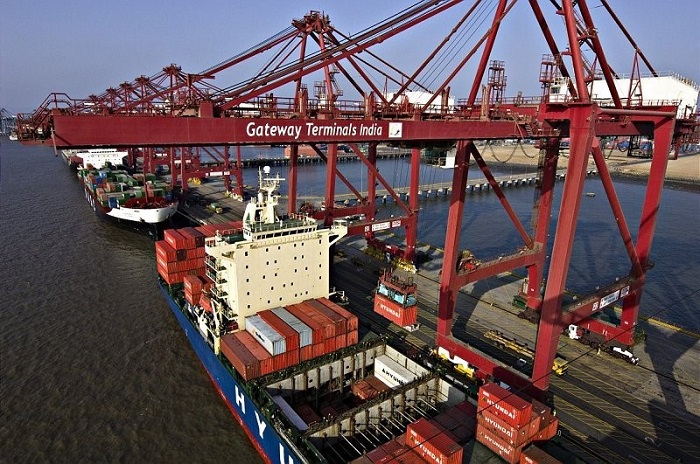
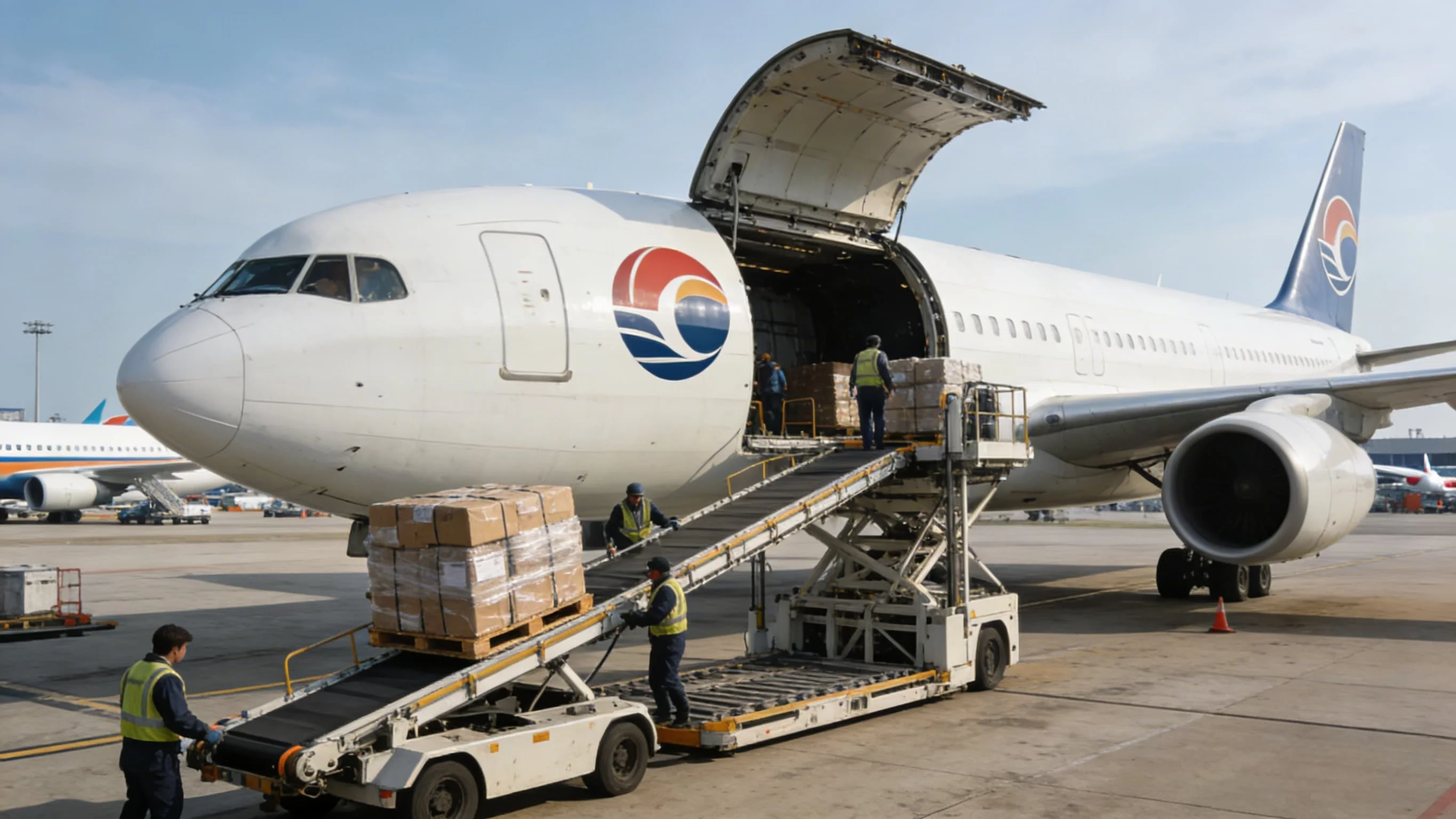
Transit time is door-to-door time, not just time on the aircraft or vessel. Air freight from major Indian airports such as Delhi, Mumbai, Bengaluru and Chennai to the Gulf, Europe or Southeast Asia is typically measured in days, including handling and customs. Sea freight on the same lanes is typically measured in weeks, including port handling, sailing time and destination clearance.
Indicative door-to-door bands, to be verified live for your route, are broadly as follows. To the Gulf and Middle East, air can take around three to seven days, while sea can take around one to three weeks. To Europe, air is often around four to eight days, while sea is often around three to six weeks depending on routing and transshipment. To the United States East Coast, air is often around five to nine days, while sea is often around four to seven weeks. To Southeast Asia, air is often around three to six days, while sea is often around one to three weeks.
Transshipment adds risk as well as time. A direct sailing or direct flight reduces handling and the chance of delay. A route with two transshipments may look cheaper on paper but can miss connections, especially in peak season or during port congestion.
Cargo suitability: perishable, high-value, bulky and hazardous
Perishable goods such as fresh produce, seafood, flowers and some pharmaceuticals usually need air freight, or specialised reefer sea freight where shelf life allows. Air wins when shelf life is short, when cold-chain breaks are costly, or when the buyer needs frequent small replenishments. Reefer sea freight can work for hardier perishables with longer shelf life and steady volumes.
High-value, low-volume goods such as precision instruments, electronics components, jewellery, samples and spare parts for urgent repairs are natural air candidates. Faster transit reduces inventory in transit, lowers insurance exposure time, and gets revenue recognised sooner.
Bulky, low-value goods such as furniture, textiles in bulk, stone, metal products and machinery parts usually favour sea freight. Their value per CBM is low, so paying air rates per kilogram destroys margin. If the goods are also heavy, sea freight's per-container economics are hard to beat.
Hazardous goods need special care in both modes, but air rules are stricter and some classes are restricted or prohibited on passenger aircraft. Always declare hazardous goods correctly, use approved packing, and confirm carrier acceptance before booking. A rejected shipment at the airport is costlier than a slower sea booking made properly.
Hidden costs to check in every quote
Fuel surcharges move with oil prices and can change between quotation and booking, so ask how long the rate is valid and whether surcharges are fixed or floating. Terminal handling, documentation, screening, palletisation and warehousing charges may sit outside the headline freight rate. Customs examination, fumigation, or re-packing can add cost and delay.
At destination, check who pays for handling, customs brokerage, duties and taxes, delivery, and any congestion or peak-season surcharges. For sea freight, demurrage and detention charges for containers held beyond free time can quickly exceed any saving on freight. For air freight, storage charges at the destination airport apply if the consignee is slow to clear.
Insurance is another hidden gap. Check whether the quote includes cargo insurance, what clauses apply, and whether cover is for invoice value plus a margin. Do not assume the carrier's liability limit replaces proper cargo insurance.
The hybrid sea-air option
Sea-air combines a sea leg to a hub with an air leg for the final stretch, or the reverse. From India, a common pattern is sea freight to a Gulf hub followed by air freight onward, or sea freight to a European hub followed by road or air delivery. Sea-air can cut transit time compared with all-sea, and cut cost compared with all-air, but it adds a handover point where delays and handling risk concentrate.
Sea-air works best when the saving is material, the hub is reliable, and a single forwarder controls both legs with through documentation and tracking. It works poorly when the cargo is highly perishable, when the buyer needs a guaranteed arrival date, or when the two legs are booked separately with no one accountable for the transfer.
A simple decision flowchart
Work through these steps in order. First, is the cargo perishable with a shelf life shorter than the sea transit time plus a safety buffer? If yes, choose air or reefer sea only if shelf life clearly allows it. Second, does the buyer face a hard deadline, a product launch, or a stock-out? If yes, air is usually the safer choice. Third, calculate landed cost per unit for air, sea and sea-air, including all hidden charges. If air costs more than the margin can absorb, sea wins unless step one or two overrides it. Fourth, check volume: for regular volumes above a container load, FCL sea freight is usually compelling. For small, irregular shipments, compare LCL sea with air on total cost and total time, not freight alone. Fifth, check risk: fragile, high-theft or hazardous cargo may justify air, better packing, or a direct route even at higher cost.
Document the decision and the quotes you compared. When a buyer later asks why freight cost what it did, that record is your evidence.
Practical checklist before you book
Confirm chargeable weight or CBM, packing dimensions, and stackability. Confirm whether the rate is port-to-port, airport-to-airport, or door-to-door, and what is excluded. Confirm rate validity, surcharge treatment, free time, and cut-off times. Confirm documentation: commercial invoice, packing list, and any certificates the destination requires. Confirm insurance cover and who arranges it under your Incoterms. Finally, confirm tracking: who updates you, how often, and who to contact if the shipment is delayed.
Frequently asked questions
Is air freight always faster door to door?
Usually, but not always. A direct sea sailing with fast clearance can beat a poorly connected air routing with long layovers, weekend customs delays, or a missed flight. Compare door-to-door schedules, not just flight or sailing time.
When does sea freight become cheaper than air?
Sea freight usually wins on cost for heavier, bulkier, lower-value cargo and for regular volumes. The advantage grows as volume rises toward a full container, and shrinks for single small cartons where minimum sea charges apply.
Can I split a shipment between air and sea?
Yes. Many exporters send an urgent first lot by air to meet a launch or replenish stock, and the balance by sea. Agree this split with the buyer in advance, because it affects invoicing, documentation and delivery expectations.
What should I verify before quoting a buyer?
Verify live freight rates, surcharges, transit time, rate validity, and destination charges in writing. Mark any estimate as indicative, and state the validity period in your quotation so a rate movement does not become your loss.
Does a forwarder or a CHA handle this choice?
A freight forwarder arranges transport and usually advises on mode and routing. A Customs House Agent (CHA) handles customs clearance. Many firms offer both services, but confirm who is responsible for each step, especially at destination.
Choosing between air and sea freight is a commercial decision, not a habit. Run the landed-cost comparison, test it against shelf life and deadlines, and verify live rates before you commit. The right mode is the one that protects margin, meets the buyer's date, and arrives in the condition the buyer paid for.