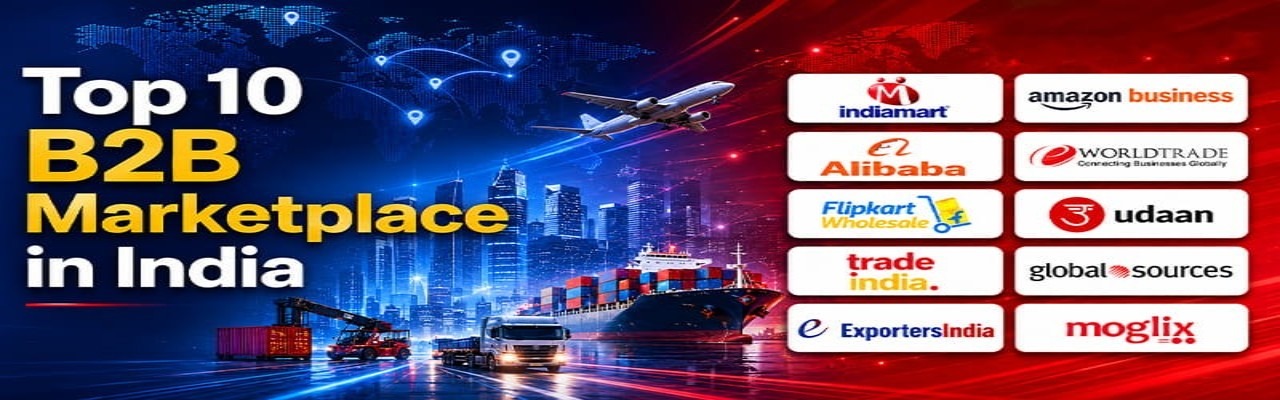
An honest 2026 comparison of the best B2B portals in India — IndiaMART, TradeIndia, ExportersIndia, Alibaba and TodayAdviser — covering pricing models, lead quality, verification and how to choose the right platform.
Choosing the best B2B portal in India depends primarily on whether your strategic objective is capturing high-volume domestic wholesale demand or establishing verified international export pipelines. For domestic Indian trade, platforms like IndiaMART and TradeIndia dominate inquiry volume, while international buyers and exporters frequently leverage Alibaba and Today Adviser for structured, cross-border supplier verification and qualified trade inquiries.
India's manufacturing and export sectors have transformed significantly. Global sourcing managers are actively diversifying supply chains under the "Make in India" and "China Plus One" initiatives. In response, Indian digital marketplaces have evolved from static directory listings into sophisticated sourcing hubs featuring digital verifications, RFQ matching engines, and structured trade compliance checks.
Navigating this landscape requires an objective assessment of what each portal actually delivers. Below is an honest, practical comparison of the five leading B2B trade platforms operating in the Indian market today, outlining their factual positioning, pricing logic, operational trade-offs, and target user profiles.
A note on method: this comparison is based on each platform's publicly stated positioning and widely reported business model, not on invented traffic figures or rankings. Where general cost bands are mentioned, they are indicative only — always confirm current rate cards directly with the platform.
Leading B2B Portals in India: Platform Breakdown
1. IndiaMART: Domestic Scale and Volume
IndiaMART is widely recognised as the largest B2B marketplace operating within the Indian domestic market. Established in the late 1990s and publicly traded on the Indian stock exchanges, it acts as the primary digital directory for millions of Micro, Small, and Medium Enterprises (MSMEs), industrial distributors, and wholesale traders.
- Factual Positioning: Primarily domestic B2B trade, though an estimated single-digit percentage of buyer traffic originates from overseas. Its catalogue covers everything from heavy industrial machinery and raw chemicals to textiles and medical consumables.
- Who It Suits Best: Indian manufacturers, distributors, and traders looking to generate high-volume inquiries from domestic Indian buyers across tier-1, tier-2, and tier-3 commercial hubs.
- Operational Reality: The platform operates on sheer volume. Because inquiry barriers are low for buyers, suppliers receive a large influx of leads, but a substantial proportion can be unvetted, retail-oriented, or price-sensitive small inquiries. Converting on IndiaMART requires a dedicated internal tele-sales effort to filter high-intent wholesale buyers from casual inquiries.
2. TradeIndia: Established SME Hybrid
TradeIndia is one of India's oldest B2B portals, managed by Infocom Network. It provides an extensive supplier database with specialised catalogue services, virtual trade expositions, and localised export marketing support.
- Factual Positioning: A balanced hybrid portal serving both domestic industrial procurement and regional export inquiries, particularly across South Asia, the Middle East, and parts of East Africa.
- Who It Suits Best: Small to mid-sized Indian manufacturers producing hardware, agricultural commodities, industrial goods, and handicrafts seeking integrated digital marketing packages.
- Operational Reality: TradeIndia provides hands-on account management and digital catalogue development, which benefits businesses lacking internal digital marketing teams. However, overall organic search volume generally tracks below IndiaMART for pure domestic demand, so sellers typically rely more heavily on paid platform promotions.
3. ExportersIndia: Legacy Export Directory
Managed by Weblink.In, ExportersIndia has maintained a distinct focus on overseas buyers searching for Indian products since the late 1990s.
- Factual Positioning: Traditional B2B catalogue directory tailored toward promoting Indian exporters to international trade houses, buying agents, and overseas distributors.
- Who It Suits Best: Exporters of traditional Indian commodities, apparel, brassware, herbal products, and agro-commodities seeking a low-maintenance, directory-based online catalogue.
- Operational Reality: The interface and lead-matching workflows reflect a more traditional catalogue model. While it provides consistent baseline exposure to search engines for niche Indian export categories, buyer inquiry velocity is generally lower than on modern transactional or verified matching marketplaces.
4. Alibaba.com: Global Export Gateway
Alibaba is the world's largest global B2B trade platform, and its presence in India serves as a dedicated export vehicle for manufacturers aiming at markets in North America, Europe, Latin America, and Southeast Asia.
- Factual Positioning: Outbound cross-border export portal connecting Indian factories directly with enterprise importers, private label brands, and online sellers worldwide.
- Who It Suits Best: Export-ready Indian manufacturers with established quality management certifications, substantial production capacity, and fluent English-speaking export sales departments.
- Operational Reality: Competing on Alibaba means competing directly with high-efficiency factories from China, Vietnam, and Turkey. The platform demands substantial investment in storefront optimisation, on-platform advertising spend, and rigorous responsiveness metrics to maintain visibility in global search results.
5. Today Adviser: Modern Verified Trade Marketplace
Today Adviser represents the newer generation of global B2B sourcing networks, built specifically to address the trust and quality deficits that challenge traditional open directories.
- Factual Positioning: An international B2B marketplace connecting vetted manufacturers and exporters with verified global buyers, procurement specialists, and enterprise trade intermediaries.
- Who It Suits Best: Quality-focused Indian exporters aiming for genuine enterprise buyers in North America, Europe, and the GCC, as well as foreign importers seeking audited Indian manufacturing partners without navigating unvetted directory spam.
- Operational Reality: Rather than optimising for raw inquiry counts, the platform emphasises supplier vetting, corporate documentation, and matched trade leads. It prioritises lead relevance and counterparty credibility over sheer lead volume.
Comparative Overview: The Top 5 at a Glance
| Platform | Primary Focus | Best Fit For | Verification Standard | Core Monetization Model |
|---|---|---|---|---|
| IndiaMART | Domestic India | High-volume domestic distributors & MSMEs | TrustSEAL (document & site check) | Tiered annual subscription + paid lead top-ups |
| TradeIndia | Domestic & regional export | Indian SMEs requiring assisted digital marketing | Verified Seller badge via documentation | Tiered annual packages + assisted marketing services |
| ExportersIndia | Indian exports | Traditional commodity, apparel, & handicraft exporters | Document-based business verification | Annual subscription / listing tiers |
| Alibaba.com | Global outbound exports | Scaled factories targeting international importers | Verified Supplier (third-party audit) | Gold Supplier subscription + on-platform ad spend |
| Today Adviser | Verified global trade | Vetted exporters & international corporate buyers | Structured business screening & buyer verification | Performance-aligned subscriptions & verified matchmaking |
Deconstructing B2B Portal Pricing Models in India
Understanding the commercial model of a B2B platform is critical before allocating marketing expenditure. In India, platforms operate across three primary monetisation structures:
1. Annual Subscription Listings
- How It Works: Sellers pay a fixed annual or multi-year fee to maintain a company storefront, display product catalogues, and access a set number of inbound inquiry credits.
- Indicative Market Realities: Entry-level packages on domestic platforms typically start in the modest thousands of Indian Rupees per year, while comprehensive premium tiers can run into the thousands of US dollars annually. Readers should confirm updated pricing directly with platform sales representatives, as regional packages vary widely.
- Pros & Cons: Predictable annual costs; however, ROI depends entirely on internal capacity to process and close incoming inquiries.
2. Pay-Per-Lead (PPL) and Buy-Lead Credits
- How It Works: Platforms aggregate RFQs posted by buyers and sell access to suppliers on a per-lead basis using consumable credits.
- Pros & Cons: Offers direct access to active buyers stating exact requirements. However, platforms frequently sell the same buy-lead to multiple competing suppliers simultaneously (often 3 to 10 vendors), initiating an immediate race-to-the-bottom price war.
3. Commission and Transaction-Based Fees
- How It Works: More prevalent in escrow-enabled cross-border trade, the platform collects a percentage of the completed transaction value (often paired with payment gateway processing fees).
- Pros & Cons: Strongly aligns platform interests with successful trade completion, though it requires strict adherence to on-platform payment processing and documentation.
How to Choose the Best B2B Portal in India for Your Business
Selecting the right portal means assessing your company's operational profile against four objective criteria:
- Define target geography — domestic demand or cross-border exports?
- Evaluate inquiry handling capacity — tele-sales team or dedicated export desk?
- Analyse category saturation — audit competitors already on the platform.
- Verify counterparty risk tolerances — open directory or vetted matchmaking?
1. Target Buyer Geography
If the bulk of your sales operations are configured for Indian GST invoicing, domestic logistics, and regional payment terms, domestic directories like IndiaMART and TradeIndia are logical primary channels. If your production capacity requires container-load shipping, letters of credit (LC), and compliance with foreign regulatory frameworks (such as FDA, REACH, or CE), investing in export-centric portals like Alibaba or Today Adviser is essential.
2. Inquiry Quality vs. Inquiry Volume
Determine whether your sales division thrives on high-velocity outreach or specialised, technical quoting. High-volume open portals require rapid triage to weed out individuals seeking single retail units. Curated platforms with stricter buyer entry barriers save technical and export teams valuable hours by presenting validated procurement demand.
3. Category Fit and Keyword Saturation
Never sign up for an enterprise package without performing an audit. Search for your five primary HS codes or core product keywords on the portal. Examine the top-ranking suppliers:
- Are they manufacturers or unvetted trading intermediaries?
- How many suppliers hold the highest paid tier?
- Has the platform attracted fresh RFQs in your category within the last 7 to 14 days?
4. Counterparty Verification Standards
Cross-border fraud and contract defaults remain major risks in international trade. Determine whether the portal verifies operational legitimacy or merely checks whether an entity holds a registered tax number. Platforms that incorporate plant audits, video verifications, or independent documentation reviews protect buyers and give legitimate manufacturers a higher baseline of trust.
Exporter & Buyer Checklist: Verification and Documentation
Before launching your presence on any B2B portal in India — or issuing purchase orders to a platform supplier — ensure the following baseline documents are verified:
- Import Export Code (IEC): Mandatory for any commercial entity conducting cross-border trade into or out of India, issued by the Directorate General of Foreign Trade (DGFT).
- Goods and Services Tax Identification Number (GSTIN): Confirms operational domestic business standing within India.
- MSME Udyam Registration: Provides indicative proof of Indian manufacturing enterprise classification.
- Bank Realisation Certificate (e-BRC) readiness: Ensures the exporter's bank can process export inward remittances properly through authorised banking channels.
- Factory audit reports: Independent inspections (ISO 9001, BSCI, Sedex, or TUV) to confirm production capabilities, ethical standards, and worker safety.
- Authorised signatory verification: Ensuring the party communicating via the messaging portal matches the legal corporate ownership.
Common Mistakes to Avoid on B2B Trade Portals
1. Relying Exclusively on a Single Marketplace
Many businesses commit their entire digital marketing budget to one portal, making them vulnerable to algorithm changes, price increases, or account suspensions. A balanced strategy typically pairs a primary volume channel with a dedicated, verified export platform.
2. Treating Digital Listings as "Set and Forget"
B2B portals reward active sellers. Profiles that fail to update catalogue inventory, maintain slow response times (longer than 2 to 4 hours), or ignore buyer messages quickly drop in visibility rankings.
3. Competing Solely on Price in Open RFQs
When dozens of suppliers respond to the same public buy-lead, quoting the lowest possible margin frequently results in compromised production quality, contract cancellations, or unprofitable operations. Lead with technical compliance, quality standards, and verifiable track records instead.
4. Neglecting Profile Optimisation and High-Resolution Assets
Low-resolution images, vague product descriptions missing technical specifications (tensile strength, purity levels, dimensions, packaging standards), and missing HS codes immediately signal unreliability to international enterprise buyers.
Frequently Asked Questions
What is the best B2B portal in India for domestic wholesale trade?
IndiaMART is widely recognised as the market leader for domestic Indian wholesale trade due to its deep catalogue, high local search visibility, and extensive network of Indian MSME buyers and sellers.
Which Indian B2B portal is best suited for cross-border exports?
For global exports, Alibaba and Today Adviser provide the strongest cross-border infrastructure. Alibaba offers broad global exposure, while Today Adviser emphasises verified counterparty matching and structured cross-border sourcing connections.
How much does it cost to list on Indian B2B portals?
Listing costs vary significantly by promotional tier. Basic listings are often free or nominal, while premium supplier packages, verified badges, and search-boost services can range from several hundred to thousands of dollars annually. Contact platforms directly for verified rate cards.
Should I use one portal or several?
Most successful exporters use two: one high-volume domestic channel (such as IndiaMART or TradeIndia) for inbound domestic demand, and one verified export channel (such as Alibaba or Today Adviser) for qualified international buyers. Spreading presence avoids over-dependence on a single algorithm or sales team.
Can buyers buy directly on Indian B2B platforms using credit cards?
Most enterprise B2B portals in India function primarily as lead-generation and matchmaking networks rather than checkout marketplaces. Payments are typically handled off-platform via corporate bank transfers, Letters of Credit (LC), or escrow systems.
How do I verify if an Indian supplier on a B2B portal is legitimate?
Verify their GSTIN on the official Indian GST portal, validate their Import Export Code (IEC) via DGFT, request audited financial statements, and check for recognised quality accreditations like ISO. Platforms with pre-verified badges significantly reduce this risk.
What is the difference between a pay-per-lead model and a subscription model?
A subscription model grants profile visibility and a catalogue storefront for a fixed annual fee regardless of closed business. A pay-per-lead model requires purchasing individual buyer RFQs (buy leads), allowing companies to spend only on relevant inquiries.
Are leads generated on open B2B portals exclusive to one seller?
No. On the vast majority of open directory portals, buyer inquiries and RFQs are distributed or sold simultaneously to multiple competing suppliers (often 3 to 10 vendors), encouraging competitive bidding among suppliers.
Conclusion
There is no single "best" platform for every business. The optimal B2B portal in India depends on your target market, transaction sizes, and internal sales structure. For rapid domestic sales across India, platforms with high domestic volume like IndiaMART remain essential. For long-term export relationships characterised by verified international credibility and qualified buyer intent, modern networks like Today Adviser provide the structure needed to trade with confidence.
To expand your international reach without the noise of unvetted directory spam, explore verified manufacturers and submit your sourcing requirements on Today Adviser today.