
Explore the meaning, culinary uses, nutrition, and export potential of chitti muthyalu rice in English, also known as tiny pearl rice or seeraga samba. Learn how B2B buyers and exporters can connect successfully using the TodayAdviser marketplace.
Chitti Muthyalu Rice in English – Tiny Pearl Rice Meaning, Uses & Export
Chitti Muthyalu is a small grain with a big reputation. Ask for it in English and the answer is tiny pearl rice, a name that describes exactly what it looks like: tiny, round, pearl-like grains. It is also widely known as seeraga samba, or jeeraga samba, especially in Tamil Nadu. For South Indian cooks it is the rice of weddings, festivals and fragrant biryanis. For exporters it is a premium specialty rice that sells not on volume, but on aroma, identity and the diaspora market that knows it by name.
This guide explains what chitti muthyalu means in English, how it is cooked, why buyers value it, where it grows, and how exporters can find international buyers for it.
What Does Chitti Muthyalu Mean in English?
In Telugu, "chitti" means small or tiny and "muthyalu" means pearls, so chitti muthyalu literally means tiny pearls. In English it is therefore sold as tiny pearl rice. The other common name, seeraga samba, comes from Tamil: "seeragam" means cumin, because the grain is about the size of a cumin seed, and "samba" refers to a group of traditional South Indian rice varieties grown in the samba season, roughly from August to January.
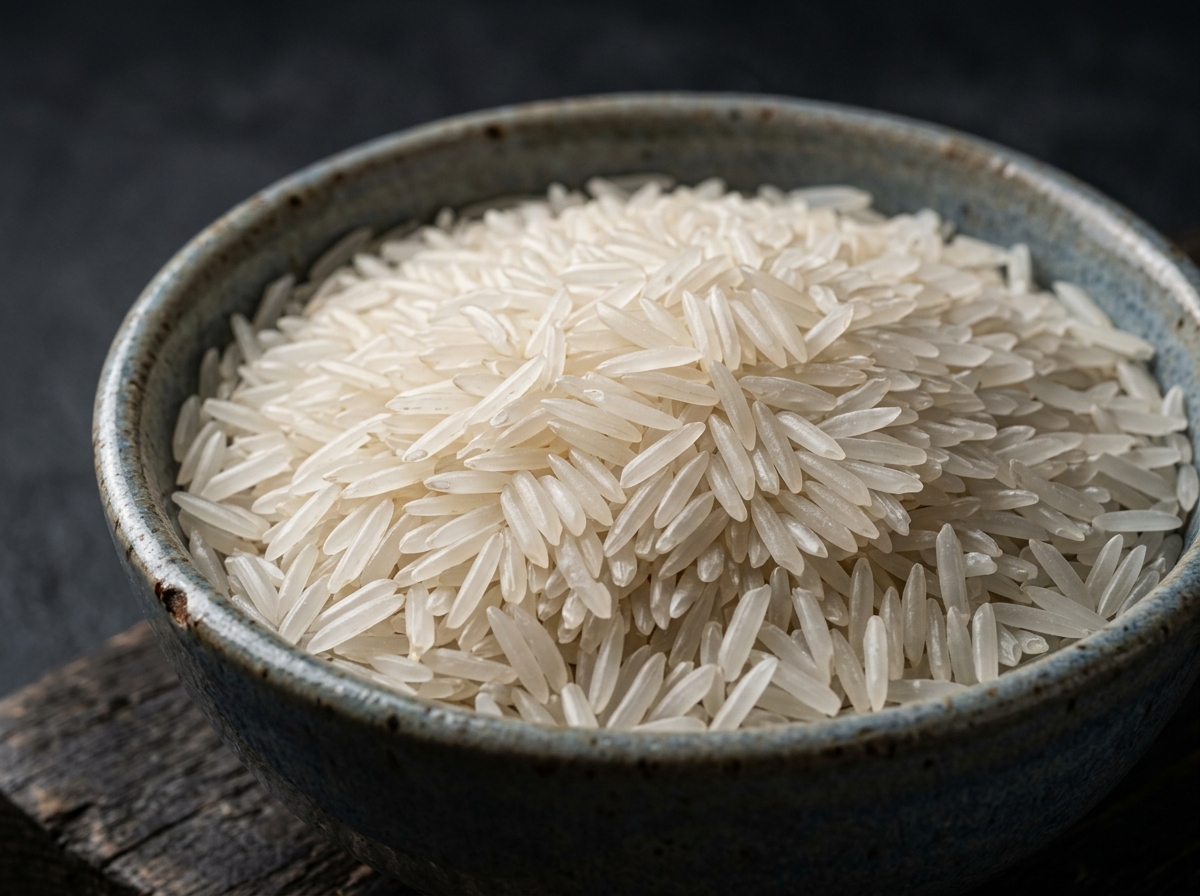
These names matter in trade. A buyer in the United States or the Gulf may search for "tiny pearl rice", a buyer in Tamil Nadu's diaspora may search for "seeraga samba", and a buyer in Andhra Pradesh may ask for "chitti muthyalu". A good listing uses all three, plus the description "aromatic short-grain rice", so that no buyer misses it. The grain itself is short, slender and slightly tapered, with a hard endosperm and a delicate, cumin-like aroma when cooked. It is not the same as ordinary short-grain rice, sushi rice or idli rice, and it should not be sold as such.
Cooking Uses and Dishes
Chitti muthyalu is a cooking rice, not a plain table rice. Its strength is flavour absorption. The small, dense grains soak up gravy, stock and ghee without becoming mushy, which is why it is the traditional choice for South Indian biryanis — Ambur, Dindigul, Thalassery and Chettinad styles all use seeraga samba or a close cousin. In a biryani, the rice carries the spice, meat and saffron flavours in every bite, while staying separate and firm.
Beyond biryani, it is used for pulao, for festive sweet dishes such as payasam and pongal, for lemon rice and tamarind rice, and for everyday meals where a fragrant, light rice is wanted. Because the grains are small, it cooks faster than basmati and needs less water — typically about one and a half cups of water to one cup of rice, soaked for 20 to 30 minutes first. Overcooking is the main mistake: it should be cooked until just tender, then rested for ten minutes before fluffing.
For restaurants and caterers, the appeal is consistency and aroma. A biryani made with genuine seeraga samba smells different from one made with ordinary rice, and customers who grew up with it can tell immediately. That is why diaspora restaurants in the United States, the United Kingdom, the Gulf, Singapore and Malaysia import it even when it costs more than basmati.
Nutrition and Why Buyers Value It
Chitti muthyalu is a traditional, unpolished or lightly polished rice, and it is valued for more than its taste. It is a good source of complex carbohydrates and energy, provides dietary fibre, and contains small amounts of protein, iron, magnesium and B vitamins. Compared with highly polished white rice, the lightly milled version retains more of the bran's nutrients. It is naturally gluten-free, easy to digest, and has a moderate glycaemic response compared with some other white rices, although it is not a low-glycaemic food.
Buyers value it for four reasons. First, aroma: the natural fragrance is a selling point that cannot be faked easily. Second, texture: firm, separate grains that hold their shape in biryani and pulao. Third, identity: it is a recognised traditional variety, not a generic commodity, so retailers can tell a story about it. Fourth, scarcity: it is grown in limited areas, so genuine supply is limited and buyers who find a reliable supplier tend to stay with them.
Exporters should not make medical claims on the pack. Describe it as a traditional aromatic rice, rich in flavour, and let the quality speak. Buyers in the health and gourmet segments will ask about milling level, broken percentage and pesticide residues, not about health claims.
Growing Regions and Export Potential
Chitti muthyalu and seeraga samba are grown mainly in Andhra Pradesh, Telangana and Tamil Nadu, with smaller quantities in Karnataka and Kerala. The main districts include the Godavari delta, the Krishna delta, and the Cauvery delta in Tamil Nadu, where the Samba season crop is harvested in January and February. The rice is traditionally grown in irrigated lowlands, often by small farmers, and the yield is lower than that of modern high-yielding varieties, which is one reason for its premium price.
The export potential is real but niche. India already exports large volumes of basmati and non-basmati rice, but chitti muthyalu is a speciality line: small volumes, high value per tonne, and buyers who are specific about the variety. The main export markets are the United States, the United Kingdom, Canada, the United Arab Emirates, Saudi Arabia, Singapore, Malaysia and Australia — in short, anywhere there is a large South Indian diaspora, plus gourmet retailers who stock heirloom grains.
Exporters should be clear about the product they are offering. Key specifications include the variety name, the milling level, the average grain length (usually 3.5 to 4.5 mm), the broken percentage (ideally below 5% for premium grade), moisture (below 14%), foreign matter (below 0.5%) and the crop year. Sortex-cleaned, well-graded rice commands a better price than ungraded material, and vacuum or nitrogen-flushed packing helps preserve aroma during a long sea voyage.
How to Find Export Buyers for Specialty Rice
Specialty rice does not sell itself in the same way as bulk basmati. The buyer is not a commodity trader looking for the cheapest tonne, but a diaspora retailer, an importer of South Indian foods, a restaurant supplier or a gourmet distributor. That means the exporter must be visible where those buyers search, and must be able to prove the variety is genuine.
Start with a clear, honest listing. Use the English name, the regional names, the grain length, the milling level and the packing options. Add a photograph of the actual rice, not a generic image, and state the minimum order quantity, the port of loading and the price basis. Offer a sample — a 1 kg or 5 kg pack — because a serious buyer will want to cook it before ordering in bulk.
Respond to buy requirements quickly and completely, with a specification sheet, a quotation and a sample offer. Follow up with importers of South Indian foods in the target market, and consider trade fairs and buyer-seller meets focused on food and rice. A single satisfied diaspora retailer can become a regular customer, ordering a few tonnes every month, and will recommend the supplier to others.
Exporters can find international buyers through the TodayAdviser buyer directory and by posting their offer as a requirement, so importers searching for tiny pearl rice and seeraga samba can find it. Post a requirement (RFQ) on TodayAdviser with your specification, quantity and target price, and respond promptly when an export buyer or export lead comes in. A profile that shows your company, your products and your certifications gives a new buyer the confidence to place a trial order, which is how most long-term relationships in the specialty rice trade begin.
Frequently Asked Questions
What is chitti muthyalu rice in English?
Chitti muthyalu in English is tiny pearl rice, also called seeraga samba or jeeraga samba.
Is chitti muthyalu the same as seeraga samba?
Yes, they are the same type of aromatic short-grain rice, known as chitti muthyalu in Telugu-speaking regions and seeraga samba in Tamil Nadu.
What dishes is chitti muthyalu rice used for?
It is best known for South Indian biryanis, especially Ambur, Dindigul and Thalassery styles, and is also used for pulao, payasam, pongal and flavoured rice dishes.
Where is chitti muthyalu rice grown?
It is grown mainly in Andhra Pradesh, Telangana and Tamil Nadu, in the Godavari, Krishna and Cauvery delta regions.
How do I find export buyers for chitti muthyalu rice?
List it with full specifications on B2B platforms and in the TodayAdviser buyer directory, respond to buy requirements and RFQs quickly, offer samples, and target diaspora retailers and South Indian food importers.
Is tiny pearl rice the same as basmati?
No. Basmati is a long-grain aromatic rice, while chitti muthyalu is a short, tiny, pearl-like grain with a different aroma and texture, used mainly in South Indian cooking.
Conclusion
Chitti muthyalu rice — tiny pearl rice — is a premium, aromatic heirloom grain with strong demand among diaspora buyers, gourmet retailers and specialty importers. Exporters who offer consistent grading, clean packing and clear specifications, and who list where international buyers search, can turn this small grain into a steady, high-margin export line.