Flax seeds in Tamil are ali vithai, and rye is a cereal grain, not a seed — meanings, differences, nutrition, uses and export guidance for flaxseed buyers.
Tamil Name for Flax Seeds and Rye in Tamil – Meaning, Uses and Benefits
If you buy health foods, bake with whole grains, or export oilseeds from India, you will meet two names that are often confused: flax seeds and rye. In Tamil, flax seeds are called ali vithai, also written aali vithai. Rye is a different food altogether, a cereal grain, and it is not a traditional Tamil crop, so Tamil speakers usually use the English loanword rye. This guide explains both names, how flax and rye differ, what they contain, how they are used, and how international buyers source flaxseed from India.
Flax Seeds in Tamil: Ali Vithai
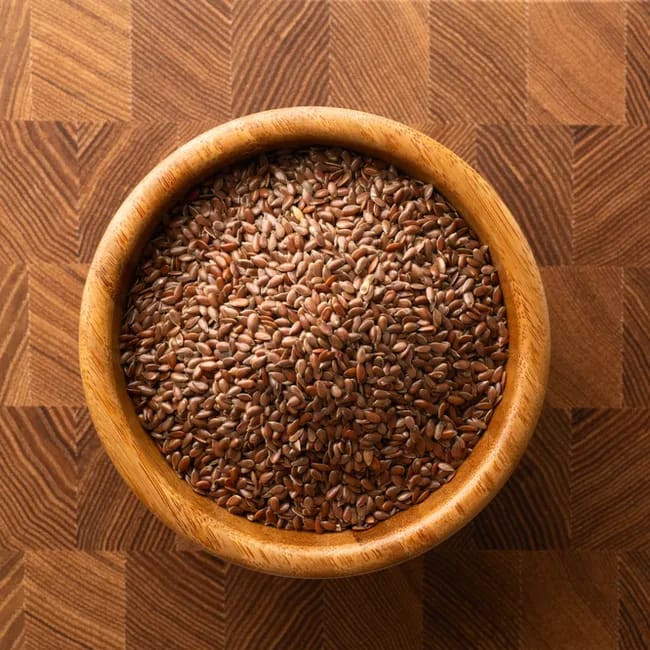
Flax seeds in Tamil are called ali vithai, also written aali vithai. The word vithai means seed, and ali is the Tamil name for flax. Flax seeds are the small, flat, brown or golden seeds of the flax plant, Linum usitatissimum. The plant is grown for its seeds and for its fibre, which is used to make linen. In Tamil cooking, ali vithai is used in small amounts, often roasted and ground, in chutneys, in podi, or powder, and in health mixes. It is also used in traditional medicine, in Ayurveda and in Siddha, where flax seed is valued for its oil and its fibre. Flax seeds have a mild, nutty flavour, and they are usually eaten ground, because whole seeds can pass through the body without being digested. A practical tip is to buy whole seeds, store them in a cool, dry place, and grind only the amount you need, because ground flax can become rancid quickly.
Rye in Tamil: What It Means
Rye in Tamil does not have a single, traditional Tamil name, because rye is not a traditional crop in Tamil Nadu. Rye is a cereal grain, Secale cereale, grown in cool climates in Europe, North America and parts of Asia. In Tamil, it is usually called by the English loanword rye, written in Tamil script, or it is described as a type of grain. Some Tamil dictionaries give a transliteration, and some sellers use the word rai, but rai can also mean mustard in other Indian languages, so it should not be used without care. The important point for a buyer is that rye is a grain, like wheat, barley and oats, and it is not a seed like flax. Rye is used to make rye bread, rye flour, crackers and whisky, and it is also used as animal feed. It is not used in traditional Tamil cooking, and it is not grown on a large scale in South India. If a supplier in Tamil Nadu offers rye, ask where it was grown, whether it is whole grain, flour or flakes, and what the variety is.
Flax Seeds and Rye: How They Differ
| Feature | Flax seeds (ali vithai) | Rye |
|---|---|---|
| What it is | Oilseed, Linum usitatissimum | Cereal grain, Secale cereale |
| Tamil name | Ali vithai, also aali vithai | Rye, used as an English loanword |
| Main use | Oil, ground seed, health food | Bread, flour, crackers, whisky |
| Key nutrients | Omega-3, lignans, fibre | Fibre, B vitamins, minerals |
| Gluten | Naturally gluten-free | Contains gluten |
| Form | Small flat seeds, brown or golden | Grain, flour, flakes |
| Grown in | India, Canada, Russia, Kazakhstan | Europe, North America, cool climates |
Flax and rye are different in almost every way. Flax is a seed, rich in oil, and it is used in small amounts as a health food. Rye is a grain, rich in starch, and it is used as a staple food, in bread and in flour. Flax is naturally gluten-free, while rye contains gluten, so it is not suitable for people who need a gluten-free diet. Flax is eaten ground, in a spoonful at a time, while rye is eaten as bread, in slices. A buyer who confuses the two will order the wrong product, at the wrong price, for the wrong use. Keep the table above beside a quotation, and always confirm the scientific name, the form and the intended use.
Nutrition: Omega-3, Lignans and Fibre
Flax seeds are valued for three things: omega-3 fatty acids, lignans and fibre. The omega-3 in flax is alpha-linolenic acid, or ALA, a plant form of omega-3. Indicative values for whole flax seeds are around 42 grams of fat per 100 grams, with about 23 grams of ALA, and about 18 grams of protein and 27 grams of fibre. Flax seeds are also a rich source of lignans, plant compounds that are studied for their antioxidant properties. They provide magnesium, phosphorus, potassium and B vitamins in useful amounts. Rye is different. It is a whole grain, with about 10 grams of protein and 15 grams of fibre per 100 grams, on an indicative basis, and it provides B vitamins, iron, magnesium and zinc. Both foods can be part of a balanced diet, but they should not be presented as medicines. Flax seeds can help with fibre intake and with plant omega-3 intake, but neither food treats a disease. People who take medicines, or who have a medical condition, should follow advice from a qualified health professional before using flax seeds in large amounts.
Culinary and Health Uses
Flax seeds are used in smoothies, porridge, dosa batter and chutney podi, and flaxseed oil is used as a dressing, but it should not be heated to a high temperature. In baking, ground flax mixed with water is sometimes used as an egg substitute, because it forms a gel. Rye flour is used for rye bread, crispbread, crackers and pancakes, and rye flakes are used in porridge and muesli. In India, rye is mainly bought by bakeries, hotels and food manufacturers who make European-style bread. A practical tip is to grind flax seeds fresh, and to use rye flour in a mix with wheat flour, because pure rye flour can be heavy and sticky.
Export Grades, Markets and Quality Specs for Flaxseed
India exports flaxseed to many countries, including the United States, China, the European Union, the United Kingdom and the Middle East. Demand comes from health food companies, from oil mills, from bakeries and from animal feed manufacturers. Flaxseed is also exported as oil and as meal, which is the residue after oil is extracted. Export grades are defined by colour, size, purity, moisture, oil content and foreign matter. Brown flaxseed is the most common, while golden flaxseed is often sold at a higher price for retail. A typical specification will state the variety, the origin, the crop year, the colour, the maximum moisture, often around 8 to 10 percent, the minimum oil content, and the maximum foreign matter. Laboratory testing for aflatoxin, pesticide residues and microbiological quality is common for food-grade shipments. Prices are indicative only, so always verify live prices with at least two suppliers before committing to a contract.
Quality, Packing and Storage
A buyer new to Indian flaxseed suppliers should check the sample, the specification, the documents and the packing. The sample should be clean, uniform in colour and size, and free from stones, husk, live insects and off smells. The supplier should provide a certificate of analysis for moisture, oil content and foreign matter, and where needed for pesticide residues. Packing is usually in new polypropylene or jute bags, often 25 kg or 50 kg, with an inner liner for food-grade shipments. Ground flax should be packed in airtight bags, because it can become rancid quickly. Flaxseed should be stored in a cool, dry place, away from direct sunlight and damp. Minimum order quantity, or MOQ, varies widely: a trader may accept one tonne for a trial, while a mill may need 10 to 25 tonnes for a custom grade.
How International Buyers Find Flax Seed Buyers and Exporters
International buyers usually start with a clear specification: the product, the colour, the grade, the quantity, the packing, the destination port and the target price. They then shortlist suppliers who can meet that specification and who can provide a company profile, a GST certificate, an APEDA registration where relevant, a food safety certificate, and recent export references. APEDA, the Agricultural and Processed Food Products Export Development Authority, registers exporters of many agricultural products and provides market information. Working with an APEDA-registered exporter is a useful first check, but it is not a guarantee: still ask for samples, a certificate of analysis and a clear contract. Request samples from two or three suppliers, compare them side by side for colour, size and freshness, test the oil content if needed, and negotiate on the sample that performed best. TodayAdviser can help here. Buyers can browse suppliers in the buyer directory, where exporters list their products, grades and contact details. A buyer can also post a requirement with the product, quantity and destination, and receive quotations from suppliers who can meet it. For exporters, the same pages are a way to be found by buyers already looking for Indian flaxseed, ali vithai, flaxseed oil or flaxseed meal.
Frequently Asked Questions
What is the Tamil name for flax seeds?
The Tamil name for flax seeds is ali vithai, also written aali vithai. It is the seed of the flax plant, Linum usitatissimum.
What is rye in Tamil?
Rye in Tamil does not have a single traditional name, because rye is not a traditional Tamil crop. Tamil speakers usually use the English loanword rye, and it is a cereal grain, Secale cereale, not a seed like flax.
Are flax seeds and rye the same?
No. Flax seeds are an oilseed, rich in omega-3 and lignans, while rye is a cereal grain, used for bread and flour. Flax is naturally gluten-free, while rye contains gluten.
Is flaxseed good for health?
Flaxseed can be part of a balanced diet. It provides omega-3, lignans and fibre, but it is not a medicine. People with a medical condition should follow advice from a qualified health professional.
Conclusion
Flax seeds in Tamil are ali vithai, and rye in Tamil is usually called rye, because it is not a traditional Tamil crop. Flax is an oilseed, rich in omega-3, lignans and fibre, while rye is a cereal grain, used for bread and flour. They are different foods, with different uses, grades and buyers. For a buyer or exporter, the next step is a written specification, a checked sample and a clear contract. Use the buyer directory to find suppliers, post a requirement to compare quotations, and verify prices and quality specs live before you ship.