For exporters, packaging is not a cost centre — it is insurance. A container shipped from an Indian port to Rotterdam or Jebel Ali spends weeks on the ocean, changes hands between truckers, terminal operators and stevedores, and endures humidity, heavy stacking and temperature swings. Corrugated boxes carry the bulk of the world's general cargo, but not every corrugated box is fit for export. Choosing the wrong grade is one of the commonest — and most avoidable — causes of cargo claims.
This guide walks through corrugated grades, box strength, export marking, crates versus boxes and ISPM-15 rules, so your packing material list is export-ready from day one.
How a corrugated box is built
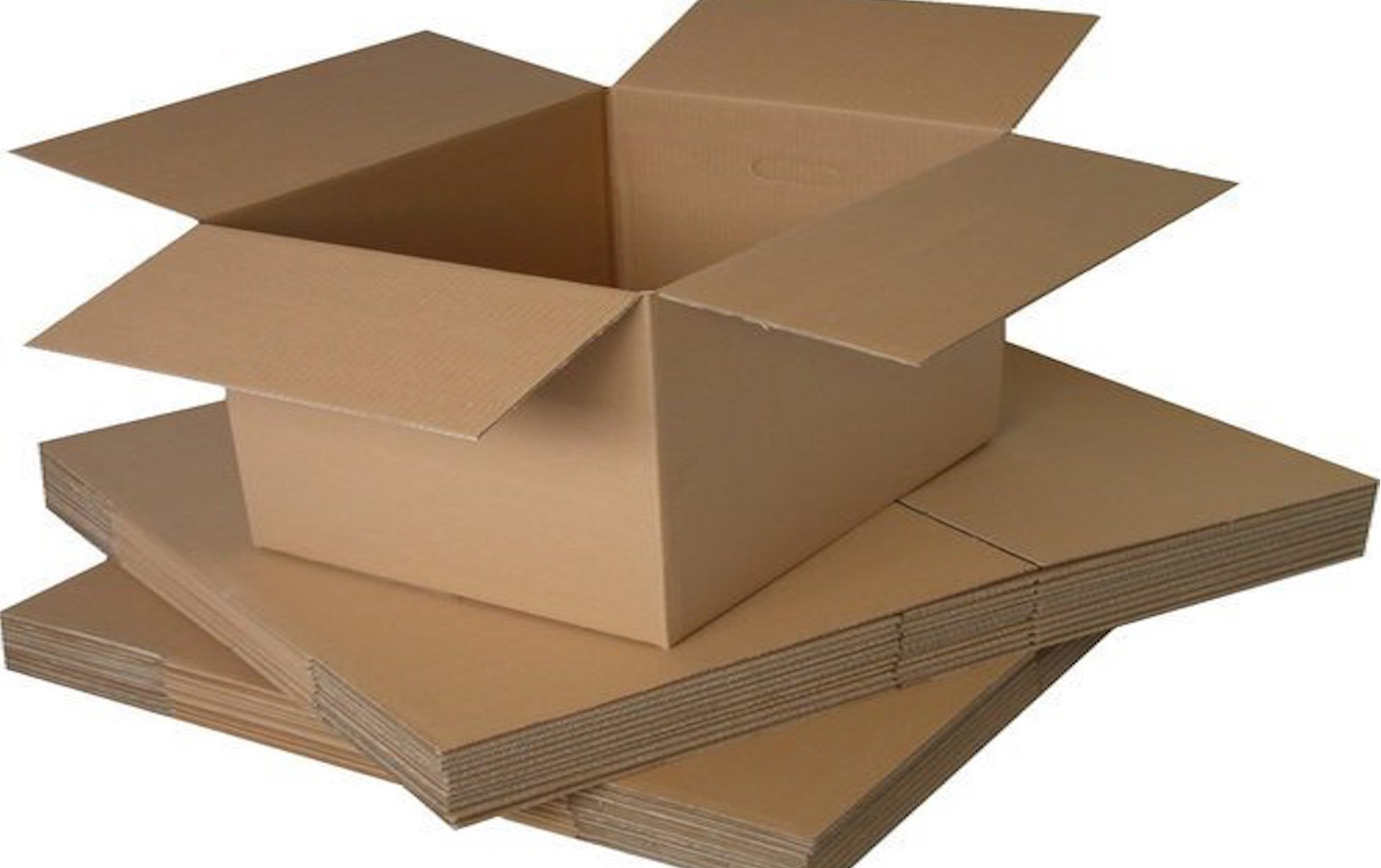
A corrugated board is a sandwich: flat linerboards glued to a wavy fluted medium. The flutes give the board its rigidity and cushioning. Common flute profiles run from coarse to fine — A, B, C, E and F flutes. Coarse flutes (A, C) offer better stacking strength and cushioning; finer flutes (B, E) give a smoother print surface. Export cartons often combine flutes — for example, a BC double-wall board pairs a C flute with a B flute for strength plus printability.
The liners matter too. Kraft liner (virgin fibre) is stronger and more moisture-resistant than test liner (recycled fibre). For export, kraft-faced board is generally the safer choice, especially for sea freight where cartons sit in humid container air for weeks.
Corrugated grades: 3-ply, 5-ply and 7-ply
Ply count describes the number of layers in the board:
- 3-ply (single wall): one fluted medium between two liners. Suitable for light to medium goods — textiles, packaged foods, small consumer goods — typically up to an indicative 10–20 kg per carton depending on design.
- 5-ply (double wall): two fluted mediums and three liners. The workhorse of export packing. Handles medium-heavy goods, stacking in containers and longer transits. Indicative range roughly 20–40 kg.
- 7-ply (triple wall): three fluted mediums. Used for very heavy items, as a substitute for wooden crates in some applications, or for tall palletised loads. Indicative 40 kg and above, though design matters more than ply alone.
Ply alone does not define strength. The quality of the liners and fluting medium, the flute profile and the box design matter equally — a well-made 5-ply kraft box can outperform a poorly made 7-ply box.
Box strength: the Edge Crush Test (ECT)
Two laboratory tests dominate export packaging specifications.
Edge Crush Test (ECT) measures the stacking strength of the board — how much top-to-bottom compression the box edges withstand, expressed in kN/m. ECT is the most relevant metric for exporters because containerised cargo is stacked: cartons at the bottom of a pallet or container bear the weight of everything above. Common ECT ratings for export cartons include indicative 32 ECT, 44 ECT and 55 ECT grades, with higher numbers for heavier stacking.
Burst strength (Mullen test) measures resistance to puncture and rough handling — the pressure needed to rupture the board. It matters when cartons are handled individually or exposed to protruding cargo.
For export, specify ECT on your purchase orders to box suppliers rather than just writing "5-ply". A specification like "5-ply BC flute, kraft liner, minimum 44 ECT" is far more precise and gives you a verifiable acceptance criterion when cartons arrive at your factory.
Choosing the right box for your cargo
Match the box to the cargo and the journey:
- Product weight and fragility: heavier or fragile goods need higher ECT and possibly double-wall board or internal inserts.
- Transit mode: sea freight means weeks of humidity and heavy stacking; air freight means lighter handling but strict dimensional-weight economics.
- Stacking: if cartons will be palletised two or three high, size them to the pallet footprint (for example 1200 × 1000 mm) to avoid overhang, which weakens stacking strength dramatically.
- Box style: RSC (regular slotted carton) is the standard; die-cut boxes suit retail-ready or fragile goods; telescopic and heavy-duty styles suit long or bulky items.
A practical rule: design the pack for the worst leg of the journey, not the best. If the last mile in the destination market involves manual handling over rough roads, the export carton must survive that too.
Specifying cartons to your supplier
Vague purchase orders produce vague cartons. A complete specification to your box supplier should state: board construction (ply, flute profile), liner type (kraft or test), minimum ECT rating, box style and dimensions (length × width × height), print requirements (buyer marks, handling symbols), and the acceptance test you will apply on receipt. Ask for a test certificate for the board lot, and keep a reference sample. When a claim arises, a written specification is what lets you distinguish a packing failure from a handling failure.
Export marking and labelling on cartons
Shipping marks on export cartons serve identification, handling and compliance purposes. A typical export marking block includes:
- Consignee or buyer marks and the order or PO number
- Package number (for example, "Carton 12 of 48")
- Country of origin ("Made in India")
- Gross and net weights, and dimensions
- Handling symbols: this side up, keep dry, fragile, do not stack (use the standard ISO pictorial marks)
Marks should appear on at least two faces of the carton, be legible, and resist rubbing off — stencilling, printed labels or direct printing all work. Colored shipping labels are widely used to speed up warehouse sorting: for instance, a red label for fragile consignments, or colour-coded labels by destination, product line or shipment batch. Whatever colour system you adopt, document it and share it with your buyer and freight forwarder so everyone reads the labels the same way.
Barcodes and SSCC labels are increasingly required by large retail buyers and 3PLs — confirm labelling specifications in the purchase order before packing begins.
Crates versus corrugated boxes
Corrugated boxes handle most general cargo, but wooden crates win for:
- Very heavy or dense items such as machinery parts, stone or metal castings
- Odd-shaped cargo that needs a rigid frame
- High-value goods needing nailed, tamper-evident packing
Crates cost more, weigh more (raising freight cost) and trigger ISPM-15 compliance (see below). Many exporters use a hybrid: a corrugated box inside a crate, or a heavy-duty 7-ply box on a wooden pallet base. For consumer goods packaging — retail-ready inner boxes inside a corrugated shipper — corrugated remains the economical standard.
ISPM-15: rules for wooden packing material
ISPM-15 is the international standard for wood packaging material — pallets, crates, dunnage and reels — in international trade. Its purpose is to stop the spread of wood-boring pests. Key points for exporters:
- All solid-wood packing material must be heat-treated (HT) or fumigated and must bear the IPPC mark: the wheat-sheaf symbol, country code, producer number and treatment code (HT or MB).
- The rule applies to the wood, not the cargo — even if your product contains no wood, a wooden pallet under it must comply.
- Non-compliance is expensive: many importing countries will refuse, destroy or re-export non-compliant consignments at the exporter's cost.
- Engineered wood (plywood, OSB, MDF) is exempt because the manufacturing process eliminates pest risk.
- Treatment and marking are done by registered treatment providers; your packing vendor or freight forwarder can arrange certified pallets and crates for packing.
Keep the treatment certificates with your shipping documents — some buyers and customs authorities ask for them.
Moisture protection for sea freight
Container rain — condensation forming inside containers as temperatures swing — is a leading cause of carton failure. Practical defences include:
- Moisture-resistant board or coated liners for high-risk lanes
- Container desiccants (used per the supplier's guidance for the container size)
- VCI (vapour corrosion inhibitor) paper or bags for metal goods
- Stretch-wrapped pallets, and keeping cartons off container walls and floors
Palletisation and container stuffing basics
- Use ISPM-15-compliant pallets sized to your cartons; avoid overhang.
- Stack cartons per the box supplier's guidance and shrink-wrap the pallet as a unit.
- Distribute weight evenly in the container: heavy cartons at the bottom, light ones on top.
- Fill voids with dunnage or airbags so cargo cannot shift.
- Record carton counts per pallet and per container — they feed directly into your packing list.
Your export packing material list: a checklist
A complete packing material list for an export consignment typically includes: corrugated shippers (specified by ply, flute and ECT), inner cartons and consumer goods packaging, cushioning (bubble wrap, foam, honeycomb), adhesive tapes and strapping, shipping labels including colored shipping labels, handling-mark stencils, ISPM-15-marked pallets, stretch and shrink film, desiccants, VCI packaging for metals, dunnage and airbags, and a crate for packing where heavy or fragile cargo needs one. Review this list against every purchase order — buyers often specify packing requirements in the order terms.
Common mistakes exporters make
- Buying on price per carton instead of strength per carton
- Reusing domestic-market cartons for export shipments
- Ignoring ECT and accepting whatever the supplier sends
- Marking only one face of the carton
- Using non-compliant wooden pallets and discovering it at destination customs
- Overhanging cartons on pallets, crushing the bottom layer
Frequently asked questions
What ply of corrugated box is best for export?
5-ply is the standard workhorse for most export cargo; 3-ply suits light goods and 7-ply suits heavy or palletised loads. Always check ECT, not just ply.
What is ECT in packaging?
The Edge Crush Test measures a corrugated board's stacking strength — its resistance to top-to-bottom compression. It is the key specification for export cartons that will be stacked in containers.
Do I need ISPM-15 certification for corrugated boxes?
No — ISPM-15 applies to solid wood packaging material (pallets, crates, dunnage), not to corrugated fibreboard. But the wooden pallets under your corrugated boxes must comply.
Should I use crates or boxes for machinery exports?
Wooden crates for heavy, dense or odd-shaped machinery; heavy-duty corrugated for lighter sub-assemblies. Hybrid packing is common.
How do I protect cartons from moisture during sea transit?
Use kraft-faced or moisture-resistant board, container desiccants, VCI packaging for metals, stretch-wrapped pallets, and keep cartons off container walls and floors.