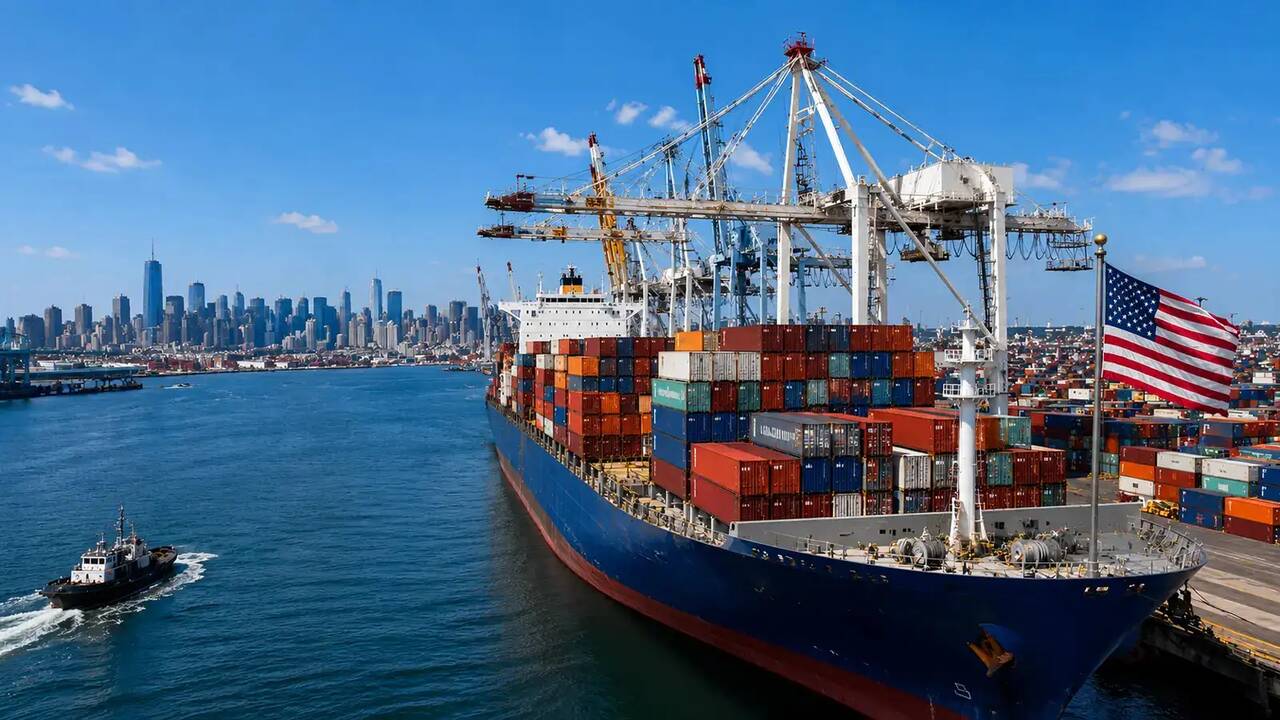
Practical guide to exporting to the USA from India: top import categories, category-specific regulations, payment norms, logistics lanes and a buyer-finding playbook.
Exporting to the USA from India: Buyers, Regulations, Payments & Logistics Guide
The United States is one of the largest and most competitive destinations for Indian exporters, but it rewards preparation. US buyers expect clear specifications, consistent quality, compliant labelling and reliable delivery. Price alone rarely wins a lasting order. This guide explains, in practical terms, what the USA buys from India, which regulations apply by product category, how payment risk is usually managed, how the main logistics lanes work, how to work well with US buyers, and how to find those buyers without relying on unverified lists.
Treat every figure, rate and transit time in this guide as indicative only. Freight rates, port congestion, duties and regulatory detail change frequently, so always verify live details with your freight forwarder, customs broker and buyer before you quote or ship.
1. What the USA buys from India
India's goods exports to the USA span a broad mix rather than a single headline category. Pharmaceuticals and generic medicines are a major strength, supported by large-scale manufacturing and established regulatory experience. Textiles, apparel and home textiles — including cotton garments, bed linen, towels and carpets — are also important, as are gems and jewellery, where craftsmanship and diamond processing play a central role.
Engineering goods form another large group. This includes machinery and parts, auto components, electrical equipment and metal products. Chemicals, dyes and related products, agricultural and food products, marine products such as shrimp, spices, tea and processed foods, and leather goods and footwear also feature prominently. Handicrafts, furniture and other consumer goods add further breadth, especially for smaller and artisan-led exporters.
For a new exporter, the lesson is to start narrow. Rather than offering a wide catalogue, identify one or two categories where you can prove quality, capacity and compliance. US importers often prefer a supplier who understands one product deeply over a general trader who can source almost anything. Check demand for your exact product variant, sizes, materials and price band before investing in samples or certification.
2. Key regulations and certifications for Indian exporters
Regulation in the USA is category-specific. There is no single approval that covers every product, and assuming that a certificate for one market automatically works in the USA is a common and costly mistake.
For food, the US Food and Drug Administration (FDA) is central. Food facilities that manufacture, process, pack or hold food for the US market generally need FDA facility registration, and food labelling must follow FDA rules on ingredients, nutrition information, allergen declarations and net quantity. Seafood, spices and processed foods may face additional controls, and animal or plant products can also fall under US Department of Agriculture (USDA) and Animal and Plant Health Inspection Service requirements, depending on the product.
For medicines, the FDA route is far more demanding. Generic drugs normally require an Abbreviated New Drug Application and manufacturing to current Good Manufacturing Practice standards, which is a long and costly process best suited to established manufacturers. For consumer products, the Consumer Product Safety Commission (CPSC) sets safety rules for many categories, including children's products, which may need testing and children's product certificates. Textiles must meet Federal Trade Commission fibre-content labelling rules, and some textile and apparel items are subject to flammability standards. Electrical and electronic goods may need to meet Federal Communications Commission requirements for radio-frequency devices, and many US buyers also ask for recognised safety testing for electrical products.
In practice, ask your buyer and a US customs broker, early in the conversation, which standards apply to your exact product. Build the cost and lead time of testing, labelling and documentation into your quotation, and keep test reports and certificates organised for repeat orders.
3. Payment norms and risk
Payment practice in the USA varies with trust, order size and the buyer's track record. Established relationships often move to open account terms, where the buyer pays after shipment, commonly within an agreed period after invoice or receipt of documents. This is convenient but leaves the exporter exposed if the buyer delays or defaults, so it should only be offered after credit checks and a successful trading history.
For new relationships and larger orders, a confirmed, irrevocable letter of credit (LC) is the safer route. An LC issued by a reputable US bank and confirmed by your Indian bank gives much stronger protection, provided you present documents exactly as the LC requires. Documentary collections, where the bank releases documents against payment or acceptance, sit between open account and an LC in terms of risk. Some exporters also take an advance payment, often a percentage of the order value, to cover raw materials and production.
Indian exporters can also explore support from the Export-Import Bank of India (EXIM Bank) and export credit insurance, for example through ECGC, to manage buyer and country risk. These tools do not remove the need for careful contracting. Agree the Incoterms, payment date, currency, quality inspection, claims window and dispute route in writing before production begins. The US dollar is the usual invoicing currency, but that does not remove foreign-exchange risk: plan for rupee-dollar movement between quotation and payment, and discuss hedging with your bank where the exposure is material.
4. Logistics lane: ports, routes and indicative transit
Most India-USA sea freight moves from west-coast Indian ports such as Nhava Sheva (JNPT) and Mundra, with some cargo routed through other Indian ports depending on origin and carrier service. On the US side, the choice of port shapes both transit and inland delivery cost. East Coast ports such as New York/New Jersey, Savannah and Charleston serve the large eastern population centres. Gulf ports such as Houston serve the south and central USA. West Coast ports such as Los Angeles and Long Beach serve the western states but involve a longer inland leg for buyers further east.
Transit times are indicative only and vary by carrier, service, transshipment, port congestion and season. Direct or faster services will differ from services with transshipment, and peak-season congestion can add delay. Air freight from major Indian airports to US hubs is the faster option for samples, high-value goods and urgent replenishment, but it is materially more expensive per kilogram and is rarely viable for bulky, low-value cargo. Always obtain a live freight quote, check the sailing or flight schedule, confirm free time and demurrage terms, and build a buffer into the delivery date you promise your buyer.
5. Business-culture tips for working with US buyers
US business culture tends to be direct, time-conscious and contract-oriented. Buyers usually want a concise pitch: what the product is, the specification, the price, the minimum order quantity, the lead time and what makes your offer reliable. Avoid long introductory messages. Lead with the facts, attach a clear product sheet, and answer questions promptly and precisely.
Punctuality matters, for calls as much as for shipments. If a sample or shipment will be late, tell the buyer early, explain the reason briefly, and give a revised date. US buyers also value consistency: the bulk order should match the approved sample in material, finish, sizing and packaging. Keep records of approvals, test reports and correspondence, and treat the written purchase order and specification sheet as the agreed standard. A professional, responsive and transparent approach builds the trust that leads to repeat orders and, over time, to more flexible payment terms.
6. Buyer-finding playbook
Finding US buyers takes a mix of visibility, targeted outreach and proof. Start with a strong supplier profile: clear product photographs, honest specifications, certifications you actually hold, production capacity and export experience. Buyers filter out vague profiles quickly, so specificity helps.
Sector trade shows and buyer-seller meets in the USA remain valuable for meeting importers, distributors and retailers face to face, especially when you bring samples and a price list. B2B directories and sourcing platforms help buyers discover you, but they work best when your listing is complete and your responses are fast. On TodayAdviser, use the directory to present your company and products clearly, and use buy-leads to find active requirements that match your category. Respond only to requirements you can genuinely fulfil, ask clarifying questions about specification and quantity, and follow up professionally rather than sending generic bulk messages.
Direct outreach also works when it is targeted. Identify importers and distributors in your exact category, study what they already sell, and send a short, personalised introduction that explains how your product fits their range. Avoid buying or using unverified buyer lists, and never claim buyers, orders or reviews you do not have. One well-qualified conversation is worth far more than dozens of untargeted emails.
Frequently asked questions
Do I need FDA approval to export food to the USA?
It depends on the product. Food facilities generally need FDA registration and compliant labelling, and some products face additional FDA or USDA controls. Confirm the exact requirements for your product with a customs broker before shipping.
Is an LC always required for US buyers?
No. An LC is common for new or large orders, but established buyers often trade on open account. Match the payment term to the risk, and use credit insurance or bank support where appropriate.
Which US port should I ship to?
Choose the port closest to your buyer's distribution point, balancing ocean transit, inland transport and total landed cost. Ask your forwarder to compare East, Gulf and West Coast options for your specific cargo.
Can small exporters sell to the USA?
Yes, especially in textiles, handicrafts, food specialities and niche engineering products, provided quality, labelling and documentation are right. Start with a focused product and a buyer who fits your capacity.
How do I avoid payment disputes?
Agree specifications, inspection, payment terms and claims procedures in writing, keep samples and test reports, and present LC documents exactly as required. Clear paperwork prevents most disputes.
Should I verify rates and transit before quoting?
Yes. Rates, schedules and transit times change. Always verify live freight, duty and delivery details before confirming a price or delivery date to a buyer.