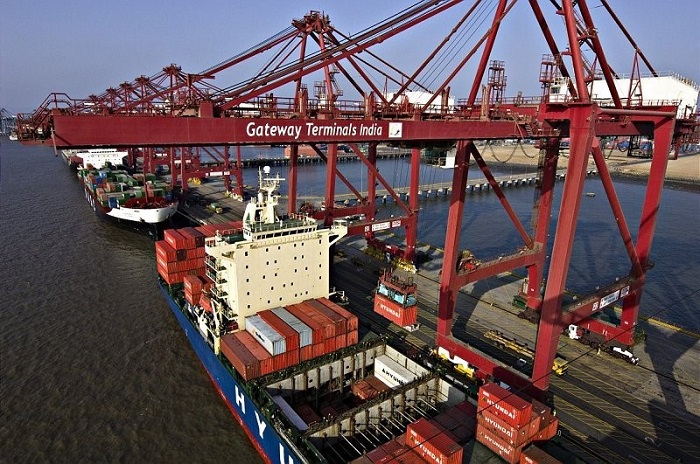

Choosing between FCL (Full Container Load) and LCL (Less than Container Load) shipping from India depends primarily on cargo volume, urgency, and total landed cost. As an operational rule of thumb, shipments under 13 to 15 cubic meters (CBM) generally favor LCL, while shipments exceeding 15 CBM become more cost-effective via a dedicated 20-foot FCL container. However, hidden terminal fees, handling touchpoints, and route-specific freight dynamics frequently shift this break-even threshold.
For Indian manufacturers, merchants, and international procurement teams, selecting the wrong ocean freight mode directly erodes gross margins and introduces preventable supply chain volatility. A decision based solely on headline freight rates ignores destination CFS charges, extended port turnaround windows, and the compounding risk of multi-shipper cargo holds. Evaluating FCL vs LCL shipping India requires an end-to-end evaluation of your freight profile—from inland container depot (ICD) handoffs to final destination de-consolidation.
This practical operational guide breaks down the financial mathematics, logistics workflows, documentation nuances, and cargo risk profiles of both modes. Whether moving engineering components from Ludhiana, textiles from Tirupur, or chemicals from Gujarat, this guide provides the exact benchmarks needed to optimize your maritime logistics strategy.
Demystifying Ocean Freight Modes: FCL vs. LCL
Understanding the operational mechanics of containerized transport is the foundation of smart freight procurement. While both modes utilize standard intermodal shipping containers, their custody chains, packing protocols, and pricing structures operate on fundamentally different principles.
What Is Full Container Load (FCL)?
In FCL shipping, an exporter leases the exclusive use of an entire shipping container for their consignment. The shipper is not required to fill the container completely; rather, they secure the dedicated capacity of the equipment, and the cargo inside belongs strictly to one commercial shipment (or multiple consignments managed by the same exporter under a single charter).
FCL equipment primarily falls into standard international specifications:
- 20-foot Standard Dry Container (20' GP): Internal capacity of approximately 33 CBM, with a practical payload capacity of 25 to 28 CBM or up to 21,500 kg to 28,000 kg depending on shipping line allowances and road weight regulations.
- 40-foot Standard Dry Container (40' GP): Internal capacity of approximately 67 CBM, holding a practical volume of 55 to 58 CBM.
- 40-foot High Cube Container (40' HC): Internal capacity of roughly 76 CBM, accommodating 65 to 68 CBM, making it ideal for voluminous, low-density cargo like garments, footwear, and consumer goods.
Under FCL terms, the container is typically dispatched empty to the exporter’s factory or warehouse for loading ("factory stuffing"), sealed with a high-security bolt seal, and transported via road or rail directly to the port or gateway dry port without being opened—provided customs inspection is completed under self-sealing permissions.
What Is Less than Container Load (LCL) and Consolidation?
LCL shipping allows multiple exporters to share space within a single standard shipping container. When an exporter has cargo that occupies only a fraction of a container—for instance, 3 CBM of brass hardware or 6 CBM of leather accessories—booking a dedicated 20-foot box results in paying for substantial "dead freight" (empty space). LCL solves this by pooling smaller consignments from various shippers heading to the same destination port.
This pooling process is known as consolidation. The operational workflow follows a strict multi-party journey:
- Cargo Delivery to CFS: The exporter transports loose, packaged cargo (cartons, crates, or palletized goods) to a licensed Container Freight Station (CFS) nominated by the consolidator or freight forwarder.
- Cargo Verification and Staging: Cargo is measured, weighed, tagged, and checked against the Shipping Bill and export packaging declarations.
- Stuffing (Co-loading): The master loader or non-vessel operating common carrier (NVOCC) plans the container stowage plan, grouping compatible cargoes into a single container.
- Voyage and De-consolidation: Upon arrival at the discharge port, the container is hauled to an import CFS, where the seal is broken, goods are de-stuffed (stripped), sorted by House Bill of Lading, and cleared individually through customs for collection.
Cost Economics: Finding the CBM Break-Even Point
Logistics managers frequently ask: At what volume does FCL become cheaper than LCL? While ocean freight markets fluctuate daily based on bunker costs, geopolitical routes, and vessel capacity, predictable pricing mechanisms govern the break-even tipping point.
                  INDICATIVE COST PROFILE ACROSS VOLUMES

Total Cost
    ▲
    │                                       / [LCL Escalation Curve]
    │                                      /  (Due to high W/M and CFS fees)
    │                                     /
    │                                    /
    │                                   *  <--- Typical Break-Even Zone
    │                                  /        (~13 to 15 CBM)
    │                                 /
    │  ==============================/========= [FCL Flat Box Cost]
    │  (High base ocean fee, but flat equipment fee)
    │
    └─────────────────────────────────────────────────────────────►
    0 CBM         5 CBM          10 CBM        15 CBM        20 CBM  (Volume)
The W/M Principle in LCL Pricing
LCL ocean freight is billed on a Weight or Measurement (W/M) basis. The carrier calculates the freight charge based on whichever is higher:
- 1 Metric Ton (MT) = 1,000 Kilograms
- 1 Cubic Meter (CBM) = 1 Revenue Ton (RT)
The 1:1,000 Ratio Rule: If your cargo measures 4 CBM but weighs 5,200 kg (5.2 MT), the freight forwarder bills you on 5.2 Revenue Tons. Conversely, if your cargo weighs 800 kg (0.8 MT) but measures 6 CBM, you are billed for 6 Revenue Tons.
In addition to the baseline ocean rate, LCL attracts origin CFS handling, carting charges, documentation fees, and crucially, destination deconsolidation and port charges. Destination CFS charges on LCL can equal or exceed the ocean freight itself, particularly when cargo is booked under deceptive "zero-freight" or negative-freight promotional schemes where forwarders recover margins from the overseas importer.
The FCL Flat Pricing Model
In contrast, FCL is billed on a flat, per-container rate (box rate), regardless of the cargo volume packed inside, provided gross vehicle weight limitations are respected. A 20-foot container costs the same baseline ocean freight whether you load 8 CBM of furniture or 26 CBM of auto parts.
Calculating the Indicative Break-Even Benchmark
To identify the cost crossover, evaluate a practical export model from an Indian gateway port such as Nhava Sheva (JNPT) or Mundra to a major European port like Rotterdam.
> Note: The following figures are purely indicative baseline benchmarks to demonstrate cost methodology. Actual rates fluctuate weekly based on currency adjustments, fuel surcharges (BAF), and port congestion surcharges. Always request live quotes from verified freight forwarders.
Hypothetical Rate Structure:
- 20' FCL Flat Rate: $1,400 (Ocean freight + Origin Terminal Handling Charges [THC] + Documentation)
- LCL All-In Origin-to-Destination CFS Rate: $95 per Revenue Ton (RT)
Cost Comparison Across Volumes:
| Cargo Volume (CBM) | Gross Weight (kg) | LCL Estimated Cost | 20' FCL Estimated Cost | Most Economical Selection |
|---|---|---|---|---|
| 3 CBM | 1,200 kg | $285 | $1,400 | LCL (Major savings) |
| 6 CBM | 2,500 kg | $570 | $1,400 | LCL |
| 10 CBM | 4,000 kg | $950 | $1,400 | LCL |
| 13 CBM | 5,500 kg | $1,235 | $1,400 | LCL (Approaching crossover) |
| 15 CBM | 6,000 kg | $1,425 | $1,400 | FCL (Break-even threshold) |
| 18 CBM | 7,500 kg | $1,710 | $1,400 | FCL (Substantial savings) |
| 22 CBM | 9,000 kg | $2,090 | $1,400 | FCL (Overwhelming advantage) |
The 13–15 CBM Rule of Thumb
Across standard global trade lanes originating in India (to the Middle East, Europe, Southeast Asia, and the US East Coast), the break-even tipping point consistently materializes between 13 CBM and 15 CBM for standard density goods.
However, if your cargo is exceptionally dense (for example, industrial steel valves measuring only 5 CBM but weighing 9,000 kg), the weight parameter triggers 9 Revenue Tons. On heavy cargo, the LCL cost accelerates rapidly, driving the break-even volume down to as low as 7 to 8 CBM.
Hidden Charges and Ancillary Fees to Monitor
Comparing pure freight rates without line-item handling fees creates budgeting inaccuracies. When auditing landed export costs, review these critical ancillary expenses:
Hidden LCL Cost Traps:
- Origin Carting and Unloading: Fees for moving loose cargo from truck into the warehouse staging area.
- LCL Destination Devanning & CISF Charges: China Import Service Fees, delivery order (DO) fees, and terminal devanning charges applied by destination CFS operators, often invoiced directly to your buyer.
- Storage and Detention: High daily warehousing penalties if import customs clearance encounters technical documentation discrepancies.
Hidden FCL Cost Traps:
- Demurrage: Fines imposed by the shipping line for holding the container inside the terminal facility beyond allowed free days (typically 3 to 7 free days).
- Detention: Daily penalties assessed when the importer pulls the container out of the port to un-stuff at their warehouse but fails to return the empty equipment to the carrier’s depot within the free period.
- Chassis Splits and Port Congestion Fees: Surcharges incurred if the container needs specialized transport handling or encounters terminal vessel wait queues.
Transit Times, Handling Touchpoints, and Risk Management
Selecting a freight mode is not purely an accounting exercise; it directly governs product lead times, supply chain predictability, and damage rates.
                    HANDLING TOUCHPOINT COMPARISON

   FCL Touchpoints (3 Steps):
   [Shipper Factory] ──(Sealed)──► [Container Vessel] ──(Sealed)──► [Consignee Warehouse]

   LCL Touchpoints (7-8 Steps):
   [Shipper Factory] ──► [Origin CFS] ──► [Unload/Stage] ──► [Consolidation/Stuffing]
         ──► [Vessel Transit] ──► [Dest. CFS] ──► [De-stuffing/Sort] ──► [Delivery]
Transit Time Realities: The Consolidation Lag
On a pure port-to-port ocean transit (e.g., Nhava Sheva to Jebel Ali), both FCL and LCL containers ride on the exact same vessel and cover the water transit in identical time (typically 3 to 5 days). Yet, from an end-to-end supply chain perspective, LCL cargo consistently takes 5 to 10 days longer than FCL.
This delay occurs due to structural CFS processes:
- Origin Cut-Off Deadlines: LCL cargo must be carted into the export CFS 4 to 7 days prior to vessel departure, compared to 24 to 48 hours for FCL gate-in.
- Vessel Cut-Off Coordination: The consolidator requires up to 72 hours to stage, plan weight distribution, secure customs inspections for individual shipments, and physically pack the container.
- Destination Segregation: Upon vessel discharge, an FCL box can be picked up immediately by prime-mover tractor-trailers once customs clearance is electronically granted. An LCL container must first be scheduled for transit to an off-dock CFS, waited on for container destuffing, checked for piece counts, and sorted into bay locations before the importer's trucker can take delivery.
Physical Cargo Handling and Damage Exposure
The physical integrity of your product correlates directly with the number of times it is handled by human labor and industrial equipment:
The FCL Custody Flow (Minimal Handling):
- Palletized and stuffed directly at your manufacturing facility.
- Container doors closed and secured with an ISO/PAS 17712 certified bolt seal.
- Container travels untouched via rail/road, transits ocean vessel, arrives at buyer's facility.
- Seal broken exclusively by the buyer's warehouse team.
Total touches on physical packaging: 2 (loading and unloading).
The LCL Custody Flow (Multi-Touch Exposure):
- Loaded onto domestic truck at exporter's plant.
- Unloaded at local inland CFS or port CFS.
- Shifted inside warehouse storage bays during export staging.
- Forklifted into shared ocean container alongside third-party freight.
- Unstuffed at destination CFS onto warehouse staging floor.
- Handled onto final delivery flatbed or box truck.
- Unloaded at buyer’s receiving dock.
Total touches on physical packaging: 6 to 8 touches.
The Shared-Container Risk Environment
In an LCL container, you have zero control over adjacent cargo. Your shipment shares physical space with products manufactured by dozens of other companies. Common risk scenarios include:
- Chemical Cross-Contamination and Odors: An agricultural or garment shipment placed beside industrial resins, aromatic chemicals, or non-hazardous liquids that leak.
- Weight Crushing: Poorly palletized, heavy industrial casting crates positioned inadvertently on top of lighter corrugated consumer packaging.
- Customs Holds and Joint Delays: Customs authorities operate on a risk-profile basis. If one exporter inside an LCL consolidation container submits fraudulent paperwork, misdeclares hazardous goods, or fails security checks, the entire container is quarantined. Even if your paperwork is flawless, your cargo remains trapped inside the impounded container at the port until customs issues an administrative resolution or an expensive partial-strip order.
Documentation and Legal Differences: Master vs. House Bill of Lading
Navigating international commercial law and customs compliance requires precise document management. The choice between FCL and LCL impacts how your Bill of Lading is executed, negotiated under banking instruments, and cleared through Indian Customs.
                  BILL OF LADING CONTRACT STRUCTURES

        FCL Typical Structure                  LCL Consolidation Structure
      ┌─────────────────────────┐             ┌─────────────────────────┐
      │     Shipping Line       │             │      Shipping Line      │
      └───────────┬─────────────┘             └────────────┬────────────┘
                  │ Master B/L (Direct)                    │ Master B/L (To NVOCC)
                  ▼                                        ▼
      ┌─────────────────────────┐             ┌─────────────────────────┐
      │   Shipper / Consignee   │             │   Freight Forwarder     │
      │ (Exporter / Importer)   │             │   (Consolidator/NVOCC)  │
      └─────────────────────────┘             └────────────┬────────────┘
                                                           │ House B/L (To Client)
                                                           ▼
                                              ┌─────────────────────────┐
                                              │   Shipper / Consignee   │
                                              │  (Individual Exporters) │
                                              └─────────────────────────┘
Master Bill of Lading (MBL) vs. House Bill of Lading (HBL)
The Bill of Lading (BL) serves three critical functions: a document of title, a contract of carriage, and a receipt of goods.
- Master Bill of Lading (MBL): Issued directly by the ocean carrier (e.g., Maersk, MSC, Hapag-Lloyd) to the cargo owner or forwarder. In FCL, the exporter often receives an MBL naming them as the shipper and the buyer (or the buyer's issuing bank) as the consignee. It reflects direct contractual privity with the vessel owner.
- House Bill of Lading (HBL): Issued by a freight forwarder or NVOCC to the individual cargo owner. In LCL shipping, the ocean carrier issues a single MBL to the consolidator covering the entire container. The consolidator then issues individual House Bills of Lading to each distinct exporter whose cargo is packed inside.
Letter of Credit (LC) Compliance Warning:
If your export transaction is financed via a Letter of Credit (LC) governed by ICC Uniform Customs and Practice for Documentary Credits (UCP 600), confirm whether the LC allows a House Bill of Lading or "Forwarder's Bill of Lading."
Under UCP 600 Article 20, an HBL is acceptable if signed correctly by the freight forwarder as a carrier or as the named agent of the carrier. However, restrictive letters of credit explicitly demand a "Clean On-Board Ocean Marine Bill of Lading issued by an actual vessel-operating shipping line." In such cases, executing an LCL shipment with an HBL can lead to non-compliant documentation, payment dishonor, and banking penalties.
Indian Customs Clearance Realities: Shipping Bills and ICEGATE
The clearance workflow through Indian Customs differs sharply based on handling mode:
FCL Documentation Path:
- Factory Stuffing & Self-Sealing: Exporters with Authorized Economic Operator (AEO) status or standard self-sealing permissions can clear customs through digital declarations on ICEGATE.
- The factory inspector verifies packing, issues a seal verification report, locks the box with an approved RFID e-seal, and transmits data directly to ICEGATE.
- The container arrives at the gateway port terminal with Let Export Order (LEO) clearance already approved or subject only to a physical port seal-check, passing seamlessly through port gates via Form 13 and automated terminal gate systems.
LCL Documentation Path:
- Exporters cannot self-seal loose cargo at a standard factory.
- Cargo must move to a licensed public or private CFS under a domestic transport document.
- An import-export clearing agent (CHA) files an inland Shipping Bill on ICEGATE. The goods are offloaded at the CFS warehouse floor, made available to the customs examining officer for manual sampling and physical inspection, and subsequently stamped with LEO.
- Only after individual customs clearance is secured can the consolidator include the goods on the master stuffing manifest to pack the container.
Cargo Suitability: A Strategic Decision Matrix
Determining whether to book FCL or LCL requires balancing volume, weight, physical vulnerabilities, delivery deadlines, and destination capabilities.
                         STRATEGIC SELECTION MATRIX

                      High
                       ▲
                       │      LCL OPTION              FCL MANDATE
                       │   (Small batch, high      (Urgent, high-value,
                       │    frequency replenishment) fragile, or high-security)
           Urgency /   │   ─────────────────────────────────────────────
          Value Factor │      LCL OPTION              FCL OPTION
                       │   (Low volume, standard   (High volume, heavy, bulk,
                       │    durable products)       or chemical consignments)
                       │
                       └─────────────────────────────────────────────►
                        Low           Cargo Volume (CBM)          High
1. Volume and Weight Parameters
- 1 to 7 CBM: Almost exclusively LCL. The cost differential of booking a 20-foot container for small volumes is rarely justified unless cargo characteristics dictate complete isolation.
- 8 to 14 CBM (The Gray Zone): Requires comparative quoting. If cargo is light (low weight) and heading to a primary direct port, LCL may remain marginally cheaper. If the goods are dense or destination CFS charges are high, booking a 20' FCL is often the more secure, predictable investment.
- 15 to 28 CBM: FCL (20-foot). Ocean freight costs reach parity with LCL, while transit speed, security, and document ownership favor a dedicated box.
- 29+ CBM: FCL (40-foot / 40' HC). Splitting 30+ CBM across multiple LCL shipments is inefficient. Utilizing 40-foot equipment yields the lowest landed cost per unit of volume.
2. Product Fragility, Shape, and Cleanliness
- High Fragility Cargo: Precision automotive machinery, ceramic sanitaryware, glassware, sensitive lab instruments, and high-end finished architectural stone should ship FCL. The dynamic forces, shifting weights, and multi-tier stacking inside an LCL consolidation box significantly heighten risk profiles.
- Irregular Shapes & Out-of-Gauge Dimensions: Items that cannot be easily palletized or stacked—such as industrial pipes, fabricated beams, heavy agricultural implements, and long textile rolls—often incur steep LCL handling surcharges and can be refused by master loaders. These belong in dedicated FCL containers.
- Standardized Palletized Consumer Goods: Sturdy, shelf-ready goods in standardized corrugated cartons loaded on heat-treated ISPM-15 wooden pallets are well-suited for LCL consolidation when volumes are low.
3. Supply Chain Urgency and Production Cycles
- Just-In-Time (JIT) Manufacturing: When raw materials or components feed strict assembly plant schedules, the 5- to 10-day consolidation and destuffing delay of LCL introduces unacceptable lead-time variance. Choose FCL.
- Frequent, Small-Batch Distribution: In modern cross-border e-commerce, stocking high inventory volumes ties up working capital. Exporters using modern fulfillment hubs frequently ship 2 to 4 CBM via LCL on weekly schedules, preserving liquidity while maintaining continuous inventory flow.
4. Destination Port and Inland Infrastructure
- Direct Deepwater Base Ports: Major transshipment hubs like Singapore, Jebel Ali, Rotterdam, and Busan process LCL consolidations efficiently, maintaining specialized CFS facilities that clear, strip, and release cargo quickly.
- Secondary, Feeder, and Landlocked Destinations: If shipping to secondary African, South American, or inland destinations (e.g., inland customs depots in Europe or dry ports in the US Midwest), LCL transit timelines can lengthen considerably. The container must be discharged at a main maritime port, stripped, consolidated onto domestic trucks or feeder vessels, and cleared through secondary hubs. In contrast, an FCL container is transferred directly onto rail or chassis under intact customs seal, arriving significantly faster.
Comprehensive Comparison: FCL vs. LCL at a Glance
| Operational Parameter | Full Container Load (FCL) | Less than Container Load (LCL) |
|---|---|---|
| Standard Billing Unit | Flat Box Rate (per 20', 40', 40' HC) | Weight or Measurement (W/M per CBM or MT) |
| Break-Even Volume | Economical above ~13–15 CBM | Economical below ~13 CBM |
| Custody & Loading | Shipper loads/seals (Factory or Port) | Forwarder loads at consolidation CFS |
| Physical Handling | Minimum (loaded once, emptied once) | High (6 to 8 touchpoints through warehouses) |
| Transit Time | Direct, fastest ocean profile | 5 to 10 days slower (CFS pack/strip buffer) |
| Damage / Theft Risk | Extremely low (single high-security bolt seal) | Moderate to high (mixed freight exposure) |
| Risk of Customs Delays | Isolated to exporter’s own compliance | Shared risk; co-loaded cargo issues delay box |
| Bill of Lading Issued | Master Bill of Lading (MBL) or HBL | House Bill of Lading (HBL) |
| Letter of Credit Suitability | High (fully complies with strict MBL terms) | Requires verification of LC terms regarding HBL |
| Destination Charges | Standard Port Handling (THC) + Delivery | CFS de-stuffing, devanning, carting, handling |
Practical Exporter Checklist: Step-by-Step Decision Protocol
Before confirming your cargo booking with an Indian freight forwarder or logistics network, run your commercial shipment through this sequential protocol.
                       EXPORTER DECISION WORKFLOW

                [Evaluate Shipment Volume & Weight]
                                │
          ┌─────────────────────┴─────────────────────┐
          ▼                                           ▼
     < 13 CBM                                      ≥ 13 CBM
          │                                           │
          ▼                                           ▼
  [Assess Cargo Profile]                         Select FCL
  - High value or fragile?                      (20' Box)
  - Strict LC demanding MBL?
  - Hazardous / sensitive?
          │
     ┌────┴────┐
   YES         NO
     │         │
     ▼         ▼
Select FCL   Select LCL
Step 1: Calculate Total Packaged Volumetric Weight
- Measure outer dimensions of cargo units: $\text{Length (m)} \times \text{Width (m)} \times \text{Height (m)} \times \text{Total Units} = \text{Total CBM}$.
- Weigh total consignment on calibrated scale: Total Weight in Kilograms $\div 1000 = \text{Total Metric Tons (MT)}$.
- Compare CBM vs. MT. The larger number represents your billable Revenue Tons (RT).
Step 2: Compare True Landed Quotations (Not Just Ocean Freight)
- Request an itemized quote from your freight forwarder detailing: Origin carting, Export CFS fees, Ocean freight, Destination CFS release fees, Delivery Order (DO) issuance charges.
- Run the financial equation:
$$\text{Total LCL Landed Expense} \lessgtr \text{Total 20' FCL Flat Cost}$$
- If the delta is within 10% to 15%, favor FCL for its operational security and predictability.
Step 3: Verify the Cargo's Material Safety Data Sheet (MSDS)
- If shipping liquid formulations, extracts, active pharmaceutical ingredients (APIs), specialty dyes, or battery-powered devices, verify hazardous classifications.
- Most consolidators decline Hazardous Materials (HAZMAT) in mixed LCL containers, or assess steep compliance surcharges that make dedicated FCL more cost-effective.
Step 4: Audit Customer Terms of Sale (Incoterms 2020)
- Under CIF/CFR Terms: You pay ocean freight to the destination port, but your overseas buyer pays destination CFS charges. If you ship via LCL, your buyer may face substantial local CFS fees, which can strain commercial relationships. Inquire whether your buyer has approved LCL delivery or prefers an FCL shipment.
- Under DDP/DAP Terms: You absorb all delivery costs to the buyer's door. Make sure you fully understand destination CFS de-stuffing charges before pricing your sales contract.
Step 5: Check Packing Compliance
- Palletization: LCL freight should be securely strapped, stretch-wrapped, and loaded on ISPM-15 heat-treated or plastic pallets to withstand multiple touches.
- Marking and Labeling: Every master carton in an LCL consolidation must carry durable shipping marks detailing port of discharge, consignee code, box count ($X \text{ of } Y$), and standard handling warning symbols.
5 Costly Mistakes Indian Exporters Make with FCL and LCL
1. Falling for the "Zero-Dollar" or "Negative-Freight" LCL Scam
Unscrupulous freight brokers frequently quote Indian exporters nominal or zero-dollar ocean freight rates for LCL cargo on CIF terms. Exporters eager to trim shipping expenses accept these quotes immediately.
Upon cargo arrival, the destination consolidator bills the buyer exorbitant, non-negotiable port fees, "deconsolidation surcharges," and inflated documentation fees. This often prompts buyers to reject cargo or file payment claims. Always demand an itemized end-to-end tariff schedule to verify true landed costs.
2. Shipping Dense Cargo via LCL Without Checking Weight Surcharges
An engineering firm exporting machine tools might calculate a shipment volume of only 6 CBM, assuming cheap LCL pricing. However, if that shipment weighs 10 MT, the forwarder bills for 10 Revenue Tons.
At $150 per RT, ocean freight totals $1,500—significantly higher than a standard 20-foot FCL flat box rate of $1,100 to the same destination. Always calculate freight on a Revenue Ton (W/M) basis, not CBM alone.
3. Missing Letter of Credit Clauses Regarding Bills of Lading
Exporters often accept Letter of Credit terms demanding an ocean carrier's Master Bill of Lading, only to book cargo with an LCL freight forwarder who can only provide a House Bill of Lading. When documents are presented to the bank, discrepancies arise, creating payment delays and costly LC amendment penalties. Always align your freight booking mode with payment terms.
4. Overpaying for FCL Air in the Gray Volume Zone
Shipping 10 CBM of lightweight cotton apparel in a dedicated 20-foot box (which holds roughly 28 usable CBM) means paying for 18 CBM of empty air. Unless the apparel is fragile or urgently required for a seasonal launch, LCL consolidation can yield substantial freight savings. Evaluate your cargo's resilience against the cost of dead freight.
5. Ignoring Demurrage and Detention Risk Profiles
In FCL, if an overseas buyer encounters import licensing roadblocks or tariff issues, standard container demurrage and detention fees accrue daily, quickly running into thousands of dollars. With LCL cargo, goods are destuffed and moved into a bonded warehouse. While warehouse storage fees apply, you avoid compounding daily equipment detention penalties from the shipping line.
Frequently Asked Questions
What does CBM mean in shipping, and how do I calculate it accurately?
CBM stands for Cubic Meter, the standard unit of volume in international logistics. To calculate it accurately, measure the outer dimensions of your packaged carton or crate in meters (Length × Width × Height) and multiply that figure by the total number of packages. For example, a pallet measuring 1.2 m long, 1.0 m wide, and 1.5 m high equals 1.8 CBM.
At what volume does FCL typically become cheaper than LCL from India?
On most standard trade routes originating from Indian ports like Nhava Sheva or Mundra, the operational break-even point typically falls between 13 and 15 CBM for general cargo. However, if your cargo is exceptionally dense (heavy), the break-even threshold can drop to 7 or 8 CBM due to Weight or Measurement (W/M) pricing models.
Can I ship hazardous materials (HAZMAT) using LCL consolidation?
While legally possible under certain IMDG classifications, shipping hazardous goods via LCL is difficult and expensive. Most consolidators maintain strict safety policies barring flammable, corrosive, toxic, or explosive materials to protect adjacent cargo. Exporters of specialty chemicals, batteries, and volatile extracts generally ship via dedicated FCL containers.
What is the primary difference between a Master B/L and a House B/L?
A Master Bill of Lading (MBL) is issued directly by the ocean carrier to the cargo owner or forwarder, covering the physical container. A House Bill of Lading (HBL) is issued by an NVOCC or freight forwarder to an individual shipper sharing a consolidated container. HBLs require specific authorization under certain bank Letters of Credit.
Why does LCL take longer to arrive than FCL if both use the same ship?
Although both travel on the same vessel, LCL requires additional operational handling. At the origin port, cargo must be delivered to a CFS 4 to 7 days before departure for consolidation. At destination, the container must be hauled to a CFS, devanned, sorted by HBL, and processed through customs, adding 5 to 10 days to the total transit.
Who pays the destination CFS and devanning charges on an LCL shipment?
Responsibility for destination CFS charges depends on the agreed Incoterms. Under CIF, CFR, or FOB terms, the overseas buyer pays local destination devanning, terminal handling, and release charges. Under DDP or DAP terms, the exporter must cover these costs. Always account for destination handling when quoting final prices to buyers.
Can I utilize factory stuffing and self-sealing for LCL shipments in India?
No. Indian Customs self-sealing regulations apply to Full Container Loads stuffed directly on-site and secured with RFID e-seals. LCL shipments must be moved to an authorized Container Freight Station (CFS), where loose packages are examined, approved for Let Export Order (LEO), and consolidated by the licensed master loader.
Conclusion: Making the Right Shipping Decision
Navigating the operational realities of FCL vs LCL shipping India requires balancing total landed costs against supply chain reliability. For small trial shipments, low-volume continuous replenishment, and cargo profiles below 13 CBM, LCL provides an accessible, capital-efficient gateway to global trade lanes without the penalty of paying for dead freight.
Once volume regularly crosses the 13 to 15 CBM threshold—or when shipping fragile, high-value, or strictly scheduled products—FCL emerges as the clear choice. A dedicated container grants you control over custody chains, eliminates shared customs liabilities, shortens lead times, and secures direct Master Bill of Lading protection.
Evaluate your shipments on a case-by-case basis. Review packing lists, run the Revenue Ton calculations, audit end-to-end fee structures, and align logistics choices with your overseas customer's delivery expectations.
Are you looking to expand your international export footprint, connect with reliable global procurement teams, or streamline cross-border trade operations? Explore verified buyers, source quality products, and partner with trusted logistics providers on Today Adviser to drive efficiency and scale your cross-border trade.