India's major ports handled 82.39 million metric tonnes of cargo in September 2026, marking a significant 12.65% year-on-year increase. Global B2B buyers and exporters must adapt to rising container throughput, higher freight rates, and evolving port dynamics to maintain resilient supply chains.
Welcome to today's market intelligence briefing for global trade professionals. As supply chains adapt to shifting geopolitical landscapes and fluctuating demand, the performance of India's maritime gateways serves as a vital barometer for international trade. For global B2B buyers, sourcing managers, and Indian exporters, understanding these logistics metrics is no longer optional—it is a core competency for maintaining competitive advantage and avoiding costly supply chain disruptions.
In this comprehensive analysis, we examine the latest maritime trade data for September 2026, breaking down cargo volumes, container throughput surges, macroeconomic trade balances, and actionable strategies for navigating port congestion and booking lead times. All figures, capacities, and pricing indicators discussed in this report are indicative only and should be verified live with your logistics providers and carriers.
Understanding the September 2026 Port Performance Data
Recent data released by the Ministry of Ports, Shipping and Waterways provides a clear picture of India's maritime vibrancy. It is important to note an advance-estimate caveat: the figures cited for September 2026 are based on early administrative reports and advance estimates, subject to minor statistical revisions in subsequent official port authority audits.
Despite this preliminary nature, the numbers signal a robust acceleration in maritime activity. During September 2026, India's major ports collectively handled 82.39 million metric tonnes (MMT) of cargo. This represents a substantial 12.65% increase compared to the 73.13 MMT recorded during the corresponding month in the previous year. This growth trajectory underscores India's strengthening position as a manufacturing and export hub.
Breaking Down Cargo Segments and Merchandise Trade
A deeper dive into the Ministry's dataset reveals that growth was not isolated to bulk commodities. Containerized cargo played a stellar role in the month's performance, recording 19.72 MMT, which is up 12.59% year-on-year. This reflects strong global demand for manufactured goods, textiles, engineering products, and chemicals originating from Indian industrial clusters.
Concurrently, broader macroeconomic indicators for merchandise trade reinforce this buoyant export environment. Merchandise exports for September 2026 stood at US$44.40 billion, compared to US$36.08 billion in the same period last year. Meanwhile, merchandise imports reached US$74.61 billion, up from US$69.08 billion. This trade expansion directly feeds into the heavy utilization rates observed across India's premier container gateways.
JNPT and the Container Throughput Surge
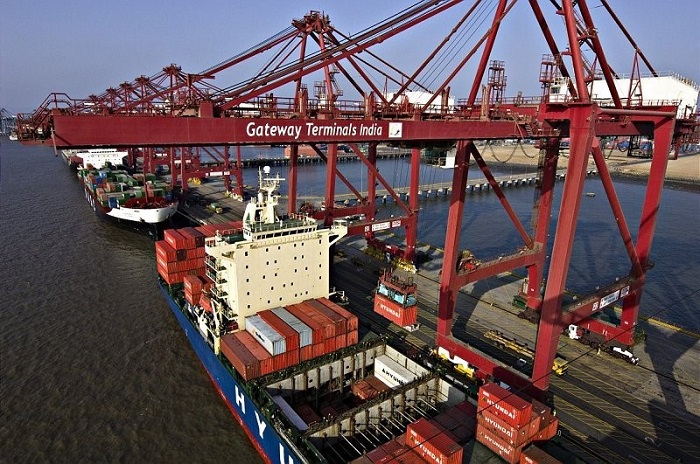
At the heart of India's container trade growth is the Jawaharlal Nehru Port Trust (JNPT) and surrounding terminals in the Nhava Sheva cluster, along with key facilities like Mundra and Chennai. The container throughput across major ports reached an impressive 1,447,954 TEUs (Twenty-Foot Equivalent Units) in September 2026, registering a sharp 20.81% surge compared to the previous year.
Why Throughput Outpaced Cargo Tonnage Growth
Trade analysts often ask why container throughput (measured in TEUs) grew by 20.81% while container cargo tonnage grew by 12.59%. This divergence highlights a crucial shift in cargo mix: a higher volume of lighter, high-value manufactured goods, electronics, auto components, and consumer retail items are moving through Indian ports.
These high-value items take up more container slot space relative to their overall physical weight. For global B2B buyers sourcing electronics, pharmaceuticals, and lifestyle goods from India, this trend indicates that container slot availability remains high in demand, directly influencing vessel utilization factors and carrier allocation strategies.
The Paradox: Rising Throughput Alongside Rising Freight Rates
One of the most pressing challenges for exporters and importers in September 2026 is the simultaneous rise in container throughput and ocean freight rates. Traditionally, rising volumes might prompt rate stabilization through increased vessel deployment, but current market conditions present a complex paradox.
Carriers are managing capacity tightly through blank sailings, slow steaming, and vessel redeployments on more lucrative lanes. Furthermore, lingering schedule reliability issues across global hub ports have created localized equipment imbalances. Consequently, even as Indian major ports process record-breaking volumes, freight rates have trended upward.
| Metric Category | September 2025 (Reference) | September 2026 (Advance Estimate) | YoY Growth (%) | Implication for B2B Trade |
|---|---|---|---|---|
| Total Major Port Cargo | 73.13 MMT | 82.39 MMT | +12.65% | Higher overall terminal utilization |
| Container Cargo Tonnage | ~17.51 MMT | 19.72 MMT | +12.59% | Stronger demand for box space |
| Container Throughput | ~1,198,538 TEU | 1,447,954 TEU | +20.81% | Increased handling at container yards |
| Merchandise Exports | US$36.08 Billion | US$44.40 Billion | +23.06% | Expanded manufacturing output |
| Merchandise Imports | US$69.08 Billion | US$74.61 Billion | +8.01% | Steady raw material inflows |
What This Means for Booking Lead Times and Port Choice
For global B2B buyers and Indian exporters, a 20.81% jump in container throughput translates directly to tighter yard capacity and longer gate-in queues during peak operational hours. Logistics managers can no longer rely on last-minute booking confirmations without facing severe roll risks.
Extended Booking Horizons
Lead times for securing equipment and vessel space have stretched significantly. Exporters who previously booked container slots 7 to 10 days prior to vessel arrival are now advised to secure allocations 3 to 4 weeks in advance, especially for major European and North American trade lanes.
Strategic Port Diversification
While JNPT and Mundra handle the lion's share of containerized exports, congestion at primary hubs has prompted savvy exporters to evaluate secondary ports. Exploring regional gateways such as Visakhapatnam, Tuticorin, or Cochin can often yield faster gate turnaround times, shorter dwell times, and more competitive rail-road intermodal connectivity.
Exporter Checklist: Navigating September 2026 Logistics
To mitigate risks associated with high port volumes and rising freight rates, exporters must implement rigorous operational protocols. Review this practical checklist to ensure your shipments move smoothly through Indian ports.
- [ ] Early Booking & Allocation Security: Secure container slots and vessel space at least 21 to 30 days ahead of planned factory stuffing dates to avoid roll-over penalties.
- [ ] Documentation Readiness: Ensure Electronic Data Interchange (EDI), shipping bills, and Certificates of Origin are error-free before cargo dispatches from the warehouse.
- [ ] Congestion Buffers: Add an extra 48 to 72 hours to inland transit schedules to absorb potential rail and road congestion near major container terminals.
- [ ] Equipment Inspection: Inspect empty containers thoroughly upon release from depots to reject damaged units and prevent costly customs re-exports.
- [ ] Live Rate Verification: Regularly verify ocean freight surcharges, peak season surcharges (PSS), and Terminal Handling Charges (THC) with multiple forwarders.
Step-by-Step Process for Managing Port Congestion
When major ports handle surge volumes, operational friction is inevitable. Follow this structured process to protect your cargo delivery timelines:
- Pre-Alert Forwarders: Share forecasted monthly shipping volumes with your freight forwarders 60 days in advance to reserve equipment pools.
- Utilize Direct Port Delivery (DPD): For eligible importers and exporters, leverage DPD mechanisms to bypass intermediary container freight stations (CFS), reducing dwell time and demurrage costs.
- Monitor Gate-In Windows: Strictly adhere to port-mandated gate-in time windows for specific vessel calls to avoid truck turnaround delays and penalty fees.
- Real-Time Tracking: Implement IoT-enabled container tracking and port community system (PCS) dashboards to monitor vessel berthing status in real time.
Compliance and Documentation Essentials
Regulatory compliance remains paramount when navigating high-volume port environments. Customs authorities at major Indian ports have intensified scrutiny on export declarations to prevent misclassification and streamline revenue collection.
Exporters must ensure that all Goods and Services Tax (GST) refund documentation, Export Promotion Capital Goods (EPCG) scheme licenses, and electronic e-way bills are meticulously reconciled. Discrepancies between physical cargo weights and declared weights on shipping bills can trigger mandatory red-channel inspections, resulting in missed vessel cut-offs and severe demurrage charges.
Frequently Asked Questions
What do the September 2026 cargo volume figures indicate about India's trade health?
India's major ports handled 82.39 MMT of cargo in September 2026, up 12.65% year-on-year. This growth, alongside US$44.40 billion in merchandise exports, reflects robust manufacturing activity, strong global demand for Indian goods, and an expanding industrial export sector.
Why did container throughput grow faster than total cargo tonnage?
Container throughput surged by 20.81% in TEUs, outpacing the 12.59% growth in container cargo tonnage. This indicates a higher volume of lighter, high-value manufactured goods, electronics, and consumer retail items occupying container slot space rather than heavy bulk commodities.
Are the September 2026 port statistics final?
No, the figures released by the Ministry of Ports, Shipping and Waterways are based on advance estimates. They provide an accurate early operational trend but are subject to minor statistical adjustments in subsequent official port authority reports.
How are rising freight rates affecting exporters amidst higher port volumes?
Despite increased port throughput, ocean freight rates have risen due to tight carrier capacity management, blank sailings, and global equipment imbalances. Exporters face higher shipping costs and must budget carefully for peak season surcharges.
What are the recommended booking lead times for exporters in light of these volumes?
Exporters should secure container allocations and vessel space 3 to 4 weeks in advance. Relying on last-minute bookings increases the risk of cargo roll-overs, missed vessel cut-offs, and supply chain delays.
Can exporters bypass congested primary ports like JNPT or Mundra?
Yes. Exporters can utilize secondary ports such as Tuticorin, Visakhapatnam, or Cochin, which offer alternative gateway options, reduced gate queues, and efficient intermodal rail connectivity for regional cargo.
What is Direct Port Delivery (DPD) and how does it help?
DPD allows eligible traders to take delivery of containers directly from the port terminal, bypassing Container Freight Stations (CFS). This significantly reduces dwell times, eliminates intermediate handling fees, and lowers demurrage risks.
Where can global buyers verify live shipping rates and connect with verified Indian exporters?
Global buyers can verify live rates, post specific trade requirements, and connect with pre-screened, verified suppliers, manufacturers, and exporters directly through trusted platforms like Today Adviser.
Conclusion
The September 2026 maritime data highlights a dynamic and expanding trade ecosystem across India's major ports. While a 12.65% increase in total cargo and a 20.81% surge in container throughput demonstrate powerful economic momentum, they also introduce operational hurdles such as tight yard capacity and rising freight rates.
For global B2B buyers and Indian exporters, proactive planning, extended booking horizons, strict compliance adherence, and strategic port selection are essential to maintaining resilient supply chains. To source reliable partners, verify live shipping capacities, and post your specific trade requirements, connect with verified suppliers on Today Adviser today.