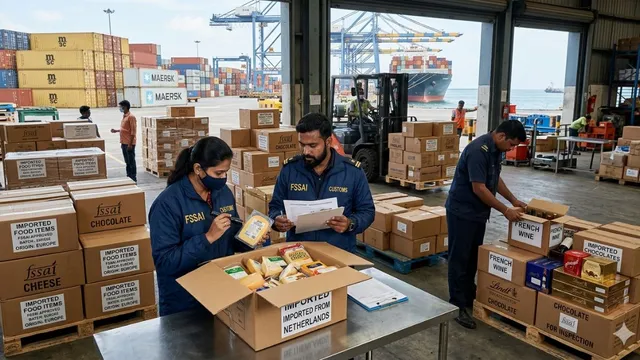
Food imports need FSSAI clearance through FICS as well as Customs. Here is the licence, filing, sampling, labelling and shelf-life route to an NOC.
FSSAI Import Clearance: How Food Importers Clear Consignments Through FICS
Importing food into India involves a second clearance in addition to Customs. Before a food consignment can be released for sale, it must also satisfy the Food Safety and Standards Authority of India (FSSAI), which checks that the food is safe, properly labelled and legally imported. That check is handled through FICS, the Food Import Clearance System, and an importer who is not ready for it can face sampling delays, labelling objections, or rejection of the consignment at the port.
This guide explains the prerequisites for food import, how FICS filing works, what happens during sampling and labelling checks, how the no-objection certificate (NOC) is issued, and what to do if a consignment is rejected. It also covers the shelf-life rule that catches many first-time importers. Procedures and fees change, so verify the live requirements on the FSSAI and FICS portals and with your CHA before shipping.
The two prerequisites: FSSAI licence and IEC
Before any food consignment is filed, the importer must hold two basic registrations. First, an Importer Exporter Code (IEC) from DGFT, which is required for all importers. Second, an FSSAI licence for import, obtained through the FSSAI licensing portal, for the importer's premises and food categories. The licence must cover the type of food being imported; a licence for one category does not automatically cover another.
The FSSAI licence number must be available for the FICS filing and for customs documentation. If the licence has expired, is suspended, or does not cover the product, the filing will stall. Renewals and category additions should be completed before the shipment is booked, not while it is on the water. The importer should also confirm that its CHA or clearing agent is familiar with FICS, because food clearance follows a different workflow from general cargo.
FICS online filing: how it works
FICS is the online system through which food import applications are filed and processed. After the goods arrive, or in some cases in advance as the system allows, the importer or CHA files an application in FICS with the bill of entry details, the product description, the manufacturer and country of origin, the quantity, the FSSAI licence number and the supporting documents, including the invoice, packing list, bill of lading or airway bill, and any required certificates such as a health certificate or certificate of analysis from the exporting country.
FICS generates an application and the consignment is referred for scrutiny. Depending on the product, risk profile and documents, FSSAI may issue an NOC on the basis of documents alone, or it may order sampling and laboratory analysis. The importer should track the FICS status daily, respond promptly to queries, and keep the customs and FICS timelines aligned: customs clearance for food is normally linked to the FSSAI NOC, so a delay in FICS is a delay in release.
Sampling, labelling and the NOC
Where sampling is ordered, an authorised officer draws samples from the consignment, which are sent to an FSSAI-notified laboratory for analysis against the applicable food safety standards. The laboratory tests for parameters relevant to the product, which may include microbiological safety, contaminants, additives, pesticide residues or composition, depending on the food category. If the sample conforms, FSSAI issues an NOC, and the consignment can proceed to customs release.
Labelling is checked alongside safety. Imported food must comply with Indian labelling rules, including the name and address of the importer, the FSSAI logo and licence number, the product name, net quantity, ingredient list, nutritional information where required, vegetarian or non-vegetarian mark, country of origin, and manufacturing and expiry or best-before dates. Many consignments are delayed not because the food is unsafe, but because the label is incomplete or the importer details are missing. Where rectifiable labelling is permitted, the importer may be allowed to affix compliant labels at a customs-bonded facility under supervision; where it is not, the consignment may be rejected.
Rejection and re-export handling
If a sample fails, or if labelling or documentation cannot be rectified, FSSAI may refuse the NOC. The importer then has limited options: re-export the consignment to the country of origin or to another country that will accept it, or, where permitted and safe, destroy it under supervision. The costs of storage, re-export or destruction fall on the importer, and repeated failures can affect the importer's risk profile and future scrutiny.
Do not attempt to divert a rejected consignment to the domestic market, split it, or re-present it without addressing the reason for refusal. That risks enforcement action and loss of licence. Instead, obtain the laboratory report and the refusal order, discuss the findings with the supplier and, if the failure is disputed, take advice on the appeal or re-testing procedure available under FSSAI rules. Prevention is better: agree specifications with the supplier, obtain a pre-shipment certificate of analysis, and check labelling before dispatch.
The shelf-life rule for imports
One rule that surprises many importers is the shelf-life requirement. Imported food must, at the time of import, retain a prescribed minimum proportion of its total shelf life — commonly, at least 60% of the shelf life must remain, or, for products with a short shelf life, a minimum period must remain. The exact rule depends on the product and the current FSSAI direction, so it must be checked live for each consignment.
The practical consequence is that slow-moving stock, long transit times and port delays can turn a compliant product into a non-compliant one. Calculate the remaining shelf life at the expected date of import, not at the date of manufacture or dispatch, and build in a buffer for shipping and clearance time. If a product will arrive close to the threshold, reconsider the shipment size or the shipping route before it leaves the supplier.
Practical checklist for food importers
- Hold a valid FSSAI import licence covering the food category, plus an IEC.
- Confirm the product's Indian food standard, labelling requirements and shelf-life rule before ordering.
- Agree specifications and a certificate of analysis with the supplier.
- Check labels on a pre-shipment sample, including importer details and FSSAI logo and licence number.
- File in FICS promptly, with complete documents, and track the application daily.
- Budget for sampling, laboratory time and possible labelling rectification at the port.
Frequently asked questions
Can I import food without an FSSAI licence?
No. A food importer must hold an FSSAI licence for import covering the relevant category, in addition to an IEC. Filing without it will stall clearance.
What is FICS?
FICS, the Food Import Clearance System, is FSSAI's online portal for filing food import applications, scrutiny, sampling referral and issue of the no-objection certificate.
How long does FSSAI clearance take?
Document-based clearance can be quick, but sampling and laboratory analysis take longer and depend on the product and laboratory. Allow for sampling time in the supply plan and track FICS daily.
What happens if my food sample fails testing?
FSSAI may refuse the NOC. The consignment will normally have to be re-exported or destroyed under supervision, at the importer's cost, unless an appeal or re-testing route applies.
Can labelling be fixed after arrival?
In some cases, rectifiable labelling may be corrected at a bonded facility under supervision. In other cases, non-compliant labelling leads to rejection. Check labelling before dispatch to avoid the issue.
What is the shelf-life rule for imported food?
At import, a prescribed minimum proportion of the product's shelf life must remain, commonly around 60%, depending on the product and the current FSSAI rule. Check the live rule for each consignment and allow a buffer for transit and clearance.
Final word
FSSAI clearance rewards preparation. A valid licence, a complete FICS filing, a pre-checked label, a supplier certificate of analysis and a shelf-life calculation done before dispatch will prevent most delays. Treat FSSAI clearance as part of the order, not as an afterthought at the port, and verify the live rules on the FSSAI and FICS portals before each shipment.