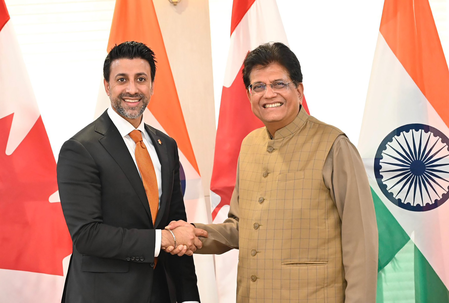
India and Canada are targeting conclusion of the proposed Comprehensive Economic Partnership Agreement (CEPA) by end-2026, after the 5th round concluded in Ottawa on 9 October. With the next round due in New Delhi in early November, here is what exporters should start preparing now – HS mapping, regulatory groundwork and rules-of-origin readiness.
Negotiators from New Delhi and Ottawa have officially concluded the fifth round of negotiations for the India-Canada Comprehensive Economic Partnership Agreement (CEPA), establishing an ambitious deadline to finalize the bilateral pact by end-2026. This target signals renewed commercial momentum, providing enterprise buyers, manufacturers, and trade intermediaries with a definitive timeline to realign global sourcing networks and secure preferential bilateral market access.
Following protracted discussions disrupted by geopolitical recalibrations, both delegations have consolidated negotiating texts across key tracks including tariff liberalization, non-tariff technical barriers, digital trade, and customs facilitation. By addressing foundational rules of origin and regulatory divergence now, the bilateral framework aims to dismantle high Most-Favoured-Nation (MFN) duties across key industrial, agricultural, and technology product lines.
For international procurement officers and export managers, the confirmed end-2026 horizon necessitates proactive operational planning. Supply chain diversification away from single-origin dependencies has made the corridor between the world's fifth-largest economy and one of the G7's most resource-endowed nations a top commercial priority. Understanding the mechanisms of this forthcoming trade pact allows cross-border enterprises to capture early-mover advantages before preferential tariff schedules come into full legal force.
The Strategic Road to 2026: Decoding the 5th Round of Negotiations
The formal conclusion of the fifth round marks a strategic shift from exploratory talks to institutionalized legal drafting. Previous negotiations oscillated between an interim early-harvest framework—the Early Progress Trade Agreement (EPTA)—and a comprehensive agreement. The current mandate firmly unifies these tracks into a single, high-ambition CEPA designed to unlock bilateral goods and services trade projected to exceed $50 billion over the next decade.
Trade delegations reached preliminary consensus on structural modalities that will govern the remainder of the negotiating cycles leading into late 2026. Key advancements include:
- Consolidated Legal Texts: Drafting progressed across core chapters, notably Trade in Goods, Rules of Origin (ROO), Sanitary and Phytosanitary Measures (SPS), Technical Barriers to Trade (TBT), and Customs Administration.
- Institutional Dispute Settlement: Agreement on a state-to-state dispute settlement architecture that mitigates regulatory uncertainty for long-term supply contracts.
- Services and Professional Mobility: Establishing bilateral baselines for cross-border professional services, IT-enabled services (ITeS), and reciprocal temporary movement of skilled corporate personnel.
- Critical Mineral and Energy Security: Framing bilateral trade instruments to facilitate long-term procurement of Canadian clean-tech inputs, coking coal, and transition minerals vital for India's domestic manufacturing expansion.
Setting a firm end-2026 delivery window establishes an operational runway for the global private sector. Sourcing directors, customs brokers, and corporate treasurers must now analyze how draft commitments will intersect with existing landed cost models, production lead times, and compliance regimes.
Strategic Priority Sectors for Global B2B Exporters and Importers
The India-Canada CEPA is asymmetric by design, reflecting the complementary nature of both industrial ecosystems. India presents deep manufacturing capacity, advanced pharmaceutical synthesis, high-yield textiles, and scalable technological infrastructure. Canada counters with agricultural surpluses, advanced engineering capital goods, critical transition metals, and rich reserves of industrial energy inputs.
1. Agri-Commodities, Pulses, and Fertilizers
Canada remains one of India's principal offshore sources of dry peas and lentils (masur), alongside strategic shipments of potassium chloride (potash). Indian agricultural import policy has historically relied on episodic duty exemptions and quantitative quotas to balance domestic consumer pricing against domestic farm-gate protections.
Under the 2026 framework, negotiators are working toward multi-year quota predictability and standardized fumigation standards, reducing the recurring demurrage and port-clearance bottlenecks that have historically plagued pulses landed at Nhava Sheva (JNPT) and Mundra.
2. Critical Minerals, Energy, and Raw Materials
India's massive infrastructure modernization and automotive electrification initiatives depend heavily on diversified foreign input supplies. Canada possesses rich reserves of nickel, cobalt, lithium, potash, coking coal, and uranium.
The 5th round focused on carving out preferential supply agreements and investment protection mechanisms to incentivize Indian public and private conglomerates to enter joint-venture extraction and off-take contracts across Canadian mining jurisdictions, notably in Saskatchewan, Ontario, and Quebec.
3. Pharmaceuticals, Active Pharmaceutical Ingredients (APIs), and Biologics
India supplies a major portion of Canada's generic prescription drugs. However, non-tariff regulatory barriers—including batch-testing protocols and physical site inspections administered by Health Canada—often extend product commercialization timelines by 12 to 18 months.
The CEPA negotiations are advancing an institutional Good Manufacturing Practice (GMP) mutual recognition track. Streamlining audit clearances and regulatory approvals between India's Central Drugs Standard Control Organisation (CDSCO) and Health Canada will yield substantial savings for generic drug exporters and provincial health procurement boards.
4. Advanced Engineering, Capital Goods, and Industrial Components
Indian precision engineering, automotive component manufacturers, and industrial casting producers face Canadian MFN tariffs ranging between 3% and 8% on specialized components. Reciprocally, Canadian heavy machinery, automation hardware, and pulp-milling technologies enter India facing basic customs duties (BCD) frequently exceeding 7.5% to 15%, plus applicable Social Welfare Surcharges (SWS).
A reciprocal phase-out schedule over a 3- to 7-year implementation window will immediately compress landed procurement costs for industrial equipment integrators in both territories.
| Industrial Sector | Major Traded Commodities / Outputs | Current MFN Tariff Environment | Anticipated CEPA Outcome (Post-2026) | Primary Compliance & Market Challenge |
|---|---|---|---|---|
| Agri-bulk | Yellow peas, lentils, chickpeas, canola derivatives | 0% to 50% (subject to volatile policy shifts) | Bound Tariff-Rate Quotas (TRQs) with 0% preferential duty | Methyl bromide fumigation compliance, weed-seed phytosanitary protocols |
| Critical Minerals | Potash, nickel, lithium, metallurgical coking coal | 2.5% to 7.5% BCD in India + Agriculture Infrastructure cess | Complete duty elimination (0%) on unrefined mineral ores | Environmental, Social, and Governance (ESG) audit trails, extraction provenance |
| Pharmaceuticals | Generic finished formulations, complex biosimilars, APIs | 0% to 8% MFN duties; high regulatory overhead | 0% tariffs paired with expedited Good Manufacturing Practice (GMP) recognition | Health Canada site licensing, strict batch analytical testing, bilingual labelling |
| Engineering Goods | Castings, forged components, auto parts, industrial valves | 6% to 8.5% in Canada; 7.5% to 15% in India | Phased tariff reductions over 3 to 5 years down to 0% | Substantial transformation verification, strict rules of origin documentation |
| Textiles & Apparel | MMF garments, knitted fabrics, home furnishings | 8% to 18% in Canada under standard MFN rules | Preferential duty-free entry competing with Vietnam/Bangladesh | Strict yarn-forward origin rules; chemical discharge and labor compliance |
| Clean Technology | Water purification arrays, hydrogen fuel cells, carbon capture | 7.5% to 12.5% BCD in India | Immediate duty-free access for critical environmental tech | Technology transfer covenants, local maintenance warranties, BIS compliance |
Rules of Origin (ROO) and Value-Addition Dynamics
The true commercial efficacy of any trade pact hinges on its Rules of Origin architecture. Without precisely calibrated ROO criteria, exporters cannot claim preferential duty rates, rendering official tariff cuts economically inaccessible.
During the 5th round, trade delegates aligned on standard international origin qualification methodologies, avoiding overly rigid rules that could strangle global value chains while preventing illegal third-party transshipment.
Wholly Obtained vs. Substantial Transformation
Commodities originating purely within the domestic territory of either India or Canada—such as mined ores, unmanufactured agricultural yields, and marine harvests—qualify automatically under Wholly Obtained (WO) provisions. However, for industrial, chemical, and manufactured goods using intermediate inputs from third-party nations (such as East Asian electronics or Middle Eastern base chemicals), the agreement deploys dual qualification tests:
- Change in Tariff Classification (CTC): The finished product must fall into a different HS Chapter (CC - 2-digit), Heading (CTH - 4-digit), or Sub-Heading (CTSH - 6-digit) compared to all non-originating raw materials or components used during production.
- Regional Value Content (RVC) / Qualifying Value Content (QVC): Industrial products generally require a minimum domestic value-addition threshold, provisionally projected between 35% and 40%. The standard formula under negotiation utilizes the build-down and build-up calculation methods.
$$\text{RVC (Build-Down Method)} = \frac{\text{FOB Value} - \text{Value of Non-Originating Materials (VNM)}}{\text{FOB Value}} \times 100$$
$$\text{RVC (Build-Up Method)} = \frac{\text{Originating Materials Cost (VOM)} + \text{Direct Labor} + \text{Direct Overhead}}{\text{FOB Value}} \times 100$$
De Minimis Allowances and Cumulation
Negotiators are finalizing a de minimis tolerance threshold provisionally set at 8% to 10%. This provision permits manufactured products to qualify for preferential CEPA tariffs even if a minute fraction of non-originating inputs fails the technical CTC test, provided the aggregate value of those inputs does not exceed the agreed threshold.
Furthermore, discussions surrounding bilateral cumulation will permit manufacturers in India to treat inputs sourced from Canada as originating domestic materials when computing final RVC percentages, and vice versa. This integration creates massive incentives for joint industrial manufacturing ventures.
Regulatory Compliance, SPS, and TBT Harmonisation
Tariff reductions produce measurable commercial value only when non-tariff barriers are eliminated in parallel. Technical Barriers to Trade (TBT) and Sanitary/Phytosanitary (SPS) divergences routinely inflict unexpected demurrage charges and logistical friction on cross-border transactions.
Resolving Agricultural SPS Frictions
The Indian import regime for pulses has consistently required methyl bromide fumigation at the loading port, a chemical treatment strictly curtailed within Canada due to environmental and atmospheric restrictions. Historical trade flows relied on periodic, short-term official derogations allowing fumigation upon arrival at Indian ports, subject to penal fees.
The 5th round advanced a durable, scientific resolution evaluating alternative fumigation technologies—such as phosphine and controlled atmospheric cold treatments—to be codified into the text. Eliminating ad-hoc administrative waivers guarantees supply chain certainty for Canadian pulse exporters and Indian bulk processors.
Technical Standards: Harmonizing BIS and Canadian Standards Council Rules
Exporters of industrial fasteners, steel products, chemicals, and electronic equipment frequently navigate duplicative quality certification regimes:
- The Indian Market: Requires extensive compliance with Quality Control Orders (QCOs) issued by line ministries and verified by the Bureau of Indian Standards (BIS). Foreign manufacturers must endure on-site factory audits to secure the mandatory Standard Mark.
- The Canadian Market: Demands conformity with standards established by the Standards Council of Canada (SCC), CSA Group designations, or Underwriters Laboratories (UL/cUL) certifications.
CEPA’s TBT chapter aims to institute Mutual Recognition Agreements (MRAs) for accredited testing laboratories. Once enacted, an accredited testing facility in Toronto or Montreal could inspect and certify machinery against Indian standards, while Indian testing authorities could issue recognized conformity certifications for goods destined for Canadian commercial projects.
Supply Chain, Maritime Logistics, and Freight Cost Considerations
The geography of India-Canada commerce imposes complex logistics and multimodal transit demands. Because the countries do not share contiguous borders or direct continental rail networks, ocean freight dynamics dictate inventory carrying costs and buffer stock volumes.
[Western Indian Hubs: Nhava Sheva / Mundra]
       │
       ├─ Option A (Via Suez / Mediterranean) ──> [Atlantic Canada: Montreal / Halifax] (24 - 30 Days)
       │
       └─ Option B (Via Cape of Good Hope) ─────> [Atlantic Canada: Montreal / Halifax] (38 - 45 Days)

[Eastern Indian Hubs: Chennai / Vizag]
       │
       └─ Option C (Trans-Pacific Transshipment) ─> [Pacific Canada: Vancouver / Prince Rupert] (28 - 35 Days)
Maritime Freight Corridors
Logistics managers select corridors based on origin and destination geographies:
- West Coast Canada (Vancouver, Prince Rupert): Primarily handles bulk grain, potash, metallurgical coal, and timber originating in Western Canada, bound for India's west and east coast ports via Trans-Pacific shipping routes with transshipment hubs in Singapore, Port Klang, or Busan. Transit times typically average 28 to 35 days under stable conditions.
- East Coast Canada (Montreal, Halifax): Handles engineering components, high-value consumer goods, and pharmaceutical shipments traversing Atlantic shipping lines via European transshipment hubs. Direct transit through the Suez Canal historically required 22 to 28 days, though maritime rerouting around the Cape of Good Hope can extend voyage times to 38–45 days, substantially elevating bunker adjustment factors (BAF) and container detention risks.
Invoicing Currency and Hedging Volatility
Most India-Canada bilateral trade currently clears in United States Dollars (USD). This exposes both the Canadian importer (dealing in CAD) and the Indian exporter (dealing in INR) to dual currency conversion costs and unpredictable volatility spreads.
Large industrial buyers and suppliers are increasingly structuring long-term off-take agreements utilizing direct CAD-INR settlement clauses or adopting systematic forward exchange contracts. A bilateral trade architecture under CEPA will accelerate bilateral banking integrations, enabling multi-currency letters of credit that reduce reliance on intermediary correspondent banking rails.
Practical B2B Implementation Checklist for Exporters & Importers
To capitalize on the finalized 2026 trade architecture, commercial operations must execute strategic optimizations well ahead of ratification. Use the following structured checklist across procurement, compliance, and legal departments:
1. Tariff Classification and HS Code Audit
- [ ] Audit Current Product Catalogs: Re-verify all commercial goods against the 6-digit World Customs Organization (WCO) Harmonized System classification.
- [ ] Identify Divergent Classifications: Ensure the Canadian supplier's HS code matches the classification used by the Indian clearing agent to avoid border reclassification delays.
- [ ] Review Target Duty Deltas: Calculate current applied MFN rates versus anticipated preferential CEPA rates across primary production inputs.
2. Origin Rules and Value-Chain Mapping
- [ ] Deconstruct the Bill of Materials (BOM): Isolate all non-originating third-country raw materials, components, and intermediate sub-assemblies.
- [ ] Calculate Regional Value Content (RVC): Run both build-down and build-up formulas under multiple raw material pricing models to verify compliance margins above 40%.
- [ ] Map Component Provenance: Confirm tier-1 and tier-2 suppliers can furnish verifiable material declaration certificates showing domestic transformation.
3. Regulatory and Phytosanitary Pre-Clearance
- [ ] Review Quality Control Orders (QCOs): Determine if products exported to India require mandatory Bureau of Indian Standards (BIS) certifications.
- [ ] Review Health Canada Approvals: For pharma and nutraceutical suppliers, audit current establishment licenses and determine mutual recognition status.
- [ ] Standardize Treatment Certifications: For agri-bulk handlers, transition documentation to align with approved non-methyl bromide fumigation or alternative quarantine systems.
4. Supply Chain and Commercial Contracts
- [ ] Update Incoterms: Audit sales contracts to define clear lines of customs liability (e.g., transitioning from standard CIF to DAP or DDP structures).
- [ ] Incorporate Trade Agreement Adaptation Clauses: Insert legal language allowing contractual pricing renegotiation once preferential CEPA rates become legally active.
- [ ] Identify Verified Secondary Suppliers: Mitigate geopolitical and single-point supply vulnerabilities by cross-verifying prospective trade partners on vetted enterprise marketplaces.
Common Mistakes to Avoid in India-Canada Cross-Border Trade
Even experienced global trade directors make expensive operational miscalculations when dealing with sophisticated cross-border procurement frameworks.
1. Misclassifying HS Codes to Exploit Tariff Deltas
Attempting to reclassify high-tariff finished equipment under broader low-duty industrial machinery codes is a major red flag for border customs enforcement. Both the Canada Border Services Agency (CBSA) and India's Central Board of Indirect Taxes and Customs (CBIC) maintain algorithmic screening models. Misdeclarations trigger post-clearance audits, immediate revocation of preferential treatment, and substantial punitive fines.
2. Treating Non-Tariff Barriers as Secondary Priorities
Zero-tariff trade yields zero commercial value if shipments sit impounded in bonded warehouses due to non-compliant documentation. For example, India’s rigorous labelling and packaging standards—such as displaying maximum retail price (MRP), manufacturing dates, and local importer addresses—are strictly enforced at point of entry. Likewise, products bound for Canada missing dual English-French language packaging or required consumer hazard markings will be denied entry regardless of trade treaty status.
3. Relying on Informal Origin Declarations
Assuming that an invoice declaration from a tier-1 supplier constitutes legal proof of origin is a common operational error. Preferential claims under CEPA will require an official, digitally verifiable Certificate of Origin (COO) issued by an authorized government or industry body (such as India's DGFT or the Canadian Chamber of Commerce). Incomplete audit trails will result in retroactive customs duty recovery assessments.
4. Neglecting Incoterms Allocation Risks
Using outmoded Incoterms like standard FOB or CIF without clarifying liability for intermediate port inspections, demurrage, and customs brokerage regularly leads to contentious commercial disputes. In times of geopolitical or maritime rerouting volatility, parties must clearly establish which entity shoulders terminal handling charges (THC), container detention, and non-routine quarantine inspection assessments.
Strategic Sourcing Realignment: Preparing for 2026 and Beyond
The formalization of an end-2026 target for the India-Canada CEPA signals clear commercial direction: cross-border commerce will increasingly reward businesses that build structured, transparent, and legally verified supply chains. Diversifying reliance away from single-source manufacturing hubs toward a resilient India-Canada corridor provides enterprises with competitive cost baselines and stable raw material pipelines.
To capture market share ahead of ratification, procurement directors must systematically benchmark alternative suppliers, stress-test landed margin models against incoming tariff reductions, and integrate agile customs compliance mechanisms into their core enterprise resourcing workflows.
Frequently Asked Questions
What is the primary objective of the India-Canada CEPA targeted for end-2026?
The Comprehensive Economic Partnership Agreement (CEPA) aims to substantially reduce or eliminate customs tariffs, dismantle non-tariff trade barriers, streamline cross-border service flows, and establish robust investment protection frameworks between India and Canada to foster long-term supply chain resilience.
How will the India-Canada CEPA affect existing tariffs on industrial goods?
Under the finalized agreement, basic customs duties on a broad range of engineering goods, automotive components, and capital machinery are scheduled to phase down to zero percent over an agreed transition period, substantially lowering overall landed import costs for both trading partners.
What are the provisional Rules of Origin (ROO) requirements under negotiation?
Negotiators are establishing rules requiring either a designated Change in Tariff Classification (CTC) at the Heading or Sub-Heading level, or a minimum Regional Value Content (RVC) threshold, provisionally estimated between 35% and 40%, accompanied by verifiable documentation.
How does the agreement address ongoing agricultural trade frictions, such as pulse imports?
The CEPA framework targets non-tariff agricultural frictions by negotiating standardized, science-based phytosanitary and alternative fumigation methodologies, ending volatile, short-term administrative derogation policies and securing stable market access for pulse growers and import processors.
Will the trade pact cover regulatory recognition for pharmaceuticals and medical supplies?
Yes, delegations are actively working toward institutional Good Manufacturing Practice (GMP) mutual recognition agreements, simplifying bilateral auditing regimes between Health Canada and the CDSCO to accelerate pharmaceutical registrations and reduce repetitive batch-testing expenses.
When should enterprise buyers and exporters begin adjusting their supply chain strategy?
Businesses must begin auditing HS code classifications, mapping bill-of-materials origin provenance, and identifying vetted supply partners immediately. Early operational alignment ensures companies can exploit preferential tariff phase-outs the moment the bilateral agreement is ratified and implemented.
How does CEPA differ from the earlier proposed Early Progress Trade Agreement (EPTA)?
While the EPTA was conceptualized as a limited early-harvest interim deal targeting select low-hanging commodities, the CEPA is a comprehensive, full-scope treaty covering wide-ranging goods schedules, services, digital commerce, government procurement, dispute settlements, and critical mineral supply chains.
Advance your international trade operations ahead of the 2026 CEPA rollout. Connect with verified global manufacturers, certified exporters, and high-volume industrial suppliers across key industrial sectors on Today Adviser to future-proof your procurement network.