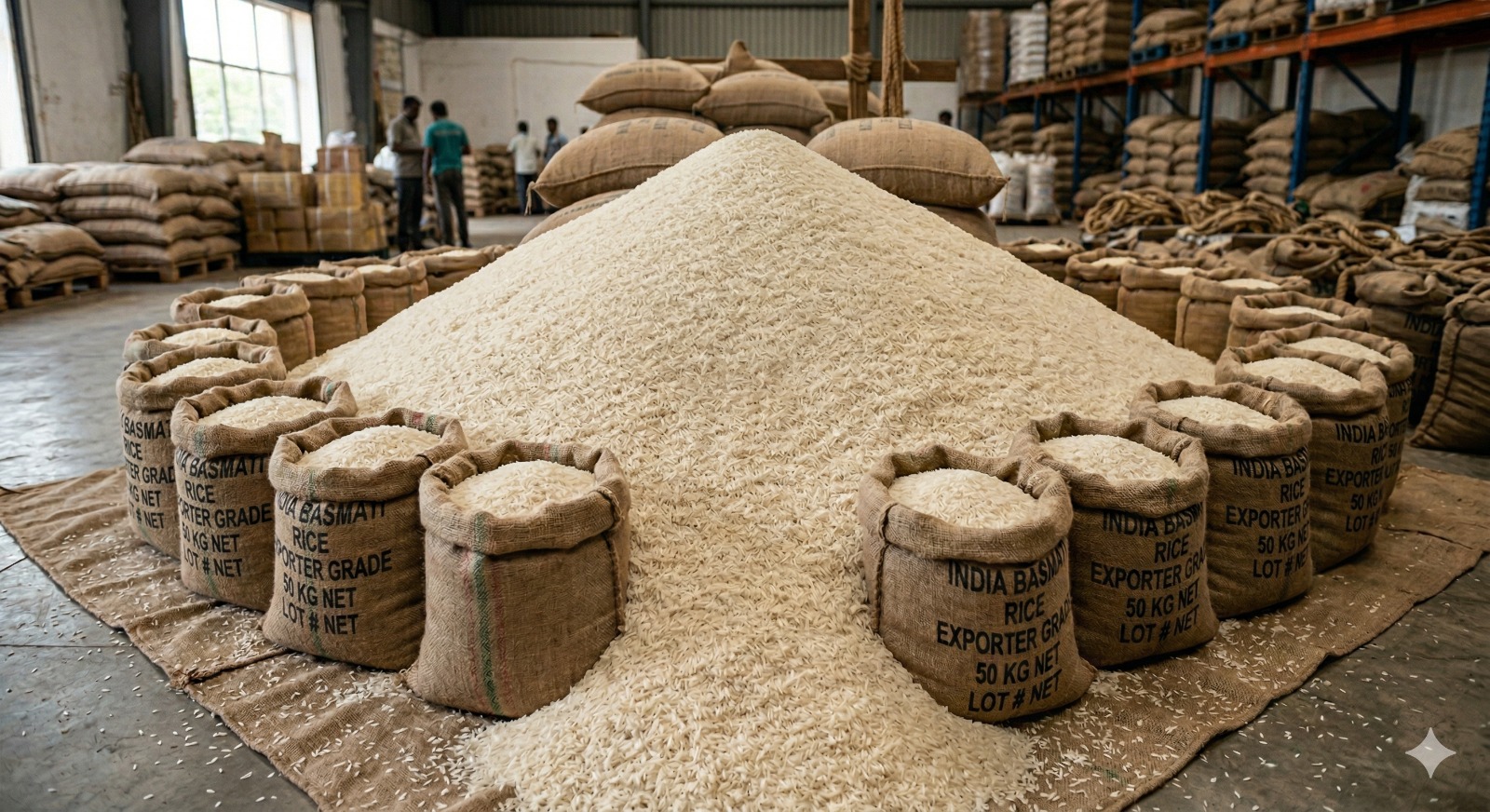
India's organic exporters woke up to a new trade map on 20 October 2026. The India–New Zealand Free Trade Agreement — signed on 27 April 2026 — has entered into force, and with it comes a double win for certified organic businesses: zero duty on 100% of India's exports from day one, and mutual recognition of organic products between the two countries.
If you export organic spices, tea, basmati, oilseeds, cotton, fresh produce or processed organic foods, this agreement removes two of the biggest frictions in the New Zealand market in a single stroke — the tariff and the certification barrier. Here is what the deal changes, and what you should do this week to be ready.
Zero Duty From Day One: The Headline
Under the FTA, 100% of India's exports to New Zealand attract zero customs duty from the day the agreement enters into force — 20 October 2026. There is no phase-down schedule to track for Indian goods: if your product qualifies as originating in India under the agreement's rules of origin, it enters New Zealand duty-free immediately.
For organic exporters, this matters because organic products typically command premium pricing, and even modest tariffs compound on already-thin margins once freight, certification and compliance costs are layered in. Duty-free access improves your landed-cost competitiveness against suppliers from countries without a comparable agreement.
The practical consequence: revisit your export pricing for New Zealand buyers now. Quotes issued before 20 October 2026 may have baked in duty assumptions that no longer apply.
Mutual Recognition of Organic Products: The Second Win
The agreement includes mutual recognition of organic products. In plain terms, each side recognises the other's organic certification system — so an Indian consignment certified organic under India's National Programme for Organic Production (NPOP) is accepted as organic in New Zealand without needing separate New Zealand organic re-certification for market access purposes.
This is significant. Historically, exporters to strict markets have faced the cost and delay of satisfying the importing country's own organic conformity requirements on top of their domestic certification. Mutual recognition collapses that duplication: your NPOP scope certificate, transaction certificate and labelling — provided they are current and complete — form the basis of your organic claim in New Zealand.
A word of caution: mutual recognition covers the organic status of the product. It does not exempt you from New Zealand's food safety, labelling, biosecurity or import-permit requirements. Check every applicable New Zealand regulation for your product line before you ship.
Rules of Origin: Proving Your Goods Are Indian
Zero duty is not automatic — it is conditional on origin. Your consignment must qualify as "originating" in India under the FTA's rules of origin, and you must be able to evidence that.
The agreement provides for digital and self-certification of origin for eligible status holders. This is a meaningful simplification: instead of applying to a designated authority for every consignment's certificate of origin, qualifying exporters can self-certify origin digitally. If you hold a recognised trusted-trader status that the FTA guidance lists as eligible, confirm that your self-certification facility is active before you ship under the FTA — and check the latest DGFT guidance on exactly which statuses qualify.
For everyone else, the conventional route — a certificate of origin issued through the usual channels — still works. Either way, build origin documentation into your pre-shipment checklist from day one; a duty-free claim without valid origin proof will be denied at the New Zealand border.
Faster Customs: 48 Hours General, 24 Hours Express and Perishable
The agreement targets faster customs clearance: 48 hours for general cargo and 24 hours for express consignments and perishables. For organic exporters of fresh produce — fruit, vegetables, herbs — the 24-hour perishable target is directly relevant to shelf life and cold-chain economics.
Treat these as facilitation targets rather than guarantees: actual clearance still depends on complete documentation, biosecurity inspection outcomes and port handling. The exporter's job is to make the paperwork so clean that nothing slows the consignment down — accurate HS classification, valid origin proof, complete organic documentation and compliant labelling.
Your This-Week Action Checklist
- Verify NPOP validity. Confirm your NPOP certification and scope certificate are current and cover every product and facility you intend to ship to New Zealand. An expired or narrow scope certificate is the single most common reason organic consignments get held up.
- Check product labelling. New Zealand labelling rules still apply. Ensure labels carry the mandatory declarations (product name, net quantity, ingredients where applicable, country of origin, importer details, date marking where required) and that any organic claim matches your certification exactly.
- Activate origin certification. If you are an eligible status holder, set up digital self-certification of origin; otherwise, line up your certificate-of-origin issuing route so the first FTA consignment is not delayed.
- Re-price New Zealand quotes. Remove duty assumptions from open quotations and inform buyers that duty-free access applies from 20 October 2026 — a useful commercial lever in negotiations.
- Brief your CHA and freight forwarder. Your customs house agent needs to file under the FTA preference from day one, with the correct origin documentation attached.
- Confirm buyer-side import requirements. Ask your New Zealand buyer (or their customs broker) to confirm the exact documentary set their border team expects for the first duty-free organic consignment — biosecurity permits for plant products, for example, are separate from the FTA.
What the Deal Does Not Cover: India's Sensitive Exclusions
India has kept its sensitive sectors outside the agreement's tariff concessions: dairy, animal meat (except sheep), sugar, edible oils, onions, chickpeas, peas, corn and almonds are excluded. If your product falls in one of these categories, the FTA's zero-duty promise does not apply to it — the standard MFN treatment continues.
Organic exporters should read this list carefully. Organic sugar, organic edible oils and organic dairy ingredients are growth categories for India, but they do not get FTA preference into New Zealand. Price accordingly, and do not promise buyers duty-free access on excluded lines.
The New Zealand Side: TRQs on Apples, Kiwi and Manuka Honey
The agreement also creates tariff-rate quotas (TRQs) for New Zealand on apples, kiwifruit and Manuka honey — products where New Zealand is globally competitive. A TRQ allows a set quantity to enter at a preferential rate, with out-of-quota volumes facing higher duties.
For Indian readers, this is primarily relevant in the other direction: it shapes what New Zealand will be selling into India. If you are an Indian importer, distributor or re-exporter dealing in these products, study the TRQ quantities and administration before committing to volumes.
The Bigger Picture: Why This FTA Matters
Bilateral merchandise trade between India and New Zealand stood at about $1.3 billion in FY25, with goods and services together at roughly $2.4 billion. Both sides are targeting NZD 7 billion in two-way trade by 2030. The FTA — with its day-one duty elimination, organic mutual recognition, faster customs and digital origin certification — is the instrument meant to get them there.
For organic exporters, the strategic read is simple: New Zealand is a premium, quality-sensitive market where Indian organics have historically been under-represented relative to their potential. Two of the biggest structural barriers — duty and duplicate certification — have just fallen together. Early movers who get their documentation right will have a first-mover advantage.
Frequently Asked Questions
Does the FTA really give zero duty from day one?
Yes — for Indian exports to New Zealand, 100% of tariff lines go to zero duty from the date of entry into force, 20 October 2026, provided the goods meet the agreement's rules of origin. India's sensitive-sector exclusions (dairy, most meat, sugar, edible oils, onions, chickpeas, peas, corn, almonds) do not receive this preference.
What does mutual recognition of organic products mean in practice?
It means New Zealand accepts products certified under India's NPOP as organic without requiring separate New Zealand organic certification for market access. You still need valid, in-scope NPOP documentation and must meet all other New Zealand import requirements (food safety, labelling, biosecurity).
Do I still need a certificate of origin?
Yes. Duty-free treatment is conditional on proving Indian origin. The FTA allows digital and self-certification of origin for eligible status holders; others use the standard certification route. Without valid origin proof, the preference will be denied.
How fast will my consignment clear New Zealand customs?
The agreement targets 48-hour clearance for general cargo and 24 hours for express and perishable consignments. These are facilitation targets — complete, accurate documentation is what makes them achievable in practice.
My product is organic sugar. Do I get zero duty?
No. Sugar is on India's exclusion list, so organic sugar does not receive FTA tariff preference into New Zealand. The same applies to the other excluded categories.
What are the TRQs on apples, kiwi and Manuka honey?
They are tariff-rate quotas applying to New Zealand's exports — set quantities of these products can enter at preferential rates. They mainly concern importers of New Zealand produce rather than Indian exporters.
Should I change anything about NPOP certification itself?
No — NPOP continues exactly as before. What changes is that your existing, valid NPOP certification is now recognised in New Zealand under the FTA. Just make sure certificates are current and scopes cover your products.