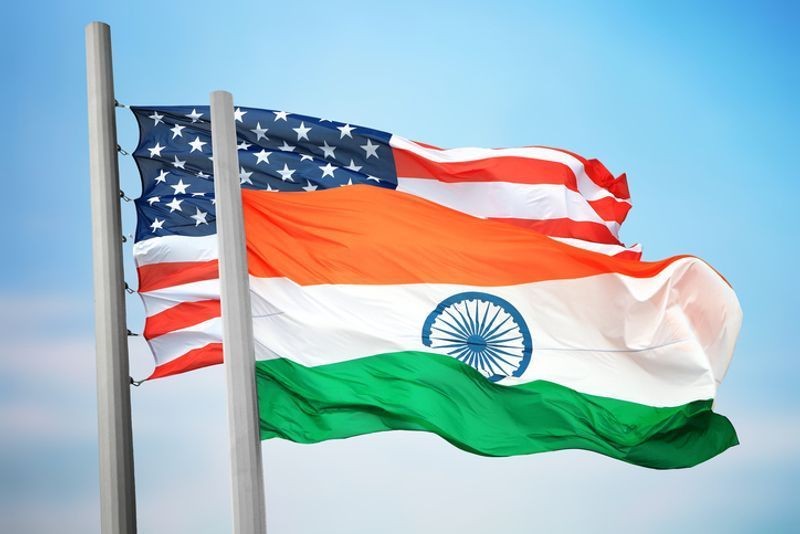
Phase 1 of the India–US trade deal is finalised at the negotiating level and in legal drafting, with an 18% reciprocal tariff framework. Here is what it means for Indian exporters — timelines, competitiveness and a practical action checklist.
The India–US trade deal has crossed its most important milestone yet. On 15 October 2026, Commerce and Industry Minister Piyush Goyal confirmed that Phase 1 of the agreement has been finalised at the negotiating level and is now in legal drafting. For Indian exporters who have spent the year navigating tariff turbulence in their largest merchandise export market, this is the clearest signal so far that a stable framework is within reach. The headline number to understand: an 18% reciprocal tariff framework.
Where Things Stand: The 15 October Update
According to the Commerce Ministry's briefing on 15 October 2026, negotiators on both sides have concluded their work on Phase 1, and lawyers are now converting the agreed text into final legal language. This matters because "finalised at negotiating level" means the political and commercial bargains are done — what remains is drafting precision, not renegotiation of the substance.
Legal drafting is typically the last step before signature and ratification. While no signing date has been officially announced, the progression from framework announcement (February 2026) to concluded negotiations (October 2026) suggests both governments are treating this as a priority deliverable. Exporters should treat the 18% framework as the working assumption for planning, while keeping contingency plans until the text is signed.
The 18% Reciprocal Tariff Framework, Explained
The framework centres on a reciprocal tariff of 18% applied to Indian goods entering the United States. In plain terms, "reciprocal" means the tariff is set as a negotiated, mutual rate rather than the punitive, country-specific duties that dominated headlines earlier in the year.
What does 18% mean in practice? It is the rate Indian exporters should model into their US pricing for the product lines covered by Phase 1. It replaces uncertainty — the far costlier problem — with a known number. An exporter quoting a US buyer for early-2027 delivery can now build 18% into landed-cost calculations instead of guessing between scenarios.
Two important caveats. First, the fine print matters: Phase 1 may carve out specific product categories with different treatment, and the final legal text will define exactly which tariff lines the 18% applies to. Second, "reciprocal" implies the framework also addresses India's tariffs on US goods — relevant if you import American inputs or machinery, since your input costs could fall too.
How We Got Here: The February 2026 Context
The road to this point ran through February 2026, when the two sides announced the framework for the deal. A pivotal development followed: the additional 25% duty that had been imposed on Indian goods over Russian oil purchases was removed, effective 7 February 2026.
That removal was significant. The extra 25% had stacked on top of existing duties, pushing effective tariff rates on some Indian exports to levels that threatened order books. Its withdrawal restored a workable baseline and created the political space for negotiators to converge on the 18% framework. Exporters who lived through that episode learned a lasting lesson: tariff risk is now a standing line item in export planning, not a one-off shock.
Competitiveness: India vs Bangladesh, Vietnam and Indonesia
The 18% figure only matters relative to what competitors pay. India's main rivals for US orders — Bangladesh, Vietnam and Indonesia — each face their own tariff equations, and the Phase 1 framework's value to Indian exporters depends heavily on this comparison.
For labour-intensive sectors such as textiles, garments, leather goods and home textiles, even a few percentage points of tariff differential can decide orders. If the framework leaves India at parity or better versus these competitors, Indian exporters gain a genuine opening — particularly in categories where India already has scale and compliance advantages, such as certified textiles and engineered goods.
The strategic point for exporters: do not just track India's rate — track the relative rate. Build a simple comparison sheet for your top product lines showing the applicable US tariff for India versus Bangladesh, Vietnam and Indonesia, and update it when the final text is published. That sheet belongs in every pricing review until the deal is signed.
What to Watch Next
The immediate milestone is the meeting between External Affairs Minister S. Jaishankar and US Secretary of State Marco Rubio in Mumbai on 20 October 2026. While trade negotiators have done the technical work, this political-level engagement will signal how firmly both governments stand behind the timeline.
Beyond that, watch for three things: the completion of legal drafting, the announcement of a signing schedule, and the publication of product-level tariff schedules. The schedules — which products get what rate — are where the real commercial impact lives. Averages conceal as much as they reveal; your HS code is what counts.
Exporter Action Checklist
- Model 18% into US quotes now. Use the framework rate as your base case for any US pricing for 2027 delivery, with a clearly labelled contingency clause for the period until signature.
- Map your HS codes. Identify the tariff lines covering your top five US export products so you can check them the day the final schedules are published.
- Benchmark against competitors. Maintain the India-vs-Bangladesh/Vietnam/Indonesia tariff comparison for your product lines and share it with your sales team.
- Review input costs. If the reciprocal framework lowers Indian duties on US-origin inputs or machinery you use, factor that into costings.
- Talk to your US buyers. Proactive communication — "here is how the framework affects our pricing" — builds confidence and can help you lock in orders ahead of competitors.
- Watch the 20 October meeting. Political signals from Mumbai will indicate whether the timeline holds.
- Do not treat it as done until signed. Keep tariff-risk clauses in contracts until the legal text is final and in force.
Frequently Asked Questions
Is the deal signed yet?
No. As of 18 October 2026, Phase 1 has been finalised at the negotiating level and is in legal drafting. Signature and entry into force come after drafting is complete.
Does the 18% apply to all Indian exports to the US?
The framework envisages an 18% reciprocal tariff, but product-level treatment will be defined in the final legal text. Check the published tariff schedules for your HS codes once available.
What happened to the extra 25% Russia-oil duty?
It was removed effective 7 February 2026, following the February 2026 framework announcement. It no longer stacks on top of the framework rate.
How does this affect my existing US orders?
For orders already shipped or in transit, the tariff in force at the time of US customs clearance applies. For future orders, model the 18% framework rate with appropriate contract clauses until the deal is signed.
Should I change my market strategy based on this?
Not radically — the US remains India's largest merchandise export destination, and the framework reduces uncertainty rather than transforming it overnight. The exporters who gain most will be those who price confidently and communicate early with buyers.
Where will the final details be published?
Expect announcements from India's Commerce Ministry and the US Trade Representative's office. The product-level tariff schedules are the document to watch.
Conclusion
Phase 1 moving into legal drafting is the strongest signal yet that India–US trade is heading toward a stable, rules-based footing. The 18% framework gives exporters something they have lacked all year: a number to plan around. Use it — model it, benchmark it against competitors, communicate it to buyers — but keep your contingency clauses until the ink is dry. In trade, as in exporting, certainty is a competitive advantage, and the exporters who plan around the framework now will be first to benefit when it takes effect.