What is red sugar? Unrefined cane sugar and red palm sugar explained: benefits, uses, cautions and buying notes.
Red Sugar Benefits & Uses – What Is Red Sugar?
"Red sugar" is a name that confuses many buyers, because it does not mean the same thing in every market. In some places it refers to an unrefined cane sugar, in others to a red palm sugar, and in some shops it is simply a coloured or flavoured sugar. Before you buy, sell or use it, you need to know which product the seller actually means. This guide explains what red sugar usually refers to, its benefits and uses, the cautions to keep in mind, and how to buy it safely.
What Is Red Sugar? First, Check the Definition
There is no single, worldwide definition of red sugar, so the first step is to verify the product in front of you. The most common meanings are:
1. Unrefined cane sugar. In parts of South Asia and elsewhere, a reddish-brown, unrefined cane sugar is sold under names that translate roughly as red sugar. It is made by boiling sugar-cane juice and allowing it to solidify, without the refining that produces white sugar. It is close in character to jaggery, panela and muscovado-style sugars, though the exact colour, moisture and flavour vary by region and maker.
2. Red palm sugar. In Southeast Asia, "red sugar" is sometimes used for a palm sugar, known in Indonesia and Malaysia as gula merah, made from the sap of palm trees. It is usually sold in blocks or discs, has a deep caramel colour and flavour, and is used in desserts, sauces and drinks.
3. Coloured or flavoured sugar. In some retail markets, red sugar is simply white sugar coloured red, often for decoration, baking or drinks. That product is not the same as an unrefined cane or palm sugar, and it should not be sold as one.
Because of this ambiguity, do not assume a definition. Ask the supplier for the source (sugar cane or palm sap), the production method, the ingredients list, and a photo of the product and its label. A genuine unrefined sugar will usually list one ingredient — cane juice or palm sap — while a coloured sugar will list sugar plus colouring.
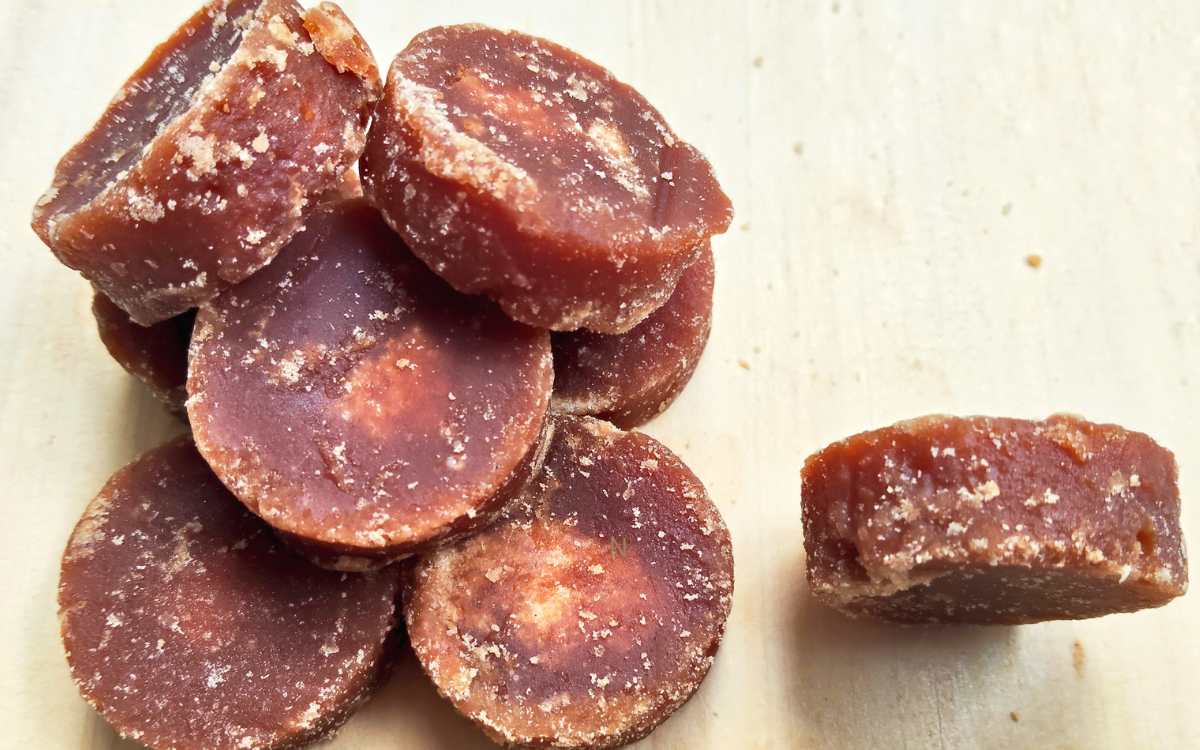
The cover image for this guide shows jaggery, a traditional unrefined cane sugar, which is the closest familiar comparison for the cane-sugar meaning of red sugar. The rest of this guide focuses mainly on unrefined cane and palm sugars, and it flags where the two differ.
How Red Sugar Is Made
Unrefined cane sugar is made by crushing sugar cane, boiling the juice to remove water, and allowing the concentrated syrup to cool and solidify. No refining step removes the molasses, so the sugar keeps a brown-red colour, a moist texture and a caramel-like flavour. It may be sold as blocks, granules, powder or a soft paste, depending on the region.
Red palm sugar is made in a similar way from palm sap, collected from the flower of a palm tree, then boiled down and poured into moulds to set. The result is a hard block that is grated or melted before use.
Benefits of Red Sugar
The benefits of red sugar are best described in practical, general terms, and they depend on which product you are talking about.
Compared with refined white sugar, unrefined cane and palm sugars keep more of the molasses and, with it, small amounts of minerals such as iron, calcium and potassium. The amounts are small, and they do not make red sugar a health food. It is still a sugar, and it should be used in moderation, as part of a balanced diet.
The main practical advantages are flavour and versatility. Red sugar has a deeper, more complex taste than white sugar — caramel, molasses and a slight earthiness — which suits traditional sweets, desserts, teas, sauces and marinades. It also adds colour to a dish, giving a warm brown tone that white sugar does not.
No medical promises should be made for red sugar. It is not a treatment for any condition, and it does not replace medical advice. Anyone with diabetes or another condition affected by sugar should follow advice from a qualified health professional.
Uses of Red Sugar
Red sugar is used in much the same way as other unrefined sugars, with a few practical notes:
- In cooking and baking. Use it in place of white or brown sugar in traditional sweets, cakes, biscuits, sauces and marinades. It dissolves well in hot liquids, and it can be grated or melted from a block. Start with the same weight as the sugar you are replacing, then adjust to taste, because its flavour is stronger.
- In drinks. Dissolve it in tea, coffee, herbal drinks and traditional beverages, where its caramel flavour is an advantage. In Southeast Asia, palm sugar is a standard ingredient in sweet drinks and desserts.
- In traditional sweets. In South Asia, jaggery-like sugars are used in laddoos, halwa, payasam and other sweets. In Southeast Asia, palm sugar is used in similar desserts, glutinous rice dishes and sauces.
Cautions
Red sugar is still sugar, and the cautions are the same as for any sugar. Use it in moderation, keep an eye on total sugar intake, and do not present it as a healthy alternative that can be eaten without limit. People with diabetes should treat it as a sugar, not as a safe substitute, and should follow medical advice.
Check for quality problems before buying in bulk. Poorly made or stored red sugar can contain impurities, excess moisture, mould or off-flavours. Ask the supplier how the sugar was made and stored, check the colour and smell, and look for a clean, dry product without grit or foreign matter.
Also check the label. If the product is described as red sugar but the ingredients list includes colouring, flavouring or refined sugar, it is not an unrefined cane or palm sugar. Buyers who need a specific product for a specific recipe should confirm the source and ingredients in writing before ordering.
Red Sugar vs Jaggery, Brown Sugar and White Sugar
| Product | Source | Colour and flavour | Processing |
|---|---|---|---|
| Red sugar (cane) | Sugar cane juice | Reddish-brown, caramel | Unrefined, boiled and set |
| Red palm sugar | Palm sap | Deep brown, caramel | Unrefined, boiled and set |
| Jaggery | Sugar cane or palm sap | Golden to dark brown | Unrefined, boiled and set |
| Brown sugar | Refined sugar + molasses | Light to dark brown | Refined, molasses added back |
| White sugar | Sugar cane or beet | White, neutral | Fully refined |
As the table shows, red sugar and jaggery overlap a great deal, and in some markets the names are used for very similar products. Brown sugar is different: it is a refined product with molasses added back, not an unrefined sugar. White sugar is the most refined and has the most neutral flavour.
Buying Notes
Red sugar prices vary by source, region, form and quality. Treat any price seen online as indicative only, and verify the live price, availability and export rules before committing.
Before ordering, agree the basics in writing: source (cane or palm), form (block, granules or powder), colour, moisture, packaging, quantity, delivery terms and documents. Common documents include a commercial invoice, packing list, certificate of origin and, where required, a food safety or phytosanitary certificate. Check the destination's food import rules, including labelling, allergen and additive rules, and any limits on contaminants.
Quality checks should cover colour, smell, moisture, cleanliness and uniformity. Ask for a sample from the actual lot, taste and cook with it if possible, and inspect on arrival. For food products, ask about the supplier's food safety practices, storage and traceability.
Packaging is usually in food-grade bags, cartons or retail packs. Red sugar needs to be kept dry, so check that the packaging protects against moisture during shipping and storage.
How to Find Red Sugar Buyers and Suppliers
Red sugar is a niche product, so finding the right buyer matters. Be specific about what you have or need: cane or palm, form, quantity, packaging, destination and delivery date.
Browse importers in the TodayAdviser buyer directory at TodayAdviser Importers Directory, and shortlist buyers who handle sugar, jaggery, traditional foods or bakery ingredients. If you are selling, post your offer so buyers can find you: Post a Requirement on TodayAdviser.
Verify any new partner before paying or shipping. Ask for business details, references, photos of the actual product and its label, and a trial order where possible. Use a written contract, agree payment terms in advance, and be cautious of prices far below the market or pressure to pay quickly.
Frequently Asked Questions
What is red sugar?
It depends on the market. It most often means an unrefined cane sugar or a red palm sugar, but in some shops it is simply coloured sugar. Always check the source, ingredients and label before buying.
Is red sugar healthier than white sugar?
It is less refined and keeps small amounts of minerals from molasses, but it is still sugar and should be used in moderation. It is not a health food and should not be presented as a treatment for any condition.
Is red sugar the same as jaggery?
They are very similar and overlap in many markets, especially when both are made from cane juice. The names vary by region, so check the source and form rather than relying on the name alone.
How should I store red sugar?
Keep it in a cool, dry place in a sealed container, away from moisture. Blocks can be grated or broken as needed, and any sugar that has gone mouldy or smells off should be discarded.
What should importers check first?
Source, form, ingredients, moisture, cleanliness, packaging, documents and the live price. Ask for a sample from the actual lot and start with a trial shipment where possible.
Conclusion
Red sugar is a useful, flavourful ingredient — as long as you know which red sugar you are buying. Check whether it is an unrefined cane sugar, a red palm sugar or simply a coloured sugar, confirm the source and ingredients in writing, and use it in moderation as part of a balanced diet. For buyers and sellers, the same rules apply as for any niche food trade: be specific, check the lot, and build relationships with partners you can trust.