India's Silk Heritage and Global Standing
India is the world's second-largest producer of silk and its largest consumer — a rare combination that makes the Indian silk market both a sourcing destination and a demand powerhouse. Sericulture (silk farming) supports millions of rural livelihoods, and Indian silk — from Mysore's lustrous mulberry to Assam's golden Muga — carries geographical-indication (GI) prestige that buyers worldwide recognise. For textile importers, fashion brands and home-furnishing buyers, understanding which silk comes from where is the first step to sourcing authentic, quality material.
This guide maps the top silk producing states in India, explains the four major silk types, and gives practical sourcing tips — from purity checks to GI tags — so you buy genuine silk with confidence.
The Four Silks of India
India is unique in producing all four major silk varieties:
- Mulberry silk: the most produced and most traded silk globally, from silkworms fed on mulberry leaves. Lustrous, smooth and strong — the foundation of sarees, apparel and premium textiles.
- Tasar (Tussar) silk: a wild silk from forest-dwelling silkworms, with a rich, textured, slightly coarse hand-feel in natural gold and copper tones. Favoured for ethnic wear and furnishings.
- Eri silk: the “peace” or “ahimsa” silk, spun (not reeled) from open-ended cocoons without killing the moth. Soft, warm and matte — popular for shawls and winter textiles.
- Muga silk: Assam's exclusive golden silk, naturally glossy and exceptionally durable — famously outlasting the wearer. A luxury fibre with GI protection.
Karnataka: India's Silk Capital
Karnataka is the largest silk producing state in India, accounting for the majority of the country's mulberry silk output according to publicly reported figures. The Ramanagara–Mysuru–Bengaluru belt is the heart of sericulture: mulberry cultivation, cocoon markets (Ramanagara hosts one of Asia's largest cocoon markets), reeling, twisting and weaving are all concentrated here. Mysore Silk — with its distinctive gold zari and GI tag — is the state's flagship product, produced by the historic Karnataka Silk Industries Corporation. For buyers, Karnataka offers the deepest supplier base, the most mature value chain and the widest mulberry silk availability in India.
Andhra Pradesh: The Second Powerhouse
Andhra Pradesh ranks among the top silk producing states, with strong mulberry sericulture in districts like Anantapur, Chittoor and Hindupur. The state has invested heavily in modern reeling units and bivoltine (high-quality) silk production, narrowing the quality gap with Karnataka. Dharmavaram and Pochampally-region weaving traditions add handloom depth. Buyers seeking mulberry silk yarn and fabric at competitive prices should include Andhra Pradesh in their sourcing map.
West Bengal: Tradition and Tasar
West Bengal's silk story spans Murshidabad's historic mulberry weaving and significant tasar production in its western districts. Baluchari and Murshidabad silks carry storied weaving legacies, while the state's tasar output feeds the ethnic-wear and furnishing segments. Kolkata remains an important trading and export hub for eastern Indian silk. Buyers of heritage weaves and tasar should look here.
Tamil Nadu: The Kanchipuram Legacy
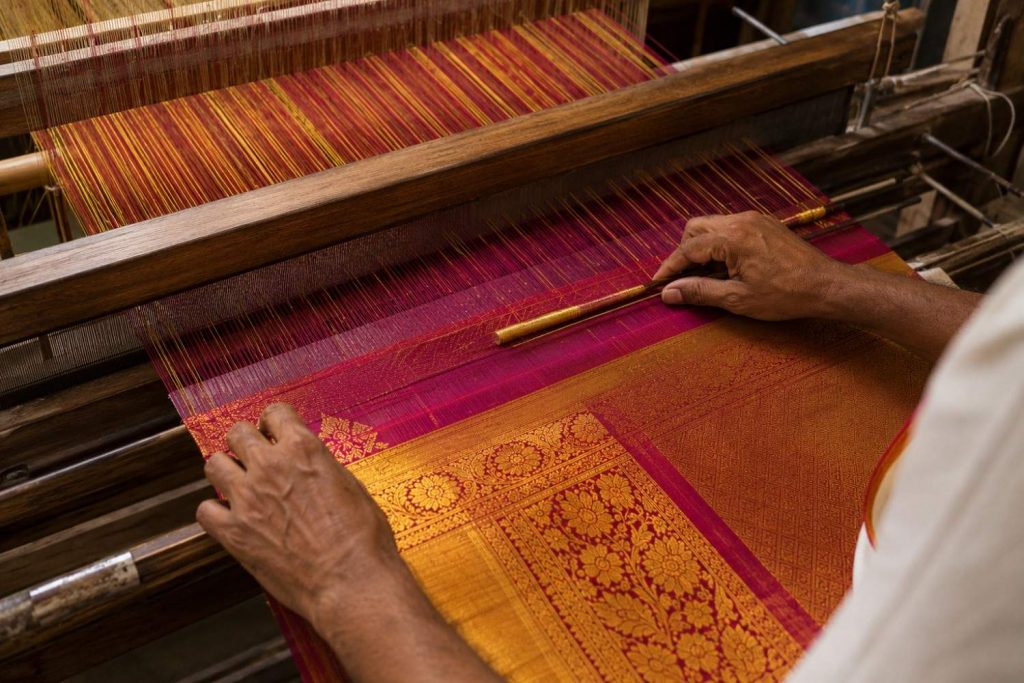
Tamil Nadu is a major mulberry silk producer and home to the legendary Kanchipuram (Kanjivaram) silk — GI-tagged, temple-border sarees woven with heavy gold zari that are prized across India and the diaspora. Sericulture clusters around Salem, Dharmapuri and Coimbatore feed both the state's weaving centres and yarn markets. For buyers, Tamil Nadu means premium handloom silk and strong weaving craftsmanship.
Assam: Home of Muga and Eri
Assam is irreplaceable in the silk map as the exclusive home of Muga silk — the golden fibre produced only in the Brahmaputra valley, with GI protection. The state is also the largest producer of Eri silk, the ahimsa fibre gaining traction in sustainable fashion. Sualkuchi, the “Manchester of Assam,” is the historic weaving centre. Buyers seeking Muga or Eri have essentially one origin: Assam and its northeastern neighbours. Verify authenticity rigorously — Muga's premium invites imitation.
Other Notable Silk States
Jharkhand and Chhattisgarh are major tasar producers, with forest-based vanya silk traditions and growing organised value chains. Odisha contributes tasar and mulberry silk alongside its ikat weaving heritage. Maharashtra and Madhya Pradesh have expanding sericulture programmes. Jammu & Kashmir produces small quantities of high-quality bivoltine mulberry silk. Map your silk type to its native state rather than defaulting to the biggest name.
The Central Silk Board: Institutional Backbone
The Central Silk Board, headquartered in Bengaluru under the Ministry of Textiles, is the apex body for sericulture development in India. It runs research institutes, supports seed and extension services, and implements schemes for quality improvement. For buyers, the Board's published statistics are the authoritative source on state-wise production — treat any figures you encounter as indicative and verify current data from official releases before quoting them commercially.
Buyer Sourcing Tips: Purity, Certification and GI Tags
- Demand Silk Mark: the Silk Mark Organisation of India's label certifies 100% natural silk. For finished silk products, Silk Mark is the simplest purity assurance — ask suppliers for it.
- Understand GI tags: Mysore Silk, Kanchipuram Silk, Muga Silk (Assam) and other GI tags protect origin and method. GI-tagged products command premiums — verify the tag's authenticity, not just the claim.
- Test before you commit: for yarn and fabric, get lab testing for silk content, denier consistency and colourfastness. Burn tests and microscopic examination catch common adulteration (polyester or viscose blends sold as pure silk).
- Visit reeling and weaving clusters: quality varies enormously between units. A cluster visit — Ramanagara, Sualkuchi, Kanchipuram — teaches more than a hundred emails.
- Clarify the full chain: confirm whether your supplier controls reeling, dyeing and weaving or outsources stages; each handoff is a quality risk.
- Contract precisely: specify silk type, grade, denier, weave, GSM, dyeing standards and acceptable tolerances in writing, with inspection rights.
Frequently Asked Questions
Which state produces the most silk in India?
Karnataka is India's largest silk producing state, led by its mulberry sericulture belt around Mysuru, Ramanagara and Bengaluru.
What are the four types of silk produced in India?
Mulberry, Tasar (Tussar), Eri and Muga. India is the only country producing all four commercially.
Where does Muga silk come from?
Exclusively from Assam (and adjoining northeastern regions). It carries GI protection — beware of imitations from other origins.
What is Silk Mark certification?
India's national certification for 100% natural silk products, administered by the Silk Mark Organisation of India. Look for the label when buying finished silk goods.
Which silk is best for luxury apparel?
Mulberry silk (especially bivoltine grades) for smooth luxury fabrics; Muga for exclusive golden textiles; Eri for soft sustainable knits and shawls. Match the fibre to the end use.
How can buyers avoid fake silk?
Buy from established clusters, demand Silk Mark on finished goods, lab-test yarn and fabric for fibre content, and verify GI-tag claims before paying premiums.
Conclusion
India's silk map rewards buyers who know it: Karnataka for mulberry depth, Andhra Pradesh for value, West Bengal for tasar and heritage weaves, Tamil Nadu for Kanchipuram craftsmanship, and Assam for the irreplaceable Muga and Eri. Source by silk type and state speciality, verify purity through Silk Mark and lab testing, and respect what GI tags signify. Do that, and Indian silk becomes a defensible premium in your product line rather than a sourcing gamble.
Looking for verified silk suppliers, weavers and exporters in India? TodayAdviser connects global buyers with vetted Indian textile suppliers — post your buy requirement today and get quotes from manufacturers who understand international quality expectations.