Executing your first cross-border transaction requires rigorous risk mitigation before capital changes hands. This comprehensive supplier verification factory audit checklist helps global B2B buyers vet manufacturing partners thoroughly, safeguarding your supply chain against fraud, delays, and substandard production.
Sourcing from a new global supplier is one of the highest-risk phases in international trade. While pre-shipment inspections catch defects in finished goods, they come too late if your manufacturing partner lacks the fundamental capacity, financial stability, or legal standing to execute your order. Comprehensive supplier verification and a targeted factory audit before placing your first purchase order are non-negotiable steps for modern procurement teams.
In this actionable guide, we will explore the exact document checks, audit scopes, quality control assessments, and payment safeguards required to protect your business. Whether you are sourcing electronics from Asia, textiles from South Asia, or machinery from Europe, applying this framework ensures you partner with verified, capable suppliers.
The Critical Difference: Supplier Verification vs. Factory Audit vs. Pre-Shipment Inspection
Many first-time importers confuse the three distinct pillars of quality assurance and risk management. Understanding the scope of each prevents critical gaps in your onboarding process.
Defining the Three Pillars of Sourcing Security
- Supplier Verification: A desktop and legal investigation into the company's existence, registration, financial health, and export history. It answers the question: "Does this company legally exist, and are they who they claim to be?"
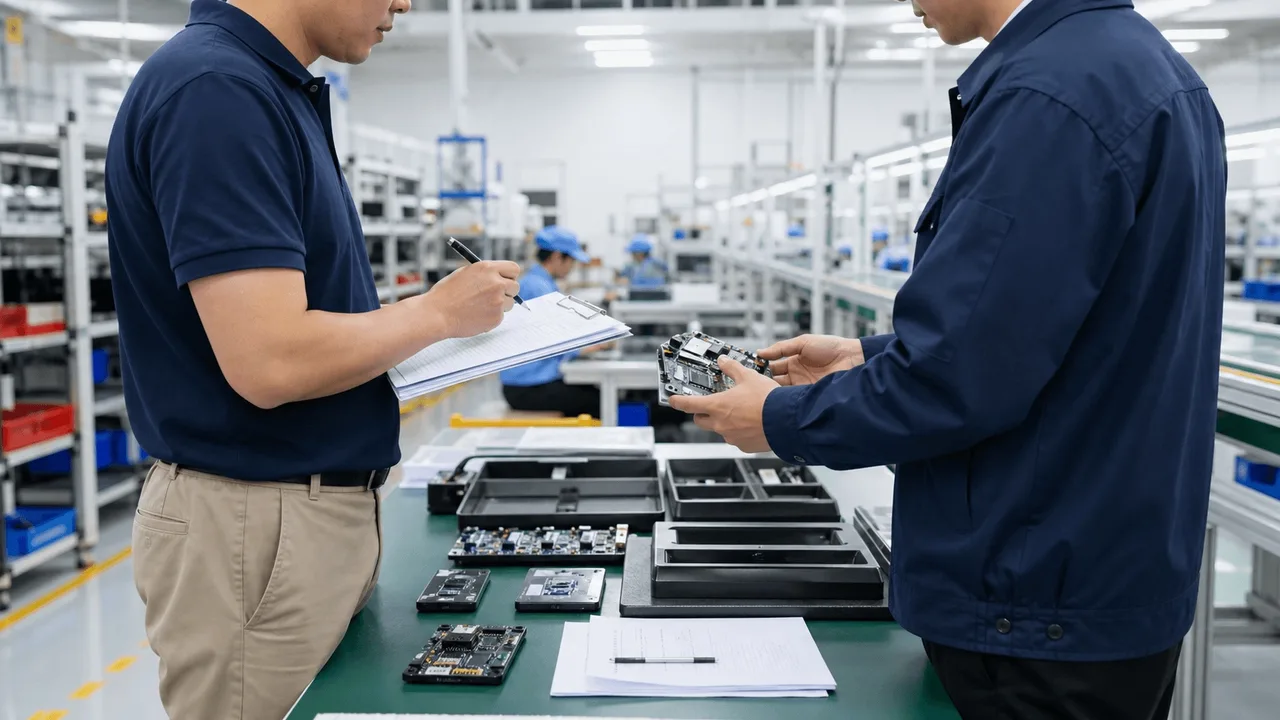
- Factory Audit: An on-site or virtual inspection of the manufacturing facility, production lines, machinery, workforce, and quality control systems. It answers the question: "Can this facility actually build my product to specification and at scale?"
- Pre-Shipment Inspection (PSI): A physical quality check conducted when 80% to 100% of the production batch is completed and packed. It answers the question: "Are the finished goods in these boxes compliant with my purchase order?"
Focusing exclusively on PSI while skipping verification and auditing leaves you vulnerable to dealing with trading companies masquerading as manufacturers, or factories operating with obsolete machinery and zero quality control protocols.
Phase 1: Comprehensive Document Checks and Legal Verification
Before evaluating factory floors or machinery, you must verify the legal credentials of your potential trading partner. Fraudsters and unreliable brokers often fail at this foundational stage.
Essential Document Checklist
- Business License / Corporate Registration: Verify the registration number against government databases. Check the registered scope of business to ensure manufacturing or exporting falls within their legal remit.
- Tax Registration Documents (e.g., GST / VAT): Validate tax identification numbers to confirm active tax compliance and operational status.
- Import-Export Code (IEC) / Export License: For markets like India and China, ensure the entity holds a valid export license and is authorized to deal in foreign exchange.
- Factory License / Municipal Permits: Confirms that the physical facility is authorized for industrial production and meets local zoning laws.
- Industry-Specific Certifications: Request valid copies of ISO 9001 (Quality Management), ISO 14001 (Environmental), CE, FDA, or OEKO-TEX depending on your product category.
Verifying Export History and Financial Health
Do not rely solely on certificates provided as PDF attachments. Cross-reference the company name with government trade databases, customs export data, and international business registries. Ask for three references from current international clients and verify their shipping records.
Phase 2: Virtual vs. On-Site Factory Audits
Deciding between a virtual audit and an on-site physical audit depends on your order volume, product complexity, and budget constraints. Both methods have distinct advantages and limitations.
Comparing Audit Methodologies
| Audit Type | Best Used For | Advantages | Limitations | Approximate Cost |
|---|---|---|---|---|
| Virtual Audit | Initial screening, low-to-medium risk items, budget constraints | Fast turnaround, live video walk-throughs, zero travel costs | Cannot physically test machinery, blind spots in camera view, difficult to verify raw material stock | USD 200 – USD 500 |
| On-Site Audit | High-value orders, complex manufacturing, custom tooling | Full physical access, direct inspection of labor conditions, hands-on material sampling | Higher cost, requires scheduling lead time, travel restrictions apply in certain regions | USD 800 – USD 2,500 |
Conducting an Effective Virtual Audit
If an on-site audit is outside your immediate budget, a live-streamed virtual audit conducted by a local quality control agent or engineer is a viable alternative. Instruct the factory guide to walk the entire production line in real-time, show raw material storage bays, open electrical panels, and interview machine operators directly.
Phase 3: Assessing Production Capacity and QC Processes
Once legal standing and facility access are confirmed, your supplier verification factory audit checklist must dive deep into operational capabilities.
Key Operational Metrics to Evaluate
- Machinery Maintenance and Age: Are the CNC machines, injection molders, or assembly lines modern and well-maintained, or obsolete relics prone to constant breakdown?
- Workforce Stability and Training: What is the ratio of permanent staff to seasonal contractors? High turnover directly correlates with inconsistent product quality.
- Line Balancing and Bottlenecks: Observe the flow of materials from receiving bays to assembly and packaging. Identify bottlenecks that could delay your delivery schedule.
- Incoming Quality Control (IQC): Inspect how raw materials are stored and tested before entering production. Are defective materials clearly tagged and quarantined?
- In-Process Quality Control (IPQC): Check if workers perform routine checks on the line, or if quality is only assessed at the very end of production.
- Outbound Quality Control (OQC): Review final testing stations, calibration tools, and packaging durability standards.
Phase 4: The Sample-Order Protocol
Never place a bulk commercial order without executing a rigorous sample-order protocol. Golden samples serve as the benchmark for all future pre-shipment inspections.
Step-by-Step Sample Protocol
- Detailed Technical Drawing: Provide clear CAD files, specification sheets, and material grade requirements.
- Sign-Off on Golden Samples: Instruct the factory to produce three identical samples. You keep one, the factory keeps one, and a third is held by your inspection agency.
- Destructive Testing: Subject the sample to stress, thermal, or chemical testing depending on your product requirements to ensure durability.
- Packaging Sample Check: Ensure the sample arrives with the proposed master carton and inner packaging to verify transit durability.
Phase 5: Payment-Term Safeguards for First Orders
Financial exposure during a first order can cripple a business. Establish payment terms that balance risk between buyer and supplier.
Recommended Payment Structures
- Standard Structure: 30% deposit upon order confirmation and signed contract; 70% balance paid only after a successful third-party pre-shipment inspection.
- Letter of Credit (LC): For high-value orders, an irrevocable LC tied to strict shipping and inspection documents offers robust security for both parties.
- Escrow Services: Utilize trusted B2B escrow platforms that hold funds securely until verified milestones are met.
- Avoid 100% Pre-Payment: Never agree to 100% advance payment with an unverified supplier, regardless of how attractive their pricing appears.
Phase 6: Factory Audit Report Template
Structure your audit findings using a standardized scoring system. Below is a foundational template structure you can adapt for your internal procurement audits.
Factory Audit Summary Template
- Section 1: General Facility Profile
- Company Name, Address, Contact Person, Audit Date, Auditor Name.
- Section 2: Legal & Compliance Verification
- Business License Status (Pass/Fail), Tax Compliance (Pass/Fail), Export History Score (1-5).
- Section 3: Production Capability Assessment
- Machinery Condition (1-5), Factory Utilization Rate (%), Workforce Capacity (1-5).
- Section 4: Quality Management Systems (QMS)
- IQC/IPQC/OQC Protocols (1-5), Calibration Records (Pass/Fail), Corrective Action Tracking (1-5).
- Section 5: Working Conditions & EHS
- Fire Safety (Pass/Fail), PPE Compliance (Pass/Fail), Child/Forced Labor Zero-Tolerance Check (Pass/Fail).
- Section 6: Final Auditor Recommendation
- Approved / Approved with Conditions / Rejected.
Common Mistakes to Avoid
- Skipping the Audit to Save Money: Spending USD 500 on an audit can save you tens of thousands of dollars in defective shipments and lost revenue.
- Trusting Alibaba Gold Supplier Badges Blindly: Platform badges indicate paid membership tiers, not verified manufacturing capability.
- Failing to Define Acceptable Quality Limits (AQL): Ensure your contract explicitly states your AQL standards (e.g., ISO 2859-1 standards for critical, major, and minor defects).
- Ignoring Sub-Contracting Risks: Explicitly forbid the factory from sub-contracting your order to unvetted third-party workshops without prior written consent.
Frequently Asked Questions
What is supplier verification in B2B trade?
Supplier verification is the process of authenticating a supplier's legal identity, business license, tax registration, financial stability, and export credentials before entering into a commercial agreement, ensuring they are a legitimate trading entity.
How does a factory audit differ from a pre-shipment inspection?
A factory audit evaluates a supplier's manufacturing capabilities, machinery, workforce, and quality systems prior to production. A pre-shipment inspection examines finished, packed goods just before dispatch to verify quality and quantity.
Is a virtual factory audit as effective as an on-site audit?
A virtual audit is cost-effective and useful for initial screenings or low-risk goods through live video walk-throughs. However, an on-site physical audit remains superior for high-value manufacturing, deep technical evaluation, and direct sample collection.
What documents should I request during a supplier background check?
You should request the corporate business license, tax registration certificate (such as GST or VAT), import-export code, factory operating permits, and relevant international quality management certifications like ISO 9001.
What are safe payment terms for a first-time manufacturing order?
A secure payment structure for a first order is 30% advance deposit upon contract signing and 70% balance payment released only after a successful independent pre-shipment inspection report is issued.
How much does a professional third-party factory audit cost?
Professional on-site factory audits typically range from USD 800 to USD 2,500 depending on the country, facility size, and scope of the technical assessment. Virtual audits generally range from USD 200 to USD 500.
What is a golden sample and why is it important?
A golden sample is the finalized, approved prototype that acts as the exact physical benchmark for mass production and subsequent quality inspections, eliminating ambiguities between buyer and supplier expectations.
How can Today Adviser help me find verified suppliers?
Today Adviser is a trusted global B2B marketplace connecting verified suppliers, exporters, and importers. Our platform streamlines sourcing by featuring pre-vetted manufacturers with verified credentials and secure trade frameworks.
Conclusion
Implementing a structured supplier verification and factory audit process is the bedrock of resilient global sourcing. By rigorously checking legal documents, assessing production capacities, enforcing strict sample protocols, and securing payment terms, you eliminate trade friction and protect your brand reputation.
Ready to source with confidence? Post your product requirement or connect directly with pre-vetted, verified suppliers and exporters on Today Adviser today to streamline your next global procurement cycle.