Navigating international trade agreements requires rigorous compliance, particularly when claiming preferential import tariffs. In 2020, Indian customs introduced regulatory frameworks that fundamentally shifted the burden of proof for tariff concessions. Understanding these mandates is essential for seamless global commerce.
Global supply chains thrive on Free Trade Agreements (FTAs), which reduce or eliminate customs duties between partner nations. However, securing these benefits is no longer a formality. With the implementation of the CAROTAR rules, customs authorities have intensified scrutiny on how goods qualify for preferential treatment, making due diligence mandatory for every importer.
Whether you are an Indian manufacturer exporting globally or an importer bringing raw materials into the country, compliance failure leads to steep financial penalties, shipment delays, and supply chain disruptions. This comprehensive guide breaks down the core pillars of CAROTAR 2020 and outlines actionable strategies for both sides of the trade transaction.
Demystifying CAROTAR 2020: What You Need to Know
The Customs (Administration of Rules of Origin under Trade Agreements) Rules, commonly known as CAROTAR 2020, came into effect in September 2020. Enacted under Section 289 of the Customs Act, 1962, these rules operationalize the verification of origin for goods imported into India under various trade agreements, such as the India-ASEAN FTA, India-Korea CEPA, and the India-Japan CEPA.
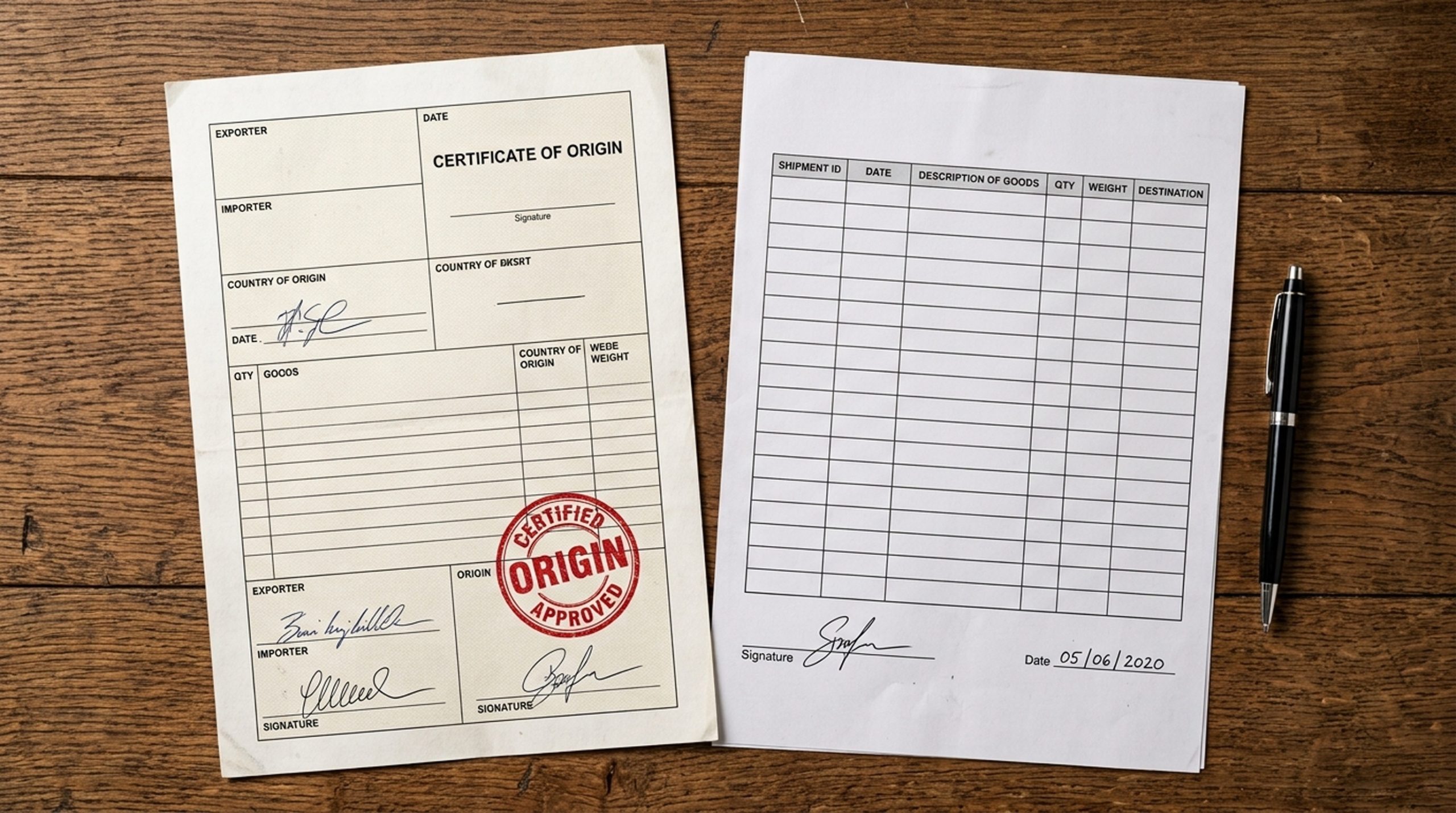
Prior to CAROTAR 2020, Indian customs largely accepted the Certificate of Origin (CoO) presented by the importer at face value, leaving verification up to bilateral government-to-government queries later. CAROTAR 2020 changed this paradigm by placing the onus squarely on the importer to prove that the goods meet the requisite rules of origin before claiming duty concessions.
The legislation was introduced to curb trade deflection—a practice where goods from non-FTA countries are routed through an FTA partner nation with minimal processing to unjustly claim zero or low import duties. By tightening compliance, India aims to protect domestic industries while ensuring that genuine preferential trade flows smoothly.
The Importer’s Due-Diligence Duty
Under the CAROTAR 2020 certificate of origin framework, claiming a preferential rate of duty is no longer just about possessing a piece of paper. Importers must exercise reasonable care and conduct proactive due diligence before filing a bill of entry.
Mandatory Information Requirements
Importers are legally required to possess sufficient information regarding the origin of the goods. This includes understanding how the product satisfies the specific Rules of Origin (RoO) criteria stipulated in the relevant trade agreement. The importer must hold:
- A valid Certificate of Origin issued by a designated issuing authority in the exporting country.
- Detailed manufacturing process descriptions and cost statements where applicable.
- Information on inputs, raw materials, and components sourced from third countries.
- Direct communication records or declarations from the overseas supplier validating origin claims.
Filing the Bill of Entry
When filing the bill of entry, the importer must make a specific declaration that the goods qualify as originating goods under the respective trade agreement. Crucially, the importer must be ready to submit origin-related documents immediately if flagged by the Customs Automated System or questioned by assessing officers.
Failing to conduct due diligence or inability to produce supporting documents upon request strips away the preferential tariff benefit instantly, leading to duty demands at standard MFN (Most Favored Nation) rates alongside interest and penalties.
Origin Criteria Basics: How Goods Qualify
To successfully navigate trade audits, importers and exporters must understand the foundational criteria that determine whether a product originates in a specific country. FTAs typically rely on three core mechanisms.
1. Wholly Obtained Goods
This category is straightforward and applies primarily to raw materials, agricultural produce, and minerals. Goods are considered wholly obtained if they are entirely grown, harvested, extracted, or born and raised within the territory of the exporting FTA partner. Examples include cotton harvested in India, minerals mined in Australia, or fish caught within territorial waters.
2. Substantial Transformation and Value Addition
When a product incorporates imported components or raw materials from non-FTA countries, it must undergo substantial transformation within the exporting country to qualify for preference. This is typically measured through value-addition formulas.
- Value-Addition Method: The domestic value addition must meet a specific percentage threshold (e.g., a minimum of 35% or 40% of the FOB value of the final product).
- Regional Value Content (RVC): Calculated using specific formulas set forth in the trade agreement.
3. Change in Tariff Classification (CTC)
Another common test is the Change in Tariff Classification. Under this rule, non-originating raw materials used in the manufacturing process must fall under a different Harmonized System (HS) code chapter, heading, or subheading than the finished product. This proves that processing fundamentally altered the nature of the goods.
| Origin Test | Definition | Typical Application | Compliance Requirement |
|---|---|---|---|
| Wholly Obtained | Completely grown, harvested, or produced locally. | Raw materials, agriculture, mining. | Proof of harvest or extraction location. |
| Value Addition | Minimum local economic contribution percentage. | Manufactured goods, electronics, assembly. | Cost statements, BOM, supplier declarations. |
| CTC (Change in Tariff Classification) | Finished product shifts HS code tier from inputs. | Chemical processing, textiles, machinery. | Detailed Bill of Materials mapped to HS codes. |
Customs Verification and Non-Compliance Consequences
CAROTAR 2020 grants customs authorities wide-ranging powers to verify origin claims. If an officer doubts the authenticity of a CoO or the accuracy of the importer’s due diligence, a formal verification process is triggered.
The Verification Cascade
- Information Request: Customs sends a detailed questionnaire to the importer, requesting specific origin documents, process descriptions, and sourcing details within a strict timeframe.
- Suspension of Preferential Tariff: If the importer fails to respond satisfactorily or if doubts persist, customs may temporarily suspend the preferential tariff rate while the investigation continues.
- Cross-Border Verification: Indian customs can reach out to the designated issuing authority or the exporter in the partner country to verify production processes and document authenticity.
Consequences of Non-Compliance
Non-compliance carries severe financial and operational repercussions:
- Denial of Preference: The goods are assessed at standard basic customs duties.
- Duty Recovery and Interest: Importers must pay the differential duty along with mandatory interest calculated from the date of importation.
- Penal Action: Penalties under the Customs Act can be levied for making incorrect declarations.
- Cargo Delays: Shipments may face prolonged clearance times, leading to demurrage and storage costs at ports.
The Exporter Angle: Protecting Your Overseas Buyers
While CAROTAR rules focus heavily on importers, Indian exporters bear an equally critical responsibility. If you export goods from India under an FTA, your overseas buyers depend entirely on your accuracy and diligence.
Issuing Correct Certificates of Origin
Exporters must apply for Certificates of Origin through authorized agencies (such as designated export promotion councils, chambers of commerce, or trade boards) in strict compliance with the FTA rules. Errors in HS codes, product descriptions, or origin criteria invalidate the CoO.
Why Sloppy COOs Hurt Your Buyers
When an Indian exporter issues a sloppy or inaccurate Certificate of Origin, the overseas buyer faces sudden duty demands and audits from their local customs authority. This damages business relationships, triggers contract cancellations, and ruins your reputation as a reliable global supplier.
Best Practices for Exporters
- Maintain a robust Bill of Materials (BOM) and trace every component's origin.
- Ensure the HS code on the CoO matches the commercial invoice and import declaration precisely.
- Proactively share supporting manufacturing declarations and cost worksheets with key international buyers.
Frequently Asked Questions
What is the main objective of CAROTAR 2020?
The Customs (Administration of Rules of Origin under Trade Agreements) Rules 2020 were introduced to ensure that importers properly verify the origin of goods imported under Free Trade Agreements, preventing misuse of tariff concessions and curbing indirect trade deflection.
Are importers required to submit origin documents for every shipment?
Importers must possess origin-related information and documents at the time of filing the bill of entry. While they may not need to upload every document proactively for every shipment, they must submit them immediately upon customs request.
What happens if the Certificate of Origin is found to be defective?
If customs discovers defects in the Certificate of Origin or if the exporter fails verification checks, the preferential tariff rate is denied. The importer must pay the standard basic customs duty along with applicable interest and potential penalties.
Can customs initiate verification after cargo clearance?
Yes, customs authorities retain the right to audit and verify origin claims even after goods have been cleared for home consumption, typically within a specified statute of limitations under the domestic customs laws of the importing country.
How does an exporter prove substantial transformation?
Exporters prove substantial transformation by maintaining detailed cost sheets, bills of materials, and production records that demonstrate adherence to the regional value content percentage or the required change in tariff classification thresholds.
What should an importer do if targeted for a CAROTAR verification query?
Importers must respond within the stipulated legal timeframe by providing all requested due-diligence records, supplier declarations, and manufacturing data. Working closely with the overseas exporter and customs brokers ensures a comprehensive and accurate response.
Conclusion
CAROTAR 2020 has permanently transformed preferential trade compliance by demanding absolute transparency and rigorous due diligence from importers. For global B2B buyers and exporters, treating origin verification as an administrative afterthought is no longer an option.
By mastering origin criteria, maintaining meticulous documentation, and ensuring accurate Certificates of Origin, businesses can protect themselves against unexpected duty liabilities and supply chain bottlenecks. Ready to source or export with confidence? Post your trade requirement or connect with verified global suppliers and exporters on Today Adviser today to streamline your cross-border supply chain.