Discover the profile of Sky Packing Material Trading LLC, explore essential packaging suppliers in the UAE, and learn effective strategies for sourcing corrugated boxes and industrial wrapping materials.
Sky Packing Material Trading LLC – Company Profile & Packaging Supplier Guide
Packaging is the part of export that buyers notice first and exporters often leave until last. A strong carton, the right tape and the right protective layer can decide whether a shipment arrives ready to sell or arrives as a claim. For companies trading in and out of the United Arab Emirates, a reliable packaging supplier is therefore part of the export operation itself.
Sky Packing Material Trading LLC is a packaging materials trading and supply business in the UAE. Public listings describe it as a trader and supplier of packaging materials, rather than a manufacturer of one product line. A trading company sources from several manufacturers, holds stock across many lines and can supply a mixed order — boxes, tape, strapping and protective materials — in one consignment.
This guide explains what the company does, what it supplies, who buys from packaging traders, how exporters source packaging in the UAE and the Gulf, and how to check a supplier before a large order. It also explains how packaging exporters can find buyers.
Only publicly known, verifiable details are used here. No founding year, turnover, employee count, street address or contact detail is stated, because those details could not be verified from public sources. Ask any supplier to confirm its current trade licence, warehouse location and product certifications directly before ordering.
Company Profile
Sky Packing Material Trading LLC is listed in UAE business directories as a packaging materials trading company. It buys packaging products in bulk from manufacturers and mills, holds them in stock, and sells them onward to businesses that need packaging for their products, warehouses and export shipments.
Its customers include manufacturers, food processors, e-commerce sellers, logistics companies, retailers, electronics assemblers, furniture makers and exporters. For them, the value of a trader is availability, range and speed. A manufacturer that runs out of cartons cannot wait for a mill to schedule a production run. A trader with stock can often deliver the same day or the next day.
The model is merchant trading. Instead of making one product, the company curates a catalogue across many categories and manages inventory, delivery and repeat supply. Buyers can consolidate orders, order mixed quantities from one source, and often order smaller quantities than a factory would require. That flexibility helps when a new product line is being tested and at peak season, when volumes spike and lead times matter more than unit price.
Product Range
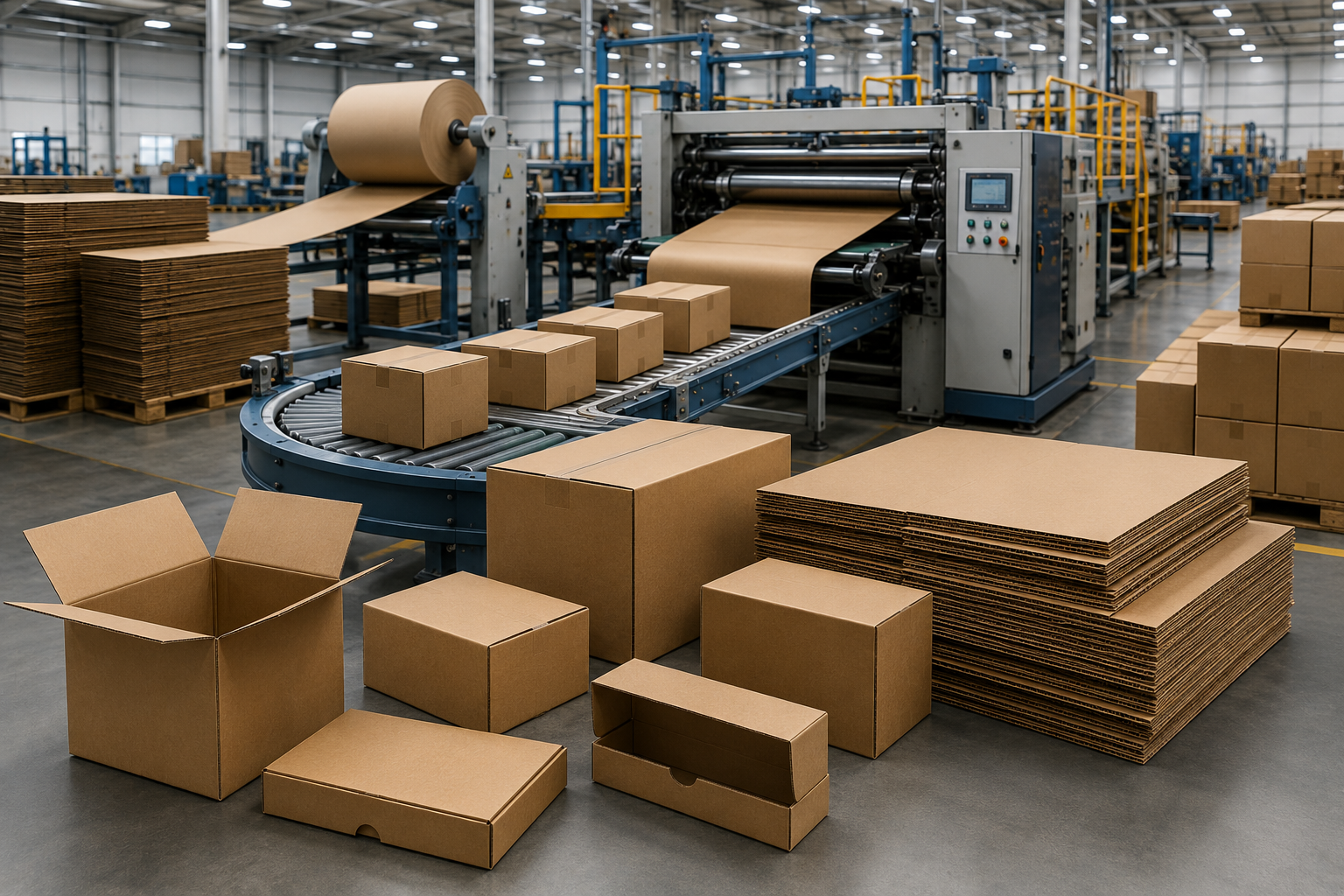
Corrugated boxes are the backbone of most export shipments. Single-wall boxes suit light consumer goods. Double-wall boxes suit heavier products and stacked pallets. Triple-wall boxes suit very heavy or fragile industrial items. Regular slotted cartons, die-cut boxes, printed boxes and partition inserts are common variations. Choose by product weight, stacking height, transport mode and destination climate. A box adequate for a short road delivery in the UAE may not survive a sea shipment with multiple handling stages. Ask for board grade, flute type, burst strength and edge crush test value, and test a sample with the actual product before ordering in bulk.
Tape is a small cost with a large consequence. A failed seal can open a carton in transit. BOPP tapes in clear and brown are the standard for carton sealing. Cloth and duct tapes suit heavy-duty and moisture-exposed work. Match tape to the carton surface, temperature range and storage conditions, and check adhesion after 24 and 72 hours.
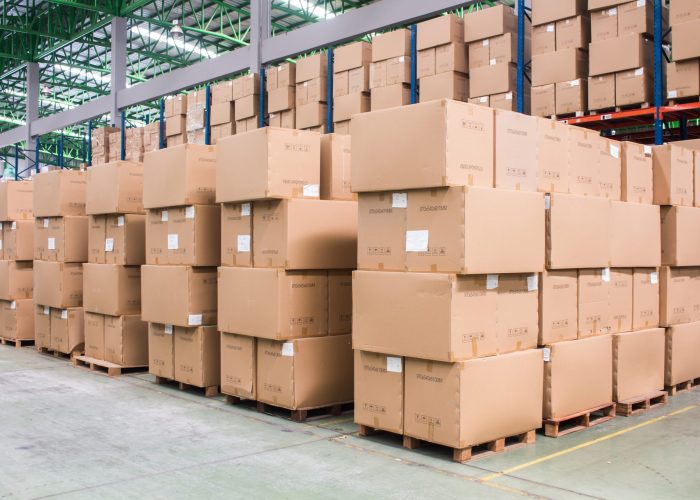
Strapping holds a pallet together. Polypropylene suits light to medium loads. Polyester suits heavy loads and sea freight, because it retains tension well. Stretch and shrink film protect against dust, moisture and pilferage. Pallet covers, corner protectors and edge boards reduce damage at the corners, where most pallet damage occurs. Protective packaging — bubble wrap, foam, air pillows, paper void fill and moulded inserts — fills space inside a carton and absorbs shock. For electronics, anti-static materials matter. For glass, a snug inner pack and a strong outer carton matter more than one thick layer of bubble wrap. Many traders also supply poly bags, labels, cable ties and strapping tools.
Who Buys from Packaging Traders?
Manufacturers buy cartons for finished goods and want consistent board quality. Food processors buy food-grade packaging that meets hygiene standards. E-commerce sellers buy small and medium cartons, mailers, tape and labels in frequent, smaller orders. Logistics companies buy pallets, wrap and strapping for consolidation. Retailers buy bags, boxes and display packaging. Exporters buy export-grade cartons, ISPM-compliant pallets where required, and protective materials that survive long transit times. A good trader asks about the product, destination and transport mode before recommending a specification, rather than simply selling the cheapest box.
Sourcing Packaging in the UAE and the Gulf
The UAE is a practical sourcing base because it combines a large trading sector, good logistics and access to regional and international manufacturers. Exporters can buy from a local trader with stock in Dubai, Sharjah or Abu Dhabi, giving fast delivery and the chance to inspect samples. They can order directly from a manufacturer in the UAE or another Gulf country, which can be cheaper for very large orders but usually means longer lead times and higher minimum quantities. They can also import packaging from India, China or Turkey, which can suit printed or specialised packaging but adds shipping time, customs and quality-control risk.
Start with a clear specification: dimensions and weight, carton size, board grade, print requirements, quantity and delivery schedule. Request samples from two or three suppliers, test them with the actual product, and compare total landed cost — price, delivery, storage and waste — rather than unit price alone. Confirm packaging meets the destination country's rules on wood packaging, labelling and food-contact materials. Demand rises before major retail seasons and before Ramadan and year-end peaks, so order early and hold a small safety stock of the most-used carton sizes.
How to Verify a Packaging Supplier
- Confirm the business is real. Ask for a current trade licence covering general trading or packaging materials trading, and for the warehouse location. Visit it or request a video walkthrough where possible.
- Get specifications in writing. Board grade, flute, GSM, burst strength, tape adhesive type and film thickness should be on the quotation. Compare like-for-like across suppliers.
- Test samples. Pack the actual product, seal the carton, stack it, and leave it for a few days in conditions similar to transit. Check for sagging, tape lift, print smudging and moisture damage.
- Ask for references. A supplier serving food, electronics or furniture exporters will understand those products' risks. Ask how it handles a quality complaint or a damaged consignment.
- Agree terms in writing. Delivery time and charges, minimum order quantity, payment terms and returns for unused or defective stock should be agreed before the first large order.
Be cautious about any supplier that cannot provide a licence, a location, a written specification or a sample, or that asks for full payment in advance for a first order without a verifiable track record. For export, choose the carton for the heaviest item it will hold, use double-wall board for stacked pallets, label cartons clearly, and photograph the packed load before the container is sealed. Wood packaging, where used, must meet ISPM 15 rules for many destinations.
How Packaging Exporters Find Buyers
Many packaging exporters also sell packaging materials overseas and face the same challenge as every exporter: finding a buyer who orders regularly and pays reliably. Be specific about product and buyer. A supplier selling corrugated boxes should target industries that use them in volume — food processing, electronics, e-commerce fulfilment, furniture and FMCG — rather than advertising to everyone.
List products in a buyer directory with clear specifications, minimum order quantities and photographs. Create content answering buyers' questions, such as how to choose a carton grade or pack for sea freight. Attend trade shows and buyer-seller meetings for packaging and logistics. Follow up enquiries quickly with a written quotation, a sample offer and a clear delivery time.
TodayAdviser can help. Packaging exporters can browse the buyer directory to find importers in their target markets, and can post a requirement to receive enquiries from buyers looking for packaging and related products. A listing stating product range, materials and export markets served attracts more relevant enquiries than one stating only a company name. Respond within one working day where possible, and start a new buyer with a small trial order.
Frequently Asked Questions
What does Sky Packing Material Trading LLC do?
It is a packaging materials trading and supply business in the UAE, supplying corrugated boxes, tapes, strapping and protective packaging to commercial and industrial customers, sourcing from manufacturers and holding stock for resale.
What products do packaging traders in the UAE typically supply?
Corrugated boxes, paperboard, BOPP and cloth tapes, polypropylene and polyester strapping, stretch and shrink film, bubble wrap, foam, void fill, poly bags, labels and pallet protection materials. Exact stock should be confirmed with the supplier.
Who buys from a packaging materials trader?
Manufacturers, food processors, e-commerce sellers, logistics companies, retailers, electronics assemblers, furniture makers and exporters, usually because they need a wide range, regular supply and fast delivery.
How do I choose the right corrugated box for export?
Match board grade and wall type to product weight, stacking height and transport mode, test a sample with the actual product, and check burst strength and edge crush values. For sea freight and stacked pallets, double-wall board and edge protection are usually safer.
How can I verify a packaging supplier in the UAE?
Ask for a current trade licence, warehouse location, written specifications and samples. Test samples with your product, ask for references from similar customers, and agree delivery, payment and returns terms in writing before a large order.
How can packaging exporters find buyers?
List products with clear specifications in a buyer directory, create helpful content for target industries, attend trade shows, and respond quickly. Exporters can browse the buyer directory and post a requirement on TodayAdviser to connect with importers.
Conclusion
Sky Packing Material Trading LLC illustrates the role of a packaging materials trader in the UAE: a supplier holding a broad range of boxes, tapes, strapping and protective materials so manufacturers and exporters can pack, protect and ship without waiting for a factory run. For a buyer, the test is not catalogue size alone. It is whether the specification is clear, the sample performs, delivery is reliable and terms are agreed in writing. For exporters, packaging is part of the product promise. Choose the specification carefully, verify the supplier, test the pack, and plan supply ahead of peak season. If you are a packaging exporter looking for buyers, use the buyer directory and post a requirement on TodayAdviser to reach importers who are already looking.