Discover leading transport and logistics companies in India that facilitate seamless domestic and cross-border freight movement. Learn how to optimize your supply chain by partnering with verified heavy-haul, road transport, and transco operators.
Navigating the vast supply chain landscape of the subcontinent requires partnering with established logistics companies India trusts for seamless domestic and cross-border freight movement. Whether you are moving industrial machinery, bulk commodities, or delicate perishables, understanding key players like Lalji Mulji Transport alongside other industry stalwarts helps global B2B buyers optimize their supply chains.
India's transport sector serves as the backbone of its booming manufacturing and export economy, connecting production hubs in Gujarat, Maharashtra, and Tamil Nadu to major global shipping ports and inland container depots. For international exporters and importers, selecting the right partner among transport companies India has to offer is critical to avoiding demurrage fees, transit delays, and cargo damage.
In this comprehensive guide, we examine prominent transport providers, evaluate essential freight cost factors, outline a practical evaluation checklist for B2B buyers, and provide actionable insights on how to source reliable logistics partners through verified global marketplaces.
Overview of the Indian Transport and Logistics Sector
The logistics ecosystem in India has undergone a massive transformation, driven by infrastructure investments, the implementation of the Goods and Services Tax (GST), and digital freight platforms. Today, supply chain management goes beyond simple point-to-point trucking; it encompasses integrated multimodal transport, temperature-controlled warehousing, real-time GPS tracking, and streamlined customs clearance.
For global B2B buyers, managing inbound or outbound shipments means coordinating with entities that understand both the regulatory nuances of interstate transit and the stringent compliance standards required for international trade. The sector relies heavily on a mix of heavy commercial vehicles, light commercial vehicles, and specialized transport modes to handle everything from standard palletized freight to Over Dimensional Cargo (ODC).
Profiles of Key Transport and Logistics Providers
When researching established transport companies India, several legacy and modern firms stand out for their operational footprint and service capabilities. Below is an overview based on publicly available industry data.
Lalji Mulji Transport
Lalji Mulji Transport is widely recognized in the Indian logistics fraternity for its specialization in handling heavy, bulky, and industrial cargo. Transporting heavy engineering goods, project cargo, and industrial machinery requires specialized flatbed trailers, hydraulic axles, and deep route-survey expertise.
Key service highlights typically associated with heavy-haulage specialists include:
- Movement of Over Dimensional Cargo (ODC) and Overweight Cargo (OWC).
- Detailed route planning and feasibility studies for heavy machinery transport.
- Multi-axle hydraulic trailer deployment for industrial plant relocations.
- Coordination with local regulatory authorities for oversized transit permissions.
Roadlines in India
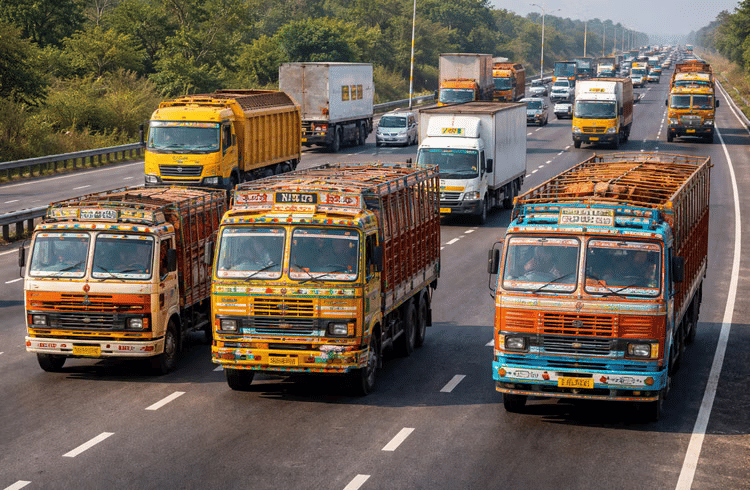
Roadlines represent the traditional backbone of general merchandise movement across the Indian subcontinent. These carriers operate extensive hub-and-spoke networks connecting Tier-1, Tier-2, and Tier-3 manufacturing cities.
Core service attributes of established road transport networks include:
- Part-Truckload (PTL) and Full-Truckload (FTL) services.
- Regular scheduled departures between major industrial corridors.
- Document handling for interstate tax and compliance requirements.
- Last-mile distribution to urban and semi-urban commercial centers.
Transco Operators
Transco entities and modern transport corporations focus on containerized movement, bonded trucking, and integrated supply chain services. These operators frequently bridge the gap between inland manufacturing units and maritime gateway ports.
Notable capabilities of transco-style logistics providers:
- Containerized trucking for secure, weather-proof cargo transit.
- Bonded transport for import-export cargo moving between ports and Inland Container Depots (ICDs).
- Fleet management systems providing milestone visibility.
- Scalable warehousing and inventory management integrations.
Core Services Offered by Indian Logistics Leaders
Navigating B2B shipments demands a clear grasp of the service portfolios offered by top-tier logistics providers. Modern transport companies in India deliver integrated solutions spanning multiple operational domains.
Road Freight Solutions
Road transport remains the dominant mode for domestic cargo movement due to extensive highway connectivity. Providers offer:
- Full-Truckload (FTL): Dedicated vehicles for high-volume shipments, minimizing transit times and handling risks.
- Part-Truckload (PTL) / LTL: Consolidated shipments for cost-effective movement of smaller commercial volumes.
- Express Cargo: Time-critical delivery models utilizing dedicated light commercial vehicles.
Warehousing and Inventory Management
Storage infrastructure is vital for managing lead times and buffering against supply chain disruptions. Key warehousing capabilities include:
- Modern multi-user warehousing facilities near major industrial clusters and ports.
- Inventory management systems (WMS) integrated with barcode and RFID tracking.
- Value-added services such as kitting, labeling, palletization, and quality inspection.
- Climate-controlled zones for sensitive or perishable goods.
Specialized Cargo and Project Logistics
Industrial buyers often require custom solutions for non-standard freight:
- Heavy engineering equipment transport requiring specialized hydraulic trailers.
- Hazardous material (Hazmat) transport adhering to strict safety protocols.
- Secure transit for high-value electronic and pharmaceutical goods.
Comparison of Transport Modes and Services
| Service Type | Best Used For | Typical Transit Time | Cost Efficiency | Key Risk Factor |
|---|---|---|---|---|
| Full-Truckload (FTL) | High-volume, direct factory-to-port dispatch | Fast (Direct route) | High for bulk volumes | Higher fixed cost if underutilized |
| Part-Truckload (PTL) | Small-to-medium commercial consignments | Moderate (Hub stops) | High for smaller lots | Potential handling delays |
| Heavy ODC / Project | Machinery, turbines, industrial structures | Variable (Route dependent) | Specialized pricing | Strict permit dependencies |
| Containerized Transco | Import/Export transit between ICD and port | Reliable scheduled runs | Moderate to High | Port congestion variables |
How Global Exporters Choose a Transporter
Selecting the right logistics partner requires a rigorous vetting process. Global buyers should evaluate potential partners using a structured framework.
Evaluation Checklist for B2B Buyers
- Fleet Ownership vs. Brokerage: Determine whether the company owns its fleet or relies heavily on market brokers, which impacts reliability and asset availability.
- Geographic Reach: Verify their operational footprint along your specific transport corridors (e.g., Gujarat ports to northern manufacturing zones).
- Technology Integration: Look for live GPS tracking, electronic proof of delivery (e-POD), and API integrations with your ERP or supply chain software.
- Compliance and Licensing: Ensure all statutory registrations (GST, carrier licenses, insurance coverage) are valid and up to date.
- Customer References: Request case studies or references from other international exporters operating in your sector.
Freight Cost Factors in India
Transport pricing is dynamic and influenced by several macroeconomic and operational variables. Understanding these cost drivers helps in accurate budgeting and contract negotiation.
Major Pricing Determinants
- Fuel Price Volatility: Diesel price fluctuations directly impact freight rate calculations and trigger periodic fuel surcharges.
- Vehicle Availability and Seasonality: Peak harvest seasons, festival periods, and industrial closing cycles create supply-demand imbalances.
- Cargo Dimensions and Weight: Volumetric weight vs. actual weight rules determine whether space or tonnage dictates the price.
- Route Complexity and Terrain: Ghat sections, restricted urban entry timings, and toll expenses add variable costs to the base freight rate.
- Insurance and Transit Risk: High-value goods require comprehensive Transit Insurance (Marine/Inland Transit), affecting overall logistics spend.
Common Mistakes to Avoid
Logistics missteps can result in costly delays, damaged inventory, and strained customer relationships. Avoid these frequent pitfalls:
- Failing to Verify Insurance Coverage: Assuming carrier liability covers the full commercial value of goods without checking policy limits.
- Ignoring Route Permitting Timelines: Underestimating the time required to secure government clearances for Oversized Dimensional Cargo.
- Inadequate Packaging: Using substandard packaging for long-distance domestic road transit over rough terrain.
- Lack of Contingency Planning: Relying on a single transporter without backup options for peak season disruptions.
Finding and Sourcing Verified Logistics Services on Today Adviser
For international buyers and exporters seeking dependable supply chain partners, vetting individual companies across fragmented directories can be time-consuming. Platforms like Today Adviser bridge this gap by connecting global businesses with verified suppliers, freight forwarders, and logistics service providers.
By leveraging a trusted B2B marketplace, buyers can review verified company credentials, compare service capabilities, request competitive quotes, and initiate secure trade discussions. Sourcing verified partners ensures operational transparency, reduces intermediary risks, and accelerates the integration of your Indian supply chain operations.
Frequently Asked Questions
What types of cargo do transport companies in India typically handle?
Transport companies in India handle a diverse range of freight, including raw materials, finished industrial goods, fast-moving consumer goods (FMCG), temperature-controlled pharmaceuticals, hazardous chemicals, and heavy engineering machinery requiring specialized ODC trailers.
How are domestic freight rates calculated in India?
Freight rates are primarily calculated based on distance, cargo weight and volume, vehicle type (FTL vs. PTL), prevailing diesel prices, toll charges, and seasonal demand fluctuations across specific industrial transport corridors.
What is the difference between FTL and PTL logistics services?
Full-Truckload (FTL) dedicates an entire vehicle exclusively to one shipper's cargo, ensuring direct, faster transit. Part-Truckload (PTL) consolidates smaller shipments from multiple shippers in a single vehicle, offering cost savings for lower volumes.
Why is route surveying important for heavy industrial transport?
Route surveying is critical for heavy and Over Dimensional Cargo (ODC) to identify low-hanging overhead cables, weak bridges, narrow turning radiuses, and toll plaza clearances, ensuring safe transit without unexpected road blockages.
How can global buyers verify the reliability of an Indian transport company?
Global buyers can verify logistics providers by checking statutory compliance registrations, assessing fleet ownership ratios, reviewing client references, requesting proof of comprehensive transit insurance, and sourcing partners through verified B2B platforms like Today Adviser.
What documentation is required for interstate cargo movement in India?
Standard documentation includes a Goods Receipt (GR), valid tax invoices, e-way bills generated through the GST portal, driver identification documents, and specific permits or clearances if transporting hazardous or oversized freight.
Conclusion
Partnering with established logistics companies India is a strategic imperative for global B2B buyers and exporters aiming for supply chain resilience. By carefully evaluating specialist heavy-haulage providers like Lalji Mulji Transport alongside versatile roadlines and transco operators, businesses can optimize their freight operations. Implement rigorous evaluation checklists, understand regional cost drivers, and utilize verified trade platforms to secure reliable logistics partners for your upcoming shipments.
Find buyers: Explore the buyer directory and post a requirement on TodayAdviser to connect with verified logistics importers and buyers.