International buyers increasingly require sustainable packaging — driven by EU regulations like PPWR and brand commitments. This guide compares eco-friendly packaging materials for export, from molded fiber to mushroom packaging, with FSC certification tips and an indicative cost analysis.
Why Sustainable Packaging Is Now an Export Requirement
Packaging was once an afterthought in export costing. Today it is a buying criterion. International buyers — especially in Europe and North America — increasingly require suppliers to use eco-friendly packaging materials, driven by regulation, corporate sustainability commitments and consumer pressure. For Indian exporters, sustainable packaging is shifting from a “nice to have” to a qualifier for shelf space, tenders and long-term contracts.
This guide explains why buyers demand green packaging, compares the main sustainable materials for export use, analyses the cost premium in indicative terms, and covers the certifications that prove your claims.
What's Driving the Demand: EU Rules and Buyer Pressure
The single biggest regulatory driver is the EU's Packaging and Packaging Waste Regulation (PPWR), which entered into force in 2025 and phases in requirements over the coming years: packaging must be recyclable by design, meet minimum recycled-content thresholds, and face restrictions on certain formats and substances. Exporters shipping to the EU — directly or via distributors — need to understand which obligations touch their products.
Beyond the EU, Extended Producer Responsibility (EPR) schemes in multiple markets make brands financially responsible for packaging waste, pushing them to demand recyclable and recycled-content packaging from suppliers. Add corporate net-zero pledges and retailer scorecards (many large retailers now rate suppliers on packaging sustainability), and the message is clear: buyers want packaging they can defend publicly. Offering certified eco-friendly packaging is becoming a competitive differentiator for Indian exporters.
Molded Fiber (Molded Pulp): The Workhorse
Molded fiber — made from recycled paper, cardboard or virgin pulp pressed into shape — is the most established sustainable protective packaging. Think egg-carton-style cushioning, bottle dividers, and custom-fit inserts.
Strengths: widely recyclable and compostable; excellent cushioning-to-weight ratio; custom moulds for product-specific protection; mature global supply chain; cost-competitive at volume.
Limitations: tooling cost for custom moulds; less suited to very heavy items; moisture sensitivity unless treated; surface finish is functional rather than premium.
Best for: electronics accessories, cosmetics, food & beverage secondary packaging, and e-commerce protective inserts.
Recycled Kraft and Corrugated: The Familiar Upgrade
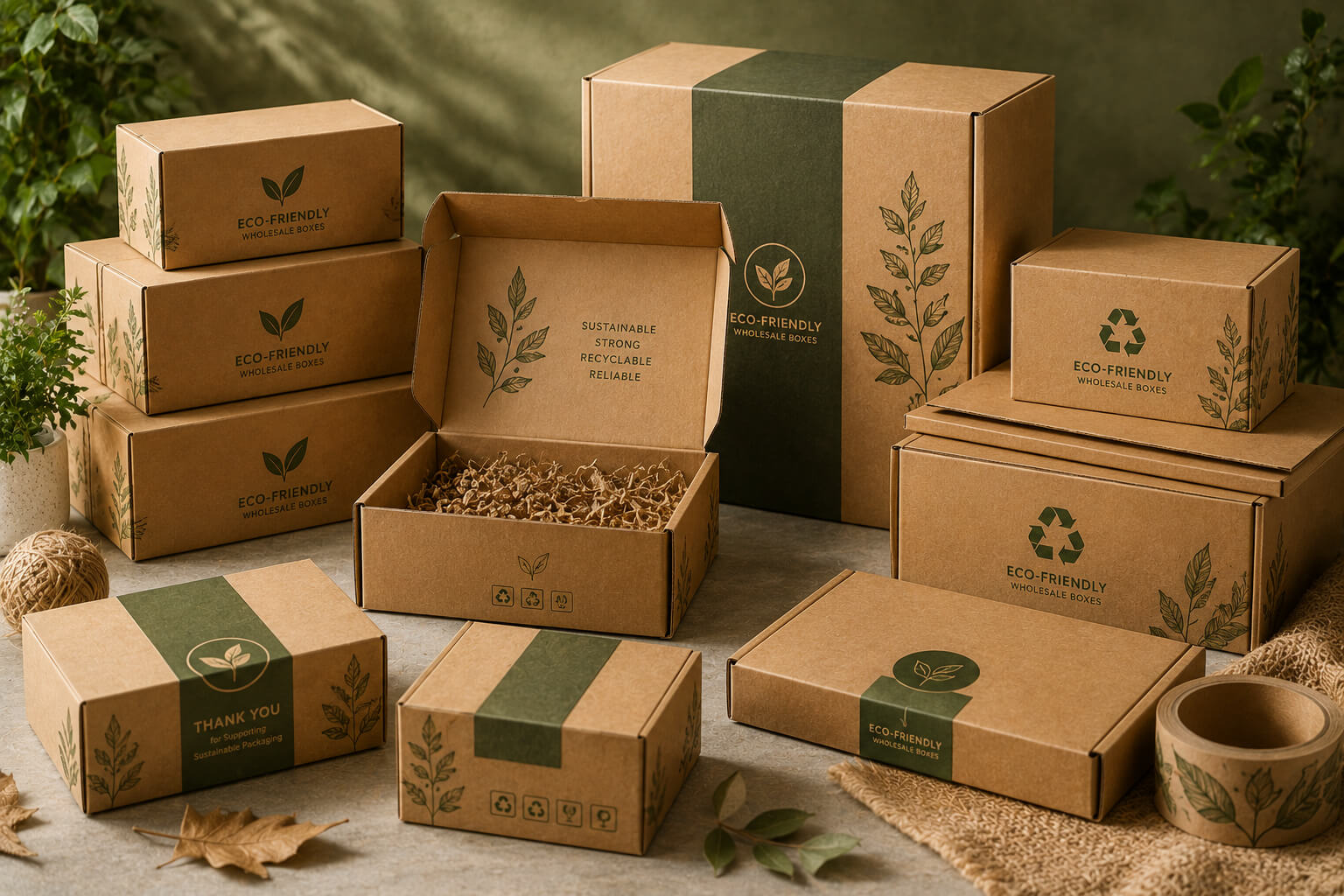
Recycled-content kraft paper and corrugated board are the lowest-friction switch: same formats, same machinery, greener story. High-recycled-content corrugated (including 100% recycled options) and kraft mailers, void fill and wrapping are widely available from Indian converters.
Strengths: drop-in replacement for virgin board; fully recyclable in standard streams; printable for branding; FSC Recycled certification available; minimal cost premium at scale.
Limitations: slightly lower burst strength than virgin kraft at equivalent weight (specify appropriately); recycled fibres shorten with each cycle, limiting infinite recyclability.
Best for: shipping cartons, e-commerce mailers, void fill, wrapping — the bulk of export packaging volume.
Cornstarch and PLA Bioplastics
Polylactic acid (PLA), derived from cornstarch or sugarcane, is a plant-based plastic used for bags, films, windows in cartons and rigid containers. It looks and performs like conventional plastic for many applications.
Strengths: renewable feedstock; suitable for food-contact applications; clear films and rigid formats available; industrially compostable under the right conditions.
Limitations: requires industrial composting — it will not break down in home compost or landfill meaningfully; can contaminate conventional plastic recycling if mixed; heat sensitivity limits some uses; typically a higher premium than paper-based options.
Best for: food packaging, sachets and applications where plastic functionality is needed but fossil plastic must be avoided. Be precise in claims — “plant-based” is not the same as “home-compostable.”
Mushroom (Mycelium) Packaging: The Breakthrough Material
Grown — not manufactured — from mycelium (mushroom roots) and agricultural waste, mycelium packaging is moulded into protective shapes and then dried. It is fully home-compostable and breaks down in weeks.
Strengths: outstanding sustainability story; home-compostable; good cushioning; made from waste feedstocks; strong buyer appeal for premium eco brands.
Limitations: limited supplier base (especially in India — verify availability); longer lead times (growing takes days); currently best for low-to-medium volumes; cost premium over molded fiber.
Best for: premium DTC brands, fragile goods, and exporters whose buyers explicitly value compostability credentials.
Paper Tape and Water-Activated Tape
A small switch with outsized recycling impact: replacing plastic BOPP tape with kraft paper tape (or reinforced water-activated tape) keeps the entire corrugated box recyclable without tape removal — a detail sustainability auditors notice. Water-activated tape also bonds more strongly and shows tampering clearly. Cost premium is modest, and the switch requires no equipment change for hand application.
Cost vs Premium: An Indicative Analysis
Sustainable packaging usually costs more than the cheapest conventional option — but the premium varies enormously by material, and the comparison is often misleading. Indicative guidance (verify live data with your converters before budgeting):
- Recycled corrugated vs virgin: typically a small single-digit to low-double-digit percentage premium, often absorbed at scale.
- Molded fiber inserts vs plastic/EPS: competitive at volume; custom tooling is the main upfront cost.
- PLA films vs conventional plastic film: a noticeable premium — indicatively in the tens of percent — driven by resin cost and smaller scale.
- Mycelium packaging: currently a clear premium product; price on application and compare against the marketing value it delivers.
- Paper tape vs plastic tape: modest premium per roll, negligible per shipment.
Evaluate on total landed packaging cost per shipment — including damage rates (better protection pays for itself), buyer willingness to pay, and avoided compliance risk — not on unit price alone. Many exporters find the premium is smaller than feared once volumes are committed.
Certifications Buyers Recognise: FSC and Beyond
Claims need proof. The certifications that matter in export packaging:
- FSC (Forest Stewardship Council): the gold standard for paper, board and wood — FSC-certified, FSC Recycled and FSC Mix labels assure responsible forestry. Demand chain-of-custody certification from your converter, not just an FSC logo claim.
- PEFC: the other major forest certification scheme, widely recognised in Europe.
- OK compost / Seedling: TÜV Austria and European Bioplastics certifications proving industrial (or home) compostability — essential if you claim compostable.
- Recycled-content verification: third-party verification of recycled percentages, increasingly required under PPWR-adjacent buyer policies.
Never print certification logos without a valid licence — misuse is a compliance violation, not a marketing shortcut.
How Exporters Can Transition: Practical Steps
- Audit current packaging: list every material touching your product (primary, secondary, tertiary) and flag fossil-plastic and non-recyclable components.
- Start with the easy wins: switch to recycled corrugated and paper tape first — low cost, low disruption.
- Ask buyers what they require: different markets and retailers have different scorecards; target the certifications your buyers actually check.
- Pilot with one SKU: trial molded fiber inserts or mycelium cushioning on a single product line before a full switch.
- Get certified packaging from certified converters: FSC chain-of-custody must run through your packaging supplier.
- Communicate honestly: state exactly what is recycled, recyclable or compostable — and under what conditions. Greenwashing destroys trust faster than plastic ever did.
Frequently Asked Questions
What is the EU PPWR and does it affect Indian exporters?
The Packaging and Packaging Waste Regulation sets EU-wide requirements for recyclability, recycled content and waste reduction, phasing in from 2025. Indian exporters shipping to the EU must ensure their packaging meets applicable requirements — check with your EU importer on specific obligations.
Is PLA packaging really compostable?
PLA is industrially compostable — it breaks down in commercial composting facilities, not in home compost or landfill. Claims should specify this clearly.
What is FSC certification for packaging?
FSC (Forest Stewardship Council) certifies that paper, board or wood comes from responsibly managed forests, with chain-of-custody tracking. It is the most recognised paper-packaging certification among international buyers.
Does eco-friendly packaging cost more?
Usually yes, but the premium ranges from negligible (recycled corrugated, paper tape) to significant (mycelium, PLA). Compare total cost per shipment including damage reduction and buyer value — and verify live quotes.
Can I call my packaging biodegradable?
Only with substantiation. “Biodegradable” without timeframe and conditions is considered misleading in many markets — use certified terms like “industrially compostable” or “home compostable” with the relevant certification.
Where can Indian exporters source sustainable packaging?
Recycled corrugated and kraft converters are widespread across Indian industrial clusters; molded fiber units are growing; mycelium and PLA suppliers are emerging — verify capacity and certifications before committing volumes.
Conclusion
Eco-friendly packaging for export is no longer a marketing extra — between the EU's PPWR, EPR schemes and buyer scorecards, it is becoming a condition of doing business with quality-conscious international customers. Start with recycled board and paper tape, pilot molded fiber or mycelium where the story fits, certify with FSC, and communicate claims precisely. Exporters who move early will find sustainability selling for them rather than costing them.
Looking for verified sustainable packaging manufacturers and export-packaging suppliers in India? TodayAdviser connects exporters with vetted suppliers — post your requirement today and get quotes from manufacturers who understand FSC certification and export compliance.