Discover the essentials of walnut export from India, covering premium Kashmiri varieties, protein profiles, shipping compliance, and proven strategies to connect with international buyers.
Global demand for premium tree nuts has accelerated significantly, and walnut export from India is emerging as a lucrative segment for B2B buyers seeking rich flavor, high nutritional value, and competitive pricing. Known for their distinct taste and high oil content, Indian walnuts—particularly from the northern Himalayan regions—are capturing the attention of international procurement managers.
Whether you are sourcing in-shell varieties for long storage or ready-to-eat kernels for retail packaging, understanding the nuances of the Indian walnut trade is critical. This comprehensive guide explores Indian walnut varieties, nutritional profiles, production hubs, key export markets, and proven strategies to connect with reliable global buyers.
Understanding Indian Walnut Varieties and Grades
India primarily cultivates and exports two distinct formats of walnuts: in-shell nuts and extracted walnut kernels. The categorization depends on shell thickness, ease of cracking, and kernel color.
Major Varieties
- Kashmiri Walnuts: Celebrated globally for their superior aroma, thin shells, and plump kernels. They command a premium in international markets.
- Himachali and Uttarakhand Walnuts: Offer robust flavors and high oil content, widely utilized for both direct consumption and oil extraction.
Standard Grading System
International buyers evaluate walnut export from India based on standardized grading parameters:
- In-Shell: Graded by size (measured in millimeters) and cracking percentage (the ratio of usable kernel weight to total in-shell weight).
- Kernels: Graded by color and physical integrity. Common grades include Extra Light Halves, Light Halves and Pieces, Amber Pieces, and Small Pieces.
Nutritional Profile: Protein and Omega-3 Fatty Acids
Health-conscious consumers drive the global tree nut market, and Indian walnuts perform exceptionally well in nutritional benchmarks. While exact figures vary by harvest season and moisture content, standard laboratory analyses indicate high nutritional density.
Indicative Nutritional Values (per 100g)
- Walnut Protein: Approximately 15g to 18g of plant-based protein, making them ideal for vegan and vegetarian product formulations.
- Omega-3 Fatty Acids: Rich in Alpha-Linolenic Acid (ALA), a vital plant-based omega-3 fatty acid supporting cardiovascular health.
- Dietary Fiber: Roughly 6g to 7g, aiding digestive health.
- Healthy Fats: Total fat content ranges between 60g and 65g, predominantly polyunsaturated and monounsaturated fats.
Note: All nutritional values and prices are indicative; buyers must verify live laboratory certificates and seasonal crop reports prior to finalizing bulk contracts.
Production Hubs and Harvesting Seasonality
Geography dictates the quality of walnuts. India's topography in the Himalayan belt provides the ideal agro-climatic conditions for walnut cultivation.
Primary Cultivation Regions
- Jammu & Kashmir: The undisputed capital of Indian walnut production, accounting for the vast majority of commercial output. Districts like Kupwara, Anantnag, and Baramulla feature ancient orchards yielding premium Kashmiri walnuts.
- Himachal Pradesh: Focuses on modern orchard management, producing high-yielding varieties with consistent sizing.
- Uttarakhand: Contributes steady volumes of wild and cultivated varieties, favored by processors looking for cost-effective kernels.
Harvesting Calendar
Harvesting typically begins in September and extends through October. Post-harvest processing involves hulling, washing, sun-drying or mechanical dehydration, and grading. Exporters generally maintain stock through the winter months, with peak export shipments occurring between November and April.
Key Export Markets for Indian Walnuts
Indian exporters cater to diverse international trade corridors. The strategic geographical position of India allows efficient transit to multiple regions.
- Middle East: Countries like the UAE and Saudi Arabia are major hubs for in-shell walnuts, particularly during festive seasons.
- European Union: Markets such as Germany, the UK, and France demand high-grade, food-safe kernels packaged for retail and industrial baking.
- North America: The US and Canada occasionally import specialty varieties, though the US is also a major global producer; bilateral trade focuses on niche Kashmiri variants.
| Export Market | Preferred Format | Primary End-Use | Key Logistics Route |
|---|---|---|---|
| Middle East | In-Shell | Wholesale & Retail Markets | Maritime Freight via Nhava Sheva to Jebel Ali |
| European Union | Kernels (Light Halves) | Bakery, Confectionery & Direct Retail | Air and Sea Freight to Rotterdam / Hamburg |
| Southeast Asia | In-Shell & Kernels | Food Processing & Ingredients | Maritime Freight to Port Klang / Singapore |
Quality Control, Packaging, and Phytosanitary Compliance
Exporting agricultural commodities requires strict adherence to international quality standards and import regulations.
Quality and Grading Checklist
- Moisture Content: Must be maintained below 5% to 7% to prevent mold growth and rancidity during transit.
- Foreign Matter & Defective Nuts: Strict limits on insect damage, shriveled kernels, and shell fragments.
Packaging Standards
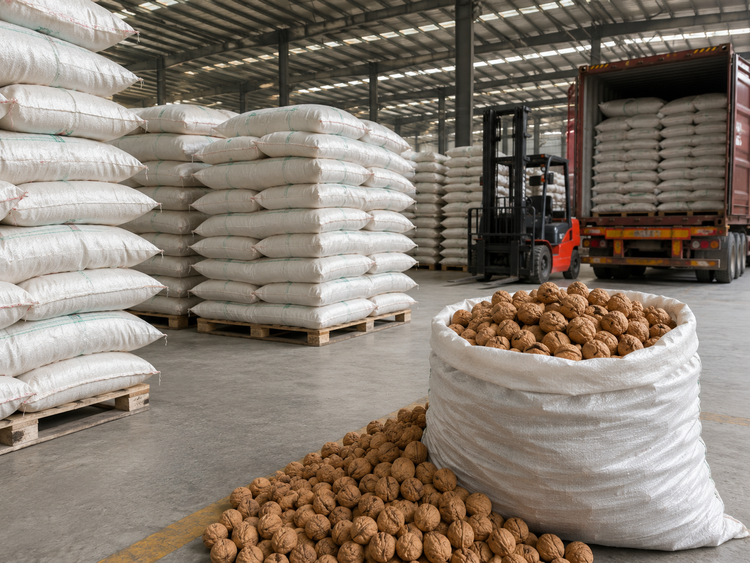
- In-Shell Walnuts: Commonly packed in 25kg or 50kg jute bags or breathable mesh bags to ensure air circulation.
- Kernels: Vacuum-sealed in foil bags or nitrogen-flushed cartons (typically 10kg boxes) to extend shelf life and preserve color.
Regulatory Documentation
Exporters must furnish a comprehensive suite of documents for customs clearance:
- Commercial Invoice and Detailed Packing List
- Bill of Lading / Airway Bill
- Phytosanitary Certificate issued by the Plant Quarantine authorities in India
- Certificate of Origin (Preferential or Non-Preferential)
- Food Safety and Standards Authority of India (FSSAI) export license
- Aflatoxin test reports from accredited laboratories
How to Find International Walnut Buyers
Expanding your customer base requires a multi-pronged approach that combines digital sourcing, industry networking, and targeted outreach. Finding buyers for walnut export involves proactive engagement across global trade ecosystems.
1. Leverage B2B Sourcing Platforms
Utilize global B2B marketplaces like Today Adviser to list your inventory. These platforms connect verified suppliers directly with international buyers actively searching for agricultural commodities. Maintaining an optimized supplier profile with high-resolution images, clear grading specs, and transparent capacities builds immediate trust.
2. Capitalize on RFQs (Requests for Quotation)
Responding promptly to buyer RFQs is one of the fastest ways to secure export leads. When international buyers post a requirement, ensure your quotation includes FOB or CIF pricing, port of loading, lead times, and payment terms (e.g., Irrevocable L/C or Advance TT).
3. Attend International Trade Fairs
Participate in prominent global food exhibitions such as Gulfood (Dubai), Anuga (Germany), and SIAL (France). These events provide face-to-face networking opportunities with wholesale importers, supermarket category managers, and brokers.
4. Direct Outreach and Digital Marketing
Build targeted email campaigns directed at food processors, nut importers, and distributors. Highlight your direct sourcing from Jammu & Kashmir, competitive pricing, and rigorous quality assurance protocols.
Frequently Asked Questions
Which Indian walnut variety is best for export?
Kashmiri walnuts are widely considered the best for export due to their thin shells, high kernel recovery, and rich flavor profile. However, standardized Himachali varieties are also heavily sought after for commercial baking and kernel extraction due to consistent sizing.
What is the protein content in Indian walnuts?
Indian walnuts contain approximately 15g to 18g of protein per 100 grams. They are also rich in plant-based omega-3 fatty acids (ALA), dietary fiber, and essential minerals, making them a preferred superfood for health-focused international markets.
How can I find verified international walnut buyers?
You can find international buyers by registering on trusted B2B trade portals like Today Adviser, responding to active RFQs, attending global food exhibitions, and partnering with export promotion councils such as APEDA in India.
What documents are needed for walnut export from India?
Essential documents include a commercial invoice, packing list, Bill of Lading, Phytosanitary Certificate from plant quarantine authorities, Certificate of Origin, FSSAI export authorization, and lab analysis reports for moisture and aflatoxins.
What is the ideal moisture content for walnut export?
To prevent mold growth, rancidity, and insect infestation during maritime transit, walnut kernels and in-shell nuts must maintain a strict moisture content below 5% to 7%.
What are the standard payment terms in the walnut trade?
Common payment terms include Irrevocable Letter of Credit (L/C) at sight for large-scale shipments, and a combination of advance payment (e.g., 30%) with the balance against scanned shipping documents (TT) for established trading partners.
Conclusion
Walnut export from India represents a high-growth opportunity for exporters equipped with quality produce and a clear understanding of compliance. By maintaining rigorous moisture controls, utilizing nitrogen-flushed vacuum packaging, and leveraging digital B2B networks, Indian exporters can successfully capture high-value contracts worldwide.
Ready to scale your export business or source premium Himalayan walnuts? Join Today Adviser today to connect with verified global buyers, explore active RFQs, and post your specific trade requirements for maximum market visibility.