
A 2026 guide to exporting processed foods from India — APEDA products, FSSAI and FDA compliance, labelling rules, and the markets buying most.
Mango pulp in a juice factory in the Middle East, pickles on a supermarket shelf in London, ready-to-eat meals in a convenience store in New York — a surprising share of the world's processed food starts in India. The country's agro-processed food exports span fruit pulps and purees, pickles and chutneys, ready-to-eat meals, spice pastes, dehydrated vegetables and much more. For buyers, India offers scale, variety and competitive prices. For exporters, the opportunity comes with a compliance checklist that must be right: APEDA registration, FSSAI requirements, US FDA rules and EU labelling, all before the first container sails.
This guide explains how agro-processed food exports from India work in 2026 — the products that sell, the registrations every exporter needs, the food safety and labelling rules in the main markets, and how buyers can verify a supplier. Prices quoted here are indicative only; processed food prices move with raw material harvests, packaging costs, freight and currency, so always verify live prices with current quotations.
India's processed-food export basket
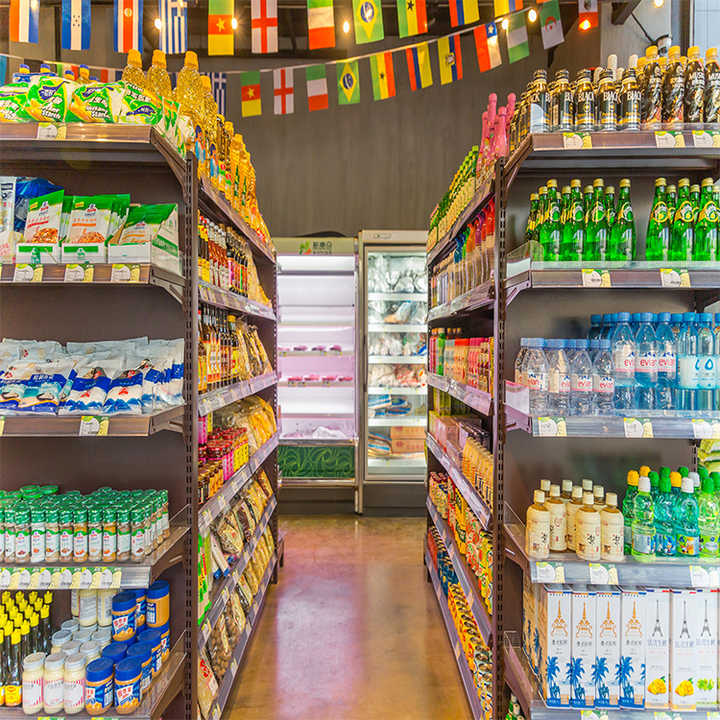
The basket is broad. Mango pulp and puree — Alphonso and Totapuri — are flagship products, used by juice and nectar manufacturers worldwide. Pickles, chutneys and spice pastes serve the Indian diaspora and a growing mainstream market. Ready-to-eat meals, from dal makhani to biryani, sell through ethnic and mainstream retail. Dehydrated vegetables, especially onion and garlic, go to food manufacturers and the seasoning industry. Also in the basket are jams, sauces, canned vegetables, frozen vegetables and fruit, and bakery ingredients.
The breadth matters because buyers rarely buy one product. A buyer who sources mango pulp can often add pickles, pastes and dehydrated onion from the same supplier, simplifying logistics. But each product has its own shelf-life, specification and testing regime, so compare suppliers product by product, on the same specification, and always ask for a sample from the production lot you will receive.
APEDA scheduled products and RCMC registration
The Agricultural and Processed Food Products Export Development Authority (APEDA) is the nodal agency for exports of scheduled products, which include fruits, vegetables, processed foods, meat, dairy and cereals. Exporters of scheduled products must register with APEDA and obtain a Registration-Cum-Membership Certificate (RCMC).
To apply, an exporter needs an Importer Exporter Code (IEC) from DGFT and the relevant business registrations. Applications are filed online through the APEDA portal, and the RCMC is the exporter's proof of registration with the authority. APEDA also issues certificates for organic products under the National Programme for Organic Production (NPOP), supports market development, and runs quality and residue monitoring programmes.
For a buyer, the check is straightforward: ask the supplier for its APEDA RCMC number and confirm it covers the product you are buying. A supplier that cannot produce a current RCMC is not a registered exporter of scheduled products, and that is a reason to stop. APEDA registration is also the gateway to export incentives and market development assistance where applicable.
FSSAI export requirements and NPOP organic certification
The Food Safety and Standards Authority of India (FSSAI) regulates food safety in India. Food businesses, including exporters and manufacturers, must hold an FSSAI licence or registration, and export consignments must meet the food safety standards of the destination country. In practice, exporters work to the buyer's specification and the destination's rules, with testing by accredited laboratories for microbiology, pesticide residues, heavy metals and additives.
For organic products, certification under NPOP is the Indian route. NPOP-certified products can be exported as organic to markets that recognise the system, and APEDA is the nodal agency for NPOP exports. Buyers of organic processed food should ask for the organic certificate, the certifying body's details, and the transaction certificate for the specific lot — organic claims without a transaction certificate are not verifiable.
US FDA facility registration and labelling
The United States is the largest single market for Indian processed foods, and the FDA's rules are central. Foreign food facilities that manufacture, process, pack or store food for the US must register with the FDA and renew that registration every two years. The FDA also requires prior notice of each shipment, and importers must verify their foreign suppliers under the Foreign Supplier Verification Program (FSVP).
Labelling for the US must follow FDA rules: a statement of identity, net quantity, ingredient list in descending order of predominance, allergen declarations for the major food allergens, nutrition facts, and the name and address of the manufacturer, packer or distributor. Claims such as "natural" or "no added sugar" have specific meanings, and nutrition labelling must use the current FDA format. Buyers should have labels reviewed by a US compliance specialist before printing — a labelling error is one of the most common reasons for detention.
EU labelling and additive rules
The European Union requires food labels to state the product name, ingredient list, allergens emphasised in the ingredients, net quantity, best-before or use-by date, storage conditions, country of origin where required, and the name and address of the food business operator. Nutrition information is mandatory in the EU format. Additives must be authorised for the product category, and maximum levels apply — a preservative or colour that is permitted in India may not be permitted in the EU, or may be permitted only at a lower level.
The EU also enforces strict limits on pesticide residues and contaminants, and tests consignments at the border. Buyers should require a certificate of analysis for each lot, covering residues, heavy metals and microbiology, and confirm that the recipe, additives and labelling all comply with EU rules before the order is produced.
Shelf-life, packaging and cold-chain basics
Shelf-life is a commercial promise, not a guess. It is set by accelerated and real-time stability studies, and it depends on the product, the packing and the storage conditions. A buyer should ask for the shelf-life study or the basis on which the shelf-life was set, and should confirm the production date and remaining shelf-life on arrival — most buyers require a minimum remaining shelf-life, often 75% or more.
Packaging must protect the product through transport and storage. Aseptic packs are standard for mango pulp; glass jars for pickles and pastes; retort pouches for ready-to-eat meals; and moisture-proof bags for dehydrated vegetables. Frozen products need a cold chain at -18°C or below, with temperature logs. Chilled products need refrigerated transport. Labelling should state the batch number and production date so that any problem can be traced to a single lot.
Top buyer markets
United States. The largest market for Indian processed foods, buying mango pulp, pickles, ready-to-eat meals and spice pastes for retail and food service. US buyers insist on FDA registration, FSVP compliance and correct labelling, and they reward consistency.
United Arab Emirates. A large buyer for the Indian diaspora and for re-export across the Gulf, taking the full range of processed foods. Proximity and frequent sailings make the UAE a fast-moving market.
United Kingdom. A major market for pickles, ready meals, spice pastes and frozen products, with a large South Asian consumer base and mainstream retail interest. EU-style labelling expectations largely still apply in practice for importers.
Saudi Arabia. A growing market for processed foods, including mango pulp, ready meals and dehydrated vegetables, with halal certification required for relevant products.
European Union. A quality-first market that pays premiums for tested, traceable products with compliant labelling. Germany, the Netherlands and France are among the main destinations.
Pricing: how to read indicative quotes
Processed food prices are set by the raw material harvest, processing and packaging costs, and freight. A quote is only meaningful when it states the product, variety, Brix or solids content for pulps, pack size and type, shelf-life, Incoterm and port of loading. As a rough, indicative guide, dehydrated vegetables and pickles are among the lower-priced lines per kilogram, while ready-to-eat meals and premium mango pulp command higher prices. These are indicative figures only — always request a live quotation and confirm the specification in writing before ordering.
Payment terms are usually a letter of credit or documents against payment for first orders, with advance payment for smaller trial orders. Use a letter of credit for larger orders until the relationship is proven, and always arrange a pre-shipment inspection by a recognised agency.
How buyers verify a genuine supplier
Start with the basics: an APEDA RCMC, an IEC, GST registration, FSSAI licence, and a verifiable factory address. Then ask for product-specific proof — FDA facility registration for the US, NPOP organic certificates where claimed, recent certificates of analysis from an accredited laboratory, and customer references in your market. Visit the plant, or have it audited, before committing to a large order: check hygiene, water quality, processing equipment, and the laboratory.
Ask for samples from the same lot you will receive, and compare the sample with the shipment on arrival — taste, colour, consistency and labelling. If a supplier cannot produce test reports, resists inspection, or offers a price far below the market without a credible explanation, walk away. In processed food, a cheap shipment that is detained at the border is the most expensive shipment of all.
Frequently asked questions
What is APEDA and why does it matter to buyers? APEDA is India's nodal agency for exports of scheduled agricultural and processed food products. Exporters must hold an APEDA RCMC, which is the baseline check for a genuine supplier.
What is an RCMC? A Registration-Cum-Membership Certificate, issued by APEDA (or another export promotion council), proving the exporter is registered with the authority for the relevant products.
Do processed food exporters need FSSAI registration? Yes. Food businesses, including manufacturers and exporters, must hold an FSSAI licence or registration, and consignments must meet the destination country's food safety standards.
What is NPOP certification? Certification under India's National Programme for Organic Production, the system under which organic products are certified for export. Buyers should ask for the certificate and the transaction certificate for the lot.
Why do US labels differ from Indian labels? Because the FDA has its own labelling rules — ingredient order, allergen declarations, nutrition facts format and claims all follow US requirements, which differ from Indian rules.
How can I check a processed food exporter's credentials? Ask for the APEDA RCMC, FSSAI licence and FDA registration numbers, recent test reports, customer references and a pre-shipment sample, and arrange a third-party inspection of the first order.
India's processed food exports reward buyers who combine market knowledge with disciplined verification. Choose the right product and specification, insist on registered exporters and proper testing, and verify before you pay.