A practical 2026 buyer guide to coffee exports from India — Arabica and Robusta, Coorg, Chikmagalur and Wayanad, Coffee Board rules and EUDR.
Coffee Exports from India: Coffee Board, Varieties & Buyer Guide (2026)
Indian coffee is a quiet success story in global trade. Grown under shade in the Western Ghats, it supplies roasters and soluble coffee makers across Europe and beyond, and it carries a flavour profile that is distinct from the large-volume origins buyers know best. For an overseas buyer, India offers washed Arabica with a mild, balanced cup and Robusta with the body and crema that soluble and espresso blends need.
This guide explains how coffee exports from India work in 2026: the varieties, the growing regions, the Coffee Board of India's role, the grades and quality standards, the new EU deforestation rules, and a practical way to buy well.
Arabica versus Robusta
India grows both species, and the choice between them shapes price, flavour and use.
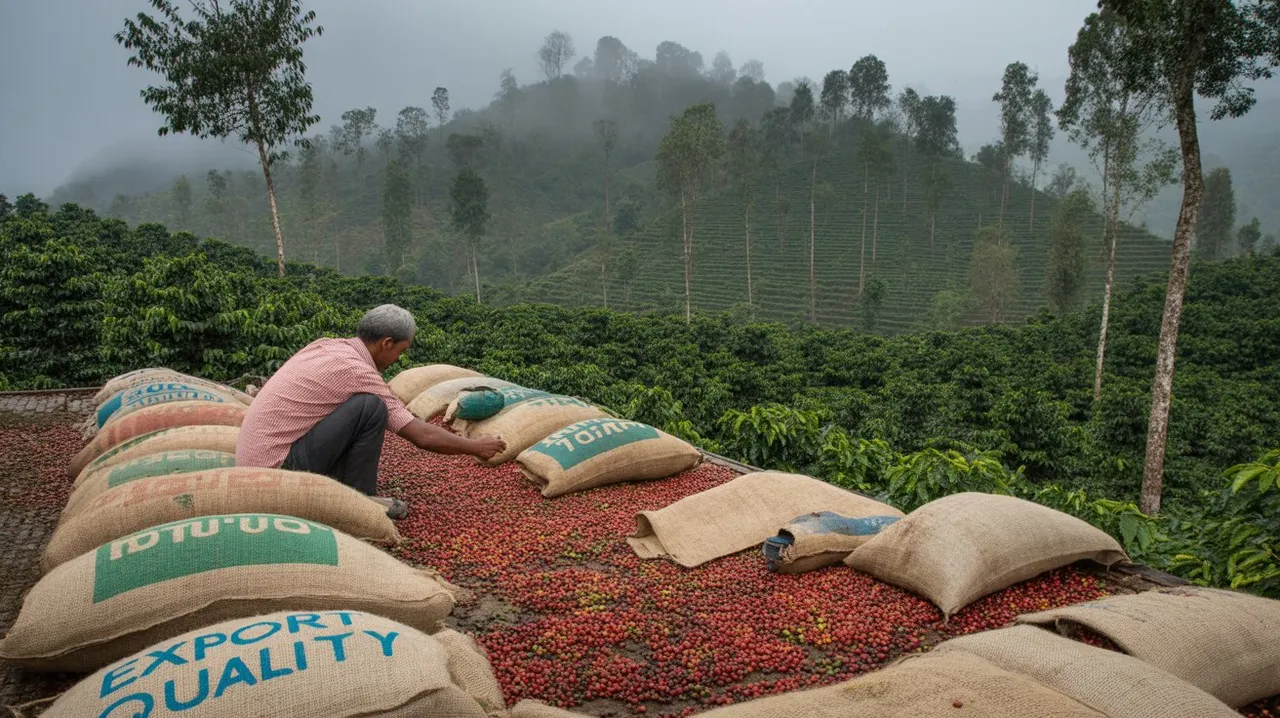
Arabica accounts for the smaller share of Indian production and grows at higher altitudes, mostly between 900 and 1,500 metres. Indian Arabica is known for a mild, medium-bodied cup with soft acidity and, in the best lots, a hint of spice. It is sold as washed parchment, as monsooned coffee — beans exposed to moist monsoon winds in coastal warehouses, which swell and mellow them — and as estate lots from well-known plantations. Arabica suits speciality roasters and premium blends.
Robusta is the larger share of Indian output and grows at lower altitudes, from about 500 to 1,000 metres. Indian Robusta is valued for its heavy body, low acidity and strong crema, which makes it a workhorse for espresso blends and soluble coffee. Washed Robusta, in particular, commands a premium over unwashed lots because it cups cleaner. Buyers should always confirm whether a Robusta lot is washed or unwashed, because the price and the cup differ materially.
A buyer sourcing both species from one exporter can often consolidate shipments, but should treat them as separate products with separate specifications, samples and contracts.
The growing regions
Coorg (Kodagu)
Coorg, in Karnataka, is India's largest coffee district. Its estates grow mainly Robusta, with Arabica at higher elevations, under a canopy of native shade trees. Coorg coffee is known for consistency and volume, and the district has well-established curing works and logistics to the port of Mangalore. For buyers needing reliable volume, Coorg is the first region to shortlist.
Chikmagalur
Chikmagalur, also in Karnataka, is where coffee was first planted in India, and it remains a centre of quality Arabica. The district's estates produce washed Arabica with good acidity and clean cups, and many are certified under Rainforest Alliance or similar schemes. Chikmagalur suits buyers looking for quality Arabica and traceable estate lots.
Wayanad
Wayanad, in Kerala, grows mainly Robusta on small and medium holdings, often alongside pepper and other crops. The region is important for buyers sourcing Robusta in smaller lots and for those who value smallholder supply chains. Wayanad coffee typically moves through curing works in the region before export through Kochi or Mangalore.
Other growing areas include the Nilgiris in Tamil Nadu and the Araku valley in Andhra Pradesh, where smallholder Arabica has gained a following among speciality buyers.
The Coffee Board of India: registration and export permits
The Coffee Board of India, under the Ministry of Commerce and Industry, regulates and promotes the coffee sector. Exporters must be registered with the Coffee Board and hold an Importer Exporter Code (IEC) from the Directorate General of Foreign Trade (DGFT) before they can export coffee.
The export process is straightforward in outline. The exporter registers with the Coffee Board, obtains the necessary permits for each shipment, and arranges quality certification. Coffee for export is graded and inspected, and the exporter must comply with the Coffee Board's quality and packaging requirements. Buyers should ask their supplier for the Coffee Board registration details and for the inspection certificate for each shipment, and should confirm that the exporter is in good standing.
The Coffee Board also runs research, extension and market promotion, and it publishes market information that buyers can use to track prices and trends. Its data is a useful cross-check against a supplier's price claims.
Grades and quality specifications
Indian coffee is sold by grade, and the grade determines price. For Arabica, the main grades are Plantation PB (peaberry), Plantation A, Plantation B and Plantation C, with further grades for small beans and broken beans. For Robusta, the main grades are Robusta Parchment PB, Robusta Parchment AB and Robusta Cherry AB, with lower grades for smaller and broken beans.
Buyers should specify the grade, the screen size, the maximum defect count, the moisture content (typically 10–11.5 percent) and the cup quality in the contract. Pre-shipment samples should be approved against the contract specification, and the buyer should require a quality certificate from an approved laboratory for each lot. For speciality lots, ask for the estate name, the harvest date and the processing method in writing.
EU Deforestation Regulation (EUDR): what buyers must know
The EU Deforestation Regulation (EUDR) requires operators placing coffee on the EU market to show that it was not produced on land deforested after 31 December 2020, and that it was produced in accordance with the law of the country of production. Coffee is one of the commodities covered by the regulation, and Indian exporters shipping to the EU must be able to provide geolocation data for the plots where the coffee was grown.
For buyers, the practical implications are clear. Ask your supplier how it collects and verifies geolocation data, whether it can provide the data in the format your compliance system needs, and how it handles coffee from smallholders, where plot-level data can be harder to collect. Build EUDR compliance into the contract, agree who bears the cost of data collection, and allow extra time for the first shipments while the system beds down. The regulation's application dates have been subject to change, so verify the current timetable with your EU importer or legal adviser before committing to a shipment.
Buyer markets: Italy, Germany, Belgium and the US
Italy is the largest buyer of Indian coffee, driven by its espresso and soluble industries, which value Indian Robusta for body and crema. Germany is a major buyer and a re-export hub, with roasters and traders who buy both Arabica and Robusta. Belgium is an important transit and roasting market, and the United States buys Indian coffee for blends and soluble production.
Market shares move from year to year with prices and harvests, so treat any share figure as indicative and verify the latest trade data before quoting it. What matters for a buyer is that Indian coffee is well established in all four markets, so suppliers understand their quality expectations and documentation needs.
How buyers vet coffee exporters
1. Desk review. Check the exporter's Coffee Board registration, its export history, its main customers and its capacity (indicative). Ask for the exporter's curing and grading facilities, or confirm that it works with a reputable curing works.
2. Samples. Always approve a pre-shipment sample against the contract specification. Cup the sample, check the screen size and defect count, and confirm the moisture content. For speciality lots, ask for a larger sample and cup it with your roaster.
3. Inspection. Agree a pre-shipment inspection by an independent agency, covering grade, moisture, defects and packaging. Hold shipment until the inspection report is approved.
4. Contracts. Use a standard coffee contract, such as the European Coffee Federation (ECF) or Green Coffee Association (GCA) terms, and agree the price basis — typically the relevant futures price plus a differential — the shipment window, the payment terms and the quality arbitration procedure in writing.
Practical sourcing tips
- Buy by grade and specification, not by name alone. Two lots of the same grade can cup very differently, so always approve a sample.
- Agree the price basis early. Most Indian coffee is priced against the relevant futures contract plus a differential. Confirm the differential, the fixing window and the currency in the contract.
- Check the harvest calendar. The Indian coffee harvest runs roughly from November to February for Arabica and from December to March for Robusta, with timing varying by region. Order early in the season for the best choice of lots.
- Specify packaging. Green coffee is usually shipped in jute or polypropylene bags, or in bulk in lined containers. Confirm the bag weight, the marking and the container type in writing.
- Plan for monsooned coffee. Monsooned Malabar is a speciality product with a long processing time — allow extra lead time and confirm the monsooning period.
- Use the right Incoterms. FOB Mangalore or Kochi suits buyers with their own freight arrangements; CIF suits buyers who prefer the supplier to arrange shipping.
Frequently asked questions
What is the difference between Indian Arabica and Robusta?
Arabica is milder, more acidic and grown at higher altitudes, while Robusta is heavier-bodied, less acidic and grown at lower altitudes. Arabica suits speciality roasting; Robusta suits espresso blends and soluble coffee.
Which region produces the most coffee in India?
Coorg (Kodagu) in Karnataka is India's largest coffee district, producing mainly Robusta with some Arabica at higher elevations.
Do exporters need Coffee Board registration?
Yes. Exporters must be registered with the Coffee Board of India and hold an Importer Exporter Code (IEC) from DGFT before exporting coffee.
What is EUDR, and does it affect Indian coffee?
The EU Deforestation Regulation requires coffee placed on the EU market to be deforestation-free and legally produced, with geolocation data for the plots. Indian exporters shipping to the EU must provide that data.
How is Indian coffee graded?
Coffee is graded by bean size, shape and defect count, with grades such as Plantation A for Arabica and Robusta Parchment AB for Robusta. Always specify the grade, screen size and defect count in the contract.
When is the Indian coffee harvest?
The harvest runs roughly from November to February for Arabica and December to March for Robusta, varying by region. Order early in the season for the best choice of lots.
Final word
Coffee exports from India offer global buyers a distinctive origin with both quality Arabica and reliable Robusta, backed by a regulated export system and a long trading history. The buyers who do best are the ones who specify the grade and cup quality, approve samples, verify Coffee Board registration, and build EUDR compliance into the contract from the start.
All prices, shares and capacities in this guide are indicative. Verify current prices, regulations and certification status with the Coffee Board of India, the supplier and your customs adviser before committing to an order.