Explore our in-depth 2026 guide to dairy products exports from India, covering skimmed milk powder, ghee, cheese, and global compliance mandates. Learn practical workflows for sourcing high-volume, verified dairy products.
Dairy Products Exports from India: Ghee, Milk Powder & Cheese Markets Guide (2026)
India is the world's largest milk producer, with a vast dairy sector built on millions of small farmers, village cooperatives and modern processing plants. For most of its history, that milk was used at home. In recent years, more of it has been turned into export products: milk powder, ghee, butter, cheese and casein, sold to buyers in the Middle East, South Asia and North America.
This guide explains dairy exports from India in practical terms: the products buyers ask for, the cooperative system behind them, the food safety and inspection rules, the main markets, and how cold-chain and packaging work. Where prices or capacities are mentioned, treat them as indicative only and verify them live before you commit to an order.
India as the world's largest milk producer
India's milk production is spread across the country, with large producing states including Uttar Pradesh, Rajasthan, Madhya Pradesh, Gujarat, Andhra Pradesh, Punjab, Haryana, Maharashtra, Bihar and Tamil Nadu. Much of the milk comes from small holdings, often with only a few animals, and is collected daily through village societies and cooperatives.
That structure has two practical effects. First, supply is seasonal: milk is more plentiful in the winter flush season and tighter in the summer lean season. Second, quality depends on collection, chilling and testing at village level. A processor who collects and chills milk quickly will have better raw material for powder, ghee and cheese than one who does not.
Export products: milk powder, ghee, butter, cheese and casein
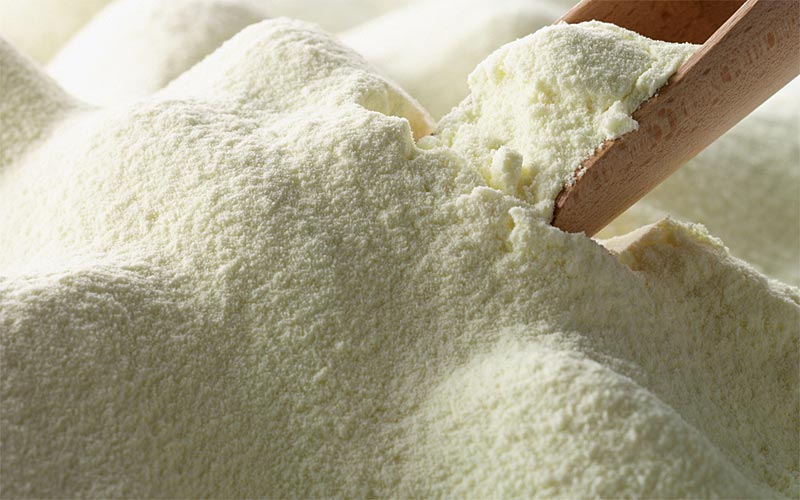
Skimmed milk powder (SMP) is one of the main export products. It is made by removing fat and water from milk, and is used for reconstituted milk, bakery products, confectionery, infant food and industrial food manufacturing. Buyers check protein, moisture, fat, solubility, acidity and microbiology. Whole milk powder is similar, but retains more fat.
Ghee is clarified butter, a traditional Indian product with a long shelf life at room temperature. It is made by heating butter to remove water and milk solids, and is used for cooking, sweets and religious purposes. Buyers check fat, moisture, free fatty acids and authenticity, and often want a specific flavour and colour. Ghee is sold in tins, jars and pouches, and in bulk for food manufacturers.
Butter is exported as salted table butter and as unsalted white butter for cooking and industrial use. Buyers check fat, moisture, salt and microbiology, and may want a specific pack size for retail or food service.
Cheese includes paneer, processed cheese, cheddar and mozzarella. Paneer is a fresh, acid-coagulated cheese, often exported frozen as cubes or blocks. Processed cheese and mozzarella are used for pizzas, sandwiches and ready meals, and buyers check melt, stretch, fat, moisture and shelf life.
Casein is a milk protein used in food, nutrition and industrial products. Acid casein and rennet casein are made by coagulating skimmed milk, washing and drying the curd. Buyers check protein, moisture, ash and microbiology.
NDDB and the Amul cooperative context
India's dairy sector is shaped by the cooperative movement, led by the National Dairy Development Board (NDDB) and the Anand pattern of cooperatives. Under this pattern, village milk societies collect milk from farmers, district unions process it, and state federations market it. The best-known example is the Gujarat Cooperative Milk Marketing Federation, which markets the Amul brand.
Amul began as a small cooperative in Anand, Gujarat, and grew into one of India's best-known food brands, selling milk, butter, ghee, cheese, milk powder and ice cream. Its success showed that small farmers, organised into cooperatives, could build a modern dairy business. Other state federations, such as Karnataka Milk Federation (Nandini), Mother Dairy and Milma in Kerala, play a similar role in their states.
FSSAI and Export Inspection Agency certification
Dairy is a food product, so food safety and inspection are central to export. The Food Safety and Standards Authority of India (FSSAI) licenses food businesses and sets food safety standards. A dairy processor or merchant exporter normally needs an FSSAI licence, and the plant should follow good manufacturing and hygiene practices. Buyers may ask for the FSSAI licence number and for test reports from a recognised laboratory.
The Export Inspection Council (EIC) and its Export Inspection Agencies (EIA) certify dairy products for export where the destination requires it. EIA approval involves checking the plant, its hygiene, its testing and its records, and inspecting consignments where required. A health certificate or certificate of inspection may be issued, and the buyer may need it for customs clearance.
Other certifications may be needed, depending on the market. Halal certification is important for the UAE, Saudi Arabia and other Muslim-majority markets. Kosher certification may be needed for some buyers in the USA. Some buyers also ask for FSSC 22000, BRCGS or other food safety certifications. Check the destination's requirements before you ship, and allow time for testing and certification.
Key markets: UAE, Bangladesh, Nepal and the USA
United Arab Emirates is a key market, especially for ghee, milk powder and butter. The UAE buys for its own consumers, for its large South Asian community, and for re-export to the wider Gulf region. Buyers want Halal certification, clear labelling in English and Arabic where required, and consistent quality.
Bangladesh is an important buyer of milk powder and other dairy products, used for reconstituted milk and food manufacturing. Proximity and short shipping times give Indian exporters an advantage, and buyers often want a regular supply at a competitive price.
Nepal buys milk powder, ghee, butter and cheese from India, often through road transport across the open border. Buyers want a reliable supply, clear labelling and a supplier who understands cross-border documentation and transport.
United States buys Indian dairy mainly for the South Asian community, for ghee, paneer and other traditional products, and for food manufacturing. Buyers require strict food safety documentation and clear labelling, and some dairy products face import quotas, so check current US import rules before you quote. Other markets include Saudi Arabia, Qatar, Oman, Kuwait, Sri Lanka, Singapore, Malaysia, the Philippines and Vietnam.
Cold-chain and packaging requirements
Dairy products need careful temperature control. A failure in the cold chain can spoil a shipment, even if the product was good when it left the plant. Frozen products, such as butter, frozen paneer and mozzarella, need a reefer container set well below freezing, pre-cooled before loading. Chilled products, such as fresh cheese, need a chilled reefer, usually at 2 to 4 degrees Celsius. Milk powder, ghee and casein can be shipped at ambient temperature, but still need a clean, dry container, away from moisture, heat and strong odours.
Packaging should protect the product from moisture, oxygen and light. Milk powder is often packed in multi-layer bags, in cartons or in bulk bags. Ghee is packed in tins, jars or pouches. Butter is packed in cartons, in foil or in bulk blocks. Cheese is packed in vacuum packs, in blocks or in shredded packs, with clear labelling of product, weight, batch, manufacturing date and expiry date.
Export procedure and documentation
Register the business, obtain an Importer Exporter Code from the Directorate General of Foreign Trade, and obtain an FSSAI licence. Agree the specification, quantity, price, Incoterms, payment terms and delivery schedule in writing. Source the product from an approved plant, with a pre-shipment sample and test report where possible. Arrange EIA inspection and certification where required, book freight, prepare documents, and file the shipping bill. Then send the buyer the document set and receive payment.
Documents commonly include the commercial invoice, packing list, certificate of origin, health certificate, certificate of analysis, bill of lading, and Halal certificate where required. New relationships should use a secure payment method such as a letter of credit. Check the buyer's creditworthiness and the destination's import rules before you ship. To check a supplier is genuine, ask for FSSAI and IEC details, a certificate of analysis and a sample from the shipment batch, a plant visit, a trial order and third-party inspection for first shipments. Be wary of prices far below the market.
Frequently asked questions
Is India the world's largest milk producer?
Yes. India produces more milk than any other country, with a large cooperative and private dairy sector. Most milk is used at home, but a growing share is processed for export.
What dairy products does India export?
The main products are skimmed milk powder, whole milk powder, ghee, butter, cheese including paneer, and casein.
What certifications are needed for dairy exports?
A FSSAI licence is a basic requirement, and Export Inspection Agency certification may be needed where the destination requires a health certificate. Halal, Kosher and food safety certifications may also be needed.
Which countries buy Indian dairy products?
The UAE, Bangladesh, Nepal and the USA are among the key markets, along with Saudi Arabia, Sri Lanka, Singapore and Malaysia.
How should dairy products be shipped?
Frozen products need a reefer, chilled products need a chilled reefer, and powder and ghee need a clean, dry container. Check the product's temperature requirements before booking freight.
How can a buyer check a dairy exporter is genuine?
Ask for FSSAI and IEC details, a certificate of analysis and a sample from the shipment batch, a plant visit, a trial order, secure payment and third-party inspection.
Conclusion
Dairy exports from India build on the world's largest milk production and a strong cooperative system, from NDDB and Amul to state federations and private processors. Start with a clear specification, an approved plant, a genuine sample and secure payment, verify prices and requirements live for each order, and build the relationship one consistent shipment at a time.