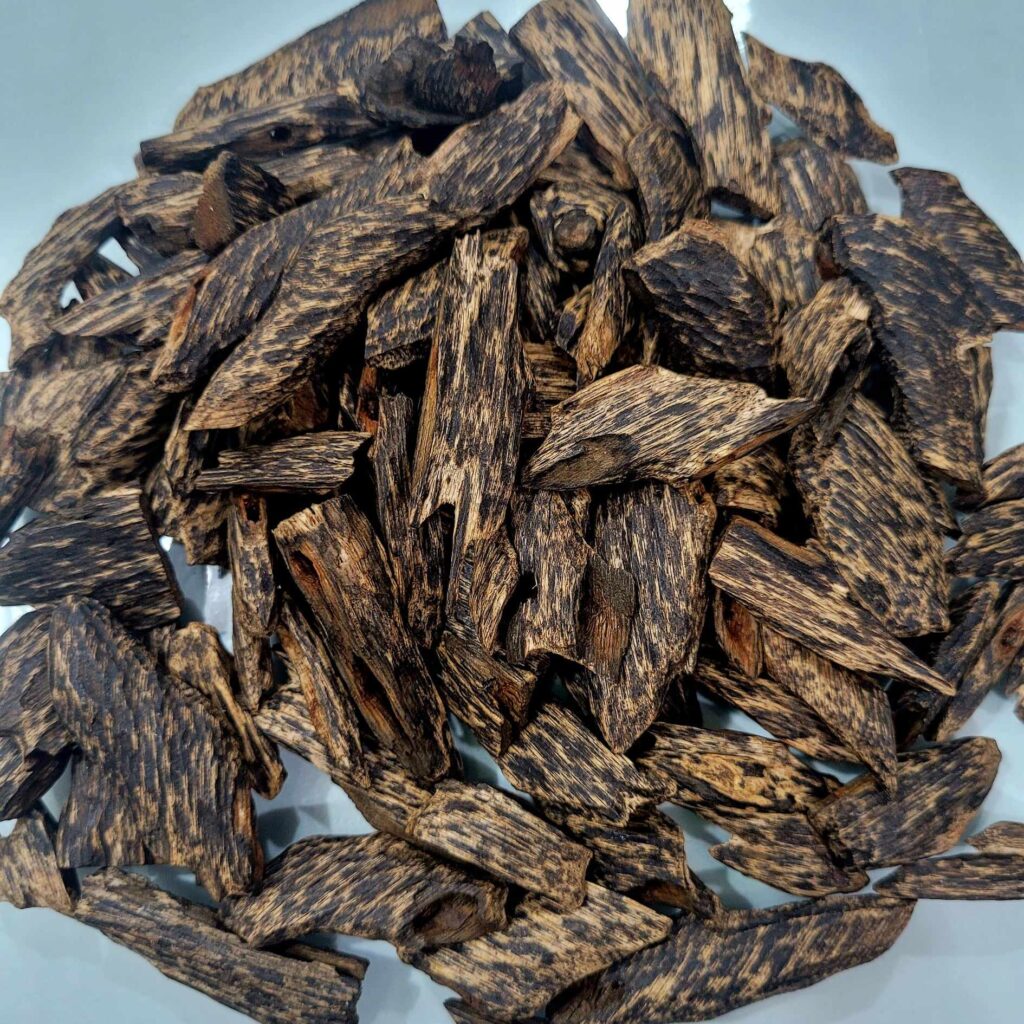
DGFT Notification 46/2026-27 adds Guwahati airport as an authorised export point for agarwood oil and chips. What Northeast exporters need to know about CITES permits, documents and the new route.
DGFT Allows Agarwood Oil & Chips Exports via Guwahati Airport: Notification 46/2026-27 Explained
Exporters in Northeast India have a new, shorter route to global buyers. DGFT Notification No. 46/2026-27, dated 30 October 2026, amends the agarwood export policy to add Lokpriya Gopinath Bordoloi International Airport, Guwahati as an authorised export point for agarwood oil, agarwood chips and allied products. For growers, processors and traders in Assam and the wider Northeast, that is a practical change: cargo that once had to travel to a distant port can now, in principle, leave from the region's main international airport.
This explainer sets out what changed, what did not change, why the Guwahati route matters, what the CITES rules still require, which documents exporters should prepare, and what to do now. It uses only the verified facts in the notification; where a procedure is not stated in the notification, this article says so and advises checking the live position with DGFT, Customs and your freight forwarder before shipping.
What changed: Notification 46/2026-27 in plain terms
DGFT Notification No. 46/2026-27, dated 30 October 2026, amends the export policy for agarwood under Chapter 12 of Schedule 2 of the ITC (HS) Export Policy 2022. The amendment adds Lokpriya Gopinath Bordoloi International Airport, Guwahati as an authorised point of export for agarwood oil, agarwood chips and allied products.
Before this notification, agarwood exports were permitted only through a defined list of ports and airports. Guwahati was not on that list, so Northeast exporters had to move their cargo to one of the authorised points elsewhere in India before it could be exported. That added distance, time, handling and cost — and, for a high-value, sensitive product, extra handling is itself a risk.
The notification does not change the underlying export policy for agarwood. It does not remove any existing restriction, and it does not create a new entitlement to export agarwood that is otherwise prohibited. It adds one more authorised exit point. An exporter still has to meet every other condition that applies to agarwood, including the CITES permit requirement discussed below.
What did not change: the existing authorised ports
The existing authorised ports remain unchanged. They are Mumbai, Nhava Sheva, Kolkata, Cochin, Delhi, Chennai, Tuticorin, Amritsar, Calicut, Thiruvananthapuram, Kandla and Mundra. Exporters who already ship through those points can continue to do so, and nothing in the notification requires them to switch to Guwahati.
The practical effect is choice. An exporter can now compare routes on cost, transit time, flight availability, handling and the buyer's destination, rather than being forced to use a distant port because Guwahati was not permitted. For some shipments, an existing port will still be the better option — for example, where a sea-freight booking or a buyer's consolidation is already arranged there. For others, Guwahati will now be the obvious choice.
Why the Guwahati route matters for Northeast exporters
Agarwood is closely associated with Assam and the Northeast. The region grows and processes agarwood, and its traders have long supplied oil, chips and related products to buyers in the Middle East, East Asia and beyond. Until now, the export leg of that trade had to begin outside the region, which meant the value created in the Northeast still had to leave through a distant gateway.
A Guwahati export point shortens that journey. It reduces the road or rail leg before export, which cuts transit time and the risk of damage, loss or deterioration in transit. Agarwood oil and chips are high-value, low-volume products, so air freight from Guwahati is a realistic option where it was not a practical one before. It also keeps more of the export process — documentation, inspection, packing and handling — within the region, where the exporter, the supplier and the cargo are already located. And it makes it easier for smaller exporters and first-time exporters in the Northeast to enter the trade, because they can deal with an airport and a Customs formation they can reach, rather than managing a shipment remotely through a port in another part of India.
Those benefits will only be realised if the supporting services are in place: airline capacity for cargo, Customs examination and clearance at the airport, secure storage where needed, and freight forwarders who know the product. Exporters should confirm each of those points for their specific shipment before booking, and should not assume that an airport being authorised in the notification automatically means every flight or every forwarder can handle the cargo.
CITES rules: the permit is still mandatory
Agarwood is a regulated product, and the most important rule for exporters has not changed. A CITES export permit is still mandatory for CITES-listed species. Agarwood comes from trees in the genus Aquilaria, which are listed under the Convention on International Trade in Endangered Species of Wild Fauna and Flora (CITES), and international trade in the wood, chips, oil and other derivatives is controlled.
In practice, an exporter must have the correct CITES documentation before the shipment leaves India, and the importing country will normally require its own corresponding documentation. The exact permit, the issuing authority and the conditions depend on the species, the form of the product and the destination country. Exporters should confirm the current CITES position for their exact product with the CITES Management Authority in India and with the buyer's authorities, and should allow time for the permit process. A shipment that arrives at the airport without the correct CITES permit will not be cleared, however the goods are packed or routed. The notification makes the route easier; it does not make the product unregulated.
Documents exporters should prepare
The notification itself adds an export point; it does not list a new set of documents. Exporters should therefore prepare the standard export documentation for an agarwood shipment and confirm the exact list with their Customs broker and freight forwarder before the shipment is booked.
- Importer Exporter Code (IEC) and GST registration, as for any export from India.
- CITES export permit for the species and product concerned, obtained before shipment.
- Commercial invoice and packing list, describing the product, quantity, value and origin accurately and consistently across all documents.
- Certificate of origin, where the buyer or the destination country requires it.
- Shipping bill and related Customs declarations, filed through the airport Customs formation at Guwahati for shipments using the new route.
- Air waybill for the Guwahati flight, and any airline-specific declarations for the cargo.
- Test reports, quality certificates or product specifications where the buyer has asked for them.
- Any state or forest-department documentation that applies to the sourcing of the raw material, where the supply chain requires it. Confirm this with the relevant authority, as the position can vary by source and by state.
Consistency across documents is the most common avoidable problem in this trade. The product description, quantity, value and origin should match on the invoice, packing list, CITES permit, shipping bill and air waybill. A mismatch — even a small one — can hold a shipment at the airport while it is checked, and for a high-value cargo that delay can be costly.
What exporters must do now
- Read the notification. Check DGFT Notification No. 46/2026-27 dated 30 October 2026 on dgft.gov.in, and confirm that your product — oil, chips or an allied product — is within the scope of the amendment.
- Confirm the CITES position. Apply for, or confirm, the CITES export permit for your species and product, and confirm the import documentation the buyer needs in the destination country. Allow time for this; do not book a flight until the permit position is clear.
- Talk to the airport and your forwarder. Confirm cargo handling, Customs examination, storage and flight availability at Lokpriya Gopinath Bordoloi International Airport for your shipment, and confirm the freight cost and transit time to the buyer's destination.
- Check the commercial terms. Confirm the price, payment terms, Incoterms and the buyer's quality and documentation requirements in writing before the shipment leaves. For agarwood oil and chips, the contract should state the grade, the form, the quantity and the testing or certification the buyer requires.
- Prepare the documents as a set. Assemble the IEC, CITES permit, invoice, packing list, certificate of origin, shipping bill and air waybill together, and check that the product description and quantities match across all of them.
- Plan for inspection. Allow time for Customs examination and for any inspection the authorities require at Guwahati, and keep the goods packed and labelled in a way that allows examination without damaging them.
The most common mistake would be to read the notification as a general relaxation of agarwood export controls. It is not: the CITES requirement, the need for correct documentation and the need for a genuine, lawful supply chain all remain.
Frequently asked questions
What did DGFT Notification 46/2026-27 change?
It added Lokpriya Gopinath Bordoloi International Airport, Guwahati as an authorised export point for agarwood oil, agarwood chips and allied products, under Chapter 12 of Schedule 2 of the ITC (HS) Export Policy 2022. The notification is dated 30 October 2026.
Which ports were already authorised for agarwood exports?
Mumbai, Nhava Sheva, Kolkata, Cochin, Delhi, Chennai, Tuticorin, Amritsar, Calicut, Thiruvananthapuram, Kandla and Mundra. Those ports remain authorised and unchanged by the notification.
Do I still need a CITES permit to export agarwood from Guwahati?
Yes. A CITES export permit is still mandatory for CITES-listed species, and the importing country will normally require its own corresponding documentation. Confirm the permit position for your exact product before shipping.
Can I export agarwood oil and chips from Guwahati now?
The notification authorises Guwahati as an export point for agarwood oil, chips and allied products. Before booking, confirm cargo handling, Customs clearance, flight availability and the CITES permit for your shipment.
Does the notification change the price or the duty on agarwood?
No. The notification changes the authorised export point only. Prices are a matter for the buyer and seller, and any duty or charge in the destination country is a matter for that country's authorities. Verify the live position before you quote.
What should a first-time agarwood exporter do first?
Read the notification on dgft.gov.in, confirm the CITES permit requirement for your product, and speak to a Customs broker and freight forwarder experienced in agarwood. Do not book a flight or promise a delivery date until the permit and the airport handling are confirmed.
This article is based on DGFT Notification No. 46/2026-27 dated 30 October 2026. Procedures, permit requirements and charges change; verify the live position on dgft.gov.in and with Customs, the CITES Management Authority and your freight forwarder before shipping.