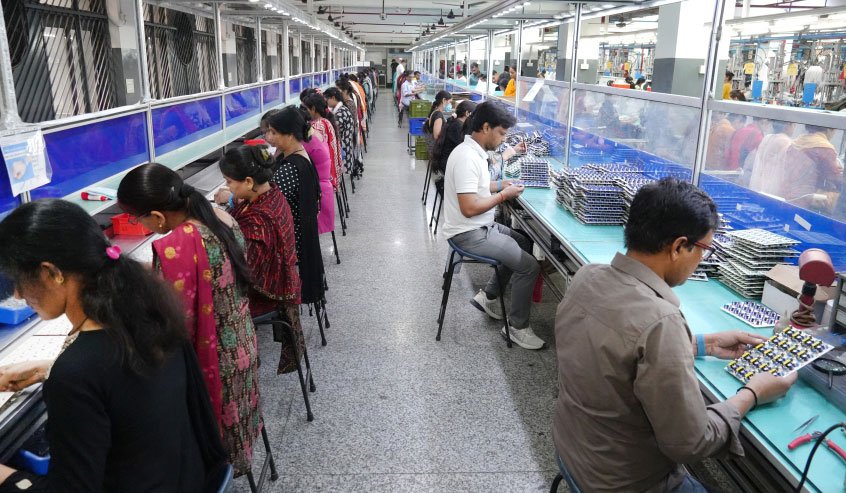
Discover the 2026 guide to electronics exports from India, covering mobile manufacturing growth, the PLI scheme, key export clusters, and mandatory compliance.
India has rapidly transformed into a global electronics manufacturing powerhouse. For international B2B buyers and domestic exporters, understanding the evolving landscape of electronics exports from India is crucial for building resilient supply chains and capitalizing on government incentives.
Driven by strategic policy interventions, robust manufacturing ecosystems, and aggressive scaling by global tech giants, Indian electronic hardware shipments have surged to historic highs. This comprehensive 2026 guide breaks down the growth drivers, key export destinations, critical compliance frameworks, and operational strategies needed to succeed in this market.
The Mobile Phones and Components Growth Story
The narrative of electronics exports from India is anchored heavily by the exponential rise of mobile phone manufacturing. What began primarily as a semi-knocked-down (SKD) assembly hub has evolved into a sophisticated completely-knocked-down (CKD) and surface-mount technology (SMT) ecosystem.
Global electronics giants and their contract manufacturing partners have established massive fabrication and assembly plants across the subcontinent. Smartphones now account for the lion's share of India's electronic hardware outbounds. Beyond finished devices, the components segment is witnessing unprecedented localization. Sub-assemblies, camera modules, charger units, and printed circuit board assemblies (PCBAs) are increasingly sourced and manufactured locally, strengthening the upstream value chain for global brands.
The PLI Scheme for Electronics: Fueling Scale
The catalyst behind this manufacturing revolution is the government's Production Linked Incentive (PLI) scheme. Designed to incentivize incremental sales of goods manufactured in domestic units, the PLI framework has directly attracted multi-billion-dollar investments into the country.
Key Pillars of the PLI Framework
- PLI for Large-Scale Electronics Manufacturing: Targets flagship smartphone producers and electronic components, offering financial incentives ranging from 4% to 6% on incremental sales over base years.
- PLI for IT Hardware: Focuses on laptops, servers, tablets, and all-in-one PCs, attracting major global PC makers to set up local production lines.
- Component Ecosystem Incentives: Dedicated schemes aimed at bridging gaps in the supply chain by subsidizing capital expenditure for electronic component manufacturing, semiconductor packaging, and display fabrication.
For B2B buyers, these schemes translate into globally competitive pricing, heavily optimized production lines, and economies of scale that rival traditional manufacturing hubs in East Asia.
Manufacturing Clusters: Noida, Chennai, Bengaluru, and Sri City
India's electronics manufacturing footprint is concentrated in four primary geographic clusters, each offering unique logistical and operational advantages for exporters and global buyers.
1. Noida and Greater Noida (Northern Hub)
Situated close to the national capital, this cluster is a primary nerve center for mobile phone manufacturing, consumer electronics, and appliance production. It boasts extensive supplier parks and direct access to major northern freight corridors.
2. Chennai and Sri City (Southern Corridor)
Spanning the borders of Tamil Nadu and Andhra Pradesh, this coastal hub is a global magnet for electronics, automotive components, and heavy engineering. Proximity to deep-water ports like Chennai and Ennore makes it ideal for rapid ocean freight dispatch to Western and Asian markets.
3. Bengaluru (Technology and SMT Hub)
Known as the Silicon Valley of India, Bengaluru excels in high-value electronic design, aerospace electronics, medical devices, and advanced PCB surface-mount technology. It houses deep engineering talent and specialized design houses.
Key Export Markets for Indian Electronics
Indian electronic goods are currently shipped to over 100 countries, with destinations diversifying rapidly. Traditional markets have expanded, and emerging corridors are opening up for specialized hardware.
| Export Destination | Primary Product Categories | Key Logistic Advantage | Typical Transit Mode |
|---|---|---|---|
| United States | Smartphones, IT Hardware, Telecom Equipment | Direct air cargo hubs, established trade routes | Air Freight & Ocean |
| United Arab Emirates (UAE) | Consumer Electronics, Mobile Devices | Strategic re-export hub for Middle East and Africa | Air & Ocean Freight |
| Netherlands & Europe | Telecom gear, Electronic components, Automotive electronics | Strict compliance adherence, well-connected ports | Ocean & Multimodal |
| United Kingdom | Mobile Phones, Consumer Durables | Established trade agreements, fast customs clearance | Air Cargo |
BIS CRS and WPC Compliance for Exporters
Navigating regulatory compliance is non-negotiable for anyone trading electronic hardware originating from or entering India. Exporters must ensure their products meet rigorous statutory quality benchmarks before shipping.
Bureau of Indian Standards (BIS) - Compulsory Registration Scheme (CRS)
Electrical and electronic goods notified under the BIS CRS must be tested in BIS-recognized laboratories and bear the standard mark. This applies to power adapters, laptops, mobile phones, LED lights, and consumer electronics. Buyers must verify that their manufacturing partners hold valid, up-to-date BIS registration numbers corresponding to the exact factory address.
Wireless Planning and Coordination (WPC) Wing
Any electronic device featuring wireless technologies (Wi-Fi, Bluetooth, Zigbee, cellular modules) requires Equipment Type Approval (ETA) from the WPC wing of the Department of Telecommunications. Exporters must submit technical test reports from accredited international or domestic labs to secure this certification.
Essential Export Documentation Checklist
Flawless paperwork ensures seamless customs clearance and prevents costly demurrage charges at ports of exit. Prepare the following documentation for every commercial consignment:
- Commercial Invoice: Clearly stating HS codes, unit prices, total value, and buyer-seller details.
- Packing List: Detailed breakdown of gross/net weights, carton dimensions, and palletization.
- Bill of Lading (B/L) or Air Waybill (AWB): The official contract of carriage issued by the logistics carrier.
- Certificate of Origin (CoO): Required to claim preferential tariff benefits under various Free Trade Agreements (FTAs).
- BIS and WPC Certificates: Copies of valid compliance certificates accompanying the shipment documentation.
- LUT (Letter of Undertaking): Filed electronically via the GST portal to enable zero-rated export processing without paying upfront integrated goods and services tax (IGST).
Frequently Asked Questions
What are the main electronic products exported from India?
Smartphones and mobile devices constitute the largest share of electronics exports from India. This is followed by consumer electronics, IT hardware peripherals, LED lighting, electronic components, and automotive electronics assemblies.
How does the PLI scheme benefit international B2B buyers?
The PLI scheme incentivizes manufacturers to scale up production and lower unit costs. International buyers benefit directly through highly competitive pricing, access to upgraded factory infrastructure, and reliable, high-volume manufacturing partners.
Is BIS certification mandatory for all exported electronics?
BIS CRS is legally mandatory for specified electronic items sold domestically in India. For pure exports, while requirements depend on destination country standards, manufacturers operating in India must maintain strict quality control standards, and factories producing for both domestic and export markets typically secure BIS approval.
What are the primary manufacturing clusters for electronics in India?
The four major manufacturing hubs are Noida (Northern cluster), Chennai and Sri City (Southern corridor), and Bengaluru (tech and SMT hub). Each offers specialized infrastructure, skilled labor, and strong logistics connectivity.
How long does WPC certification take for wireless devices?
Obtaining an Equipment Type Approval (ETA) from the WPC wing typically takes anywhere from 1 to 3 weeks, provided all foreign test reports (FCC, CE) and technical documentation are submitted accurately through the online portal.
What documents are required to claim GST refunds on electronics exports?
Exporters must furnish a shipping bill filed on the ICEGATE portal, a valid GST return (GSTR-3B), a digital Letter of Undertaking (LUT), and commercial invoices that match the bank realization certificates (BRC).
How can I verify the credentials of an Indian electronics manufacturer?
B2B buyers can vet suppliers by checking their IEC (Importer-Exporter Code), verifying active BIS registration licenses, reviewing past export performance data, and connecting with verified suppliers on trusted B2B marketplaces like Today Adviser.
Conclusion
The electronics export sector in India represents one of the most dynamic trade opportunities globally. Backed by proactive government policies, world-class manufacturing clusters, and strict adherence to international quality standards, Indian exporters are well-positioned to serve global supply chains.
Ready to source high-quality electronic components or finished devices? Post your requirement or connect with verified suppliers and exporters on Today Adviser today.