How to use export buyer directories and international buyer databases properly — searching, judging data quality, and converting lists into orders.
Every exporter has heard the promise: buy a list of ten thousand importers and your order book will fill itself. It rarely works that way. A list of names is not a pipeline, and a database is only as good as the way you use it. The exporters who get real orders from buyer directories are the ones who know what these tools are, how to search them properly, and how to turn a name on a list into a conversation, a sample and a paid order.
This guide explains how to use export buyer directories and international buyer databases properly — what they contain, which ones are worth paying for, how to search by HS code and country, how to judge whether the data is fresh, and how to combine them with customs data to build a list of buyers worth contacting.
What buyer directories and databases actually are
An export buyer directory is a searchable listing of companies that buy products internationally — usually with the company name, country, product interests and some contact details. Some directories are general B2B marketplaces where buyers post live requirements; others are curated lists organised by product or country. The TodayAdviser buyer directory, for example, lists live buy leads from importers, so you see what buyers want right now, in what quantity and in which country.
A buyer database is a step deeper. Databases are built from shipment records, customs data, company registries and trade-show records, and they typically include import history: what a company bought, how much, how often and from whom. Well-known examples include ITC TradeMap for market-level data, and commercial shipment databases such as ImportGenius, Panjiva and Volza, alongside Indian shipment-data providers.
The distinction matters. A directory answers "who might buy from me?" A database answers "who already buys what I sell, and how regularly?" You need both: directories for live demand, databases for verified buying behaviour.
Free vs paid databases compared
Free sources are a good place to start. ITC TradeMap shows which countries import your product and in what volumes, at no cost for basic use. Zauba and similar Indian shipment-data sites show individual shipment records. DGFT and APEDA publish Indian export statistics by product and destination. Export Promotion Councils often share buyer lists and market reports with members.
Free sources have limits: company-level detail is often restricted, contact information is rarely included, and the data may be months old. Paid databases solve these problems. For an indicative subscription of a few hundred to a few thousand US dollars a year — verify live pricing before you buy — you typically get company names, shipment frequency, quantities, supplier names and sometimes contact details, searchable by HS code, country and date range.
Which should you choose? Start free while you learn your HS codes and target markets. Pay when you have a clear product and a shortlist of countries, and when you can name the decision you will make with the data. A subscription nobody uses is the most expensive option of all. Many providers offer trials or single-country reports; use them before committing to an annual plan.
How to search: HS code, country and product
Good searching starts before you open the database. First, find the correct HS code for your product — the international classification number used in customs declarations. A spice exporter works with different codes for whole, ground and mixed spices; a textile exporter with different codes for fabric, made-ups and garments. Your customs house agent or your EPC can confirm the right code, and getting it wrong means researching the wrong buyers.
Search in this order. Start with the HS code to find every company importing that product. Filter by country to match your target markets — consider demand, import duties, shipping time and whether Indian products already sell there. Then filter by recency and frequency: companies that imported in the last six months, and more than once, are far better prospects than a company with a single shipment two years ago.
Refine further by volume. A company importing two containers a month is a realistic target for a mid-sized exporter; a company importing two hundred containers a month probably buys from very large suppliers. Match the buyer's scale to your capacity, and be honest about your indicative monthly production capacity when you approach them.
How to judge data freshness and quality
Not all buyer data is equal, and stale data wastes more time than no data. Check these five things before you trust a list:
- Recency. When was the last recorded shipment? Data more than a year old should be treated as a lead to verify, not a fact.
- Frequency. One shipment could be a trial; regular monthly shipments indicate a real, ongoing requirement.
- Consistency. Does the company's import pattern match what its website says it sells? Mismatches are a warning sign.
- Completeness. Are company names, addresses and contact details present and plausible? Lists full of generic email addresses are low quality.
- Source. Data drawn from official customs records is far more reliable than scraped web listings or unknown "compiled" lists.
A useful test: pick five companies from any list and verify them independently — website, registration, LinkedIn presence. If three of the five check out, the list is usable. If only one does, find a better source.
Combining directories with customs and trade data
The most effective approach uses directories and databases together. Use a buyer directory such as the TodayAdviser buyer directory to find live demand — buyers posting requirements today. Use trade data to check whether those buyers (or similar companies) import your product regularly, in what volumes and from which countries. Use LinkedIn to find the right person — an import manager or procurement head — at the companies on your shortlist.
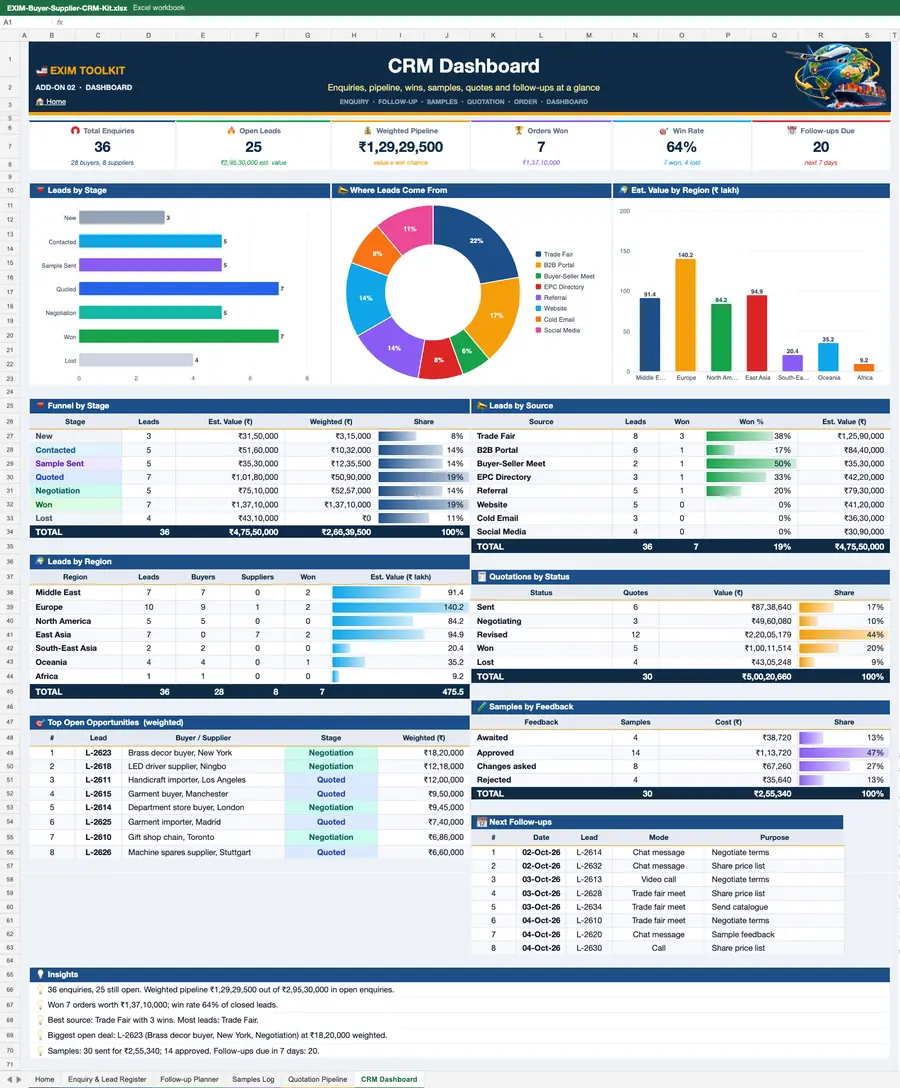
Work in a simple loop each week: pull the newest buy leads from the directory; check the most promising ones against shipment data; find the contact on LinkedIn; send a short, specific message. Over a month this produces a shortlist of twenty to fifty verified importers who buy your product, buy it regularly, and have shown recent demand. That shortlist is worth more than any ten-thousand-name list.
Keep records. Note the source of every name, the date you found it, the HS code you used, and the outcome of each contact. When a list goes stale you will know exactly which parts to refresh, and when a buyer replies after three months you will know exactly where they came from.
From list to first order: the outreach workflow
A list becomes an order through a disciplined workflow. Step one: prioritise. Rank your shortlist by fit — product match, country, import frequency and company size — and contact the top twenty first.
Step two: personalise the first message. Mention the product, the buyer's country and one fact that shows you did your homework, such as the product category they import. Keep it to four lines: who you are, what you supply, one proof point and a simple question. Attach nothing in the first message.
Step three: follow up. Send a second message after four days with one useful addition — a photograph, a certification or an indicative price. Send a final short check-in after ten days. Most replies come after the second message.
Step four: qualify before you invest. Ask about volumes, target prices, packaging and payment terms before you spend on samples or customised production. Step five: verify and start small — a trial order on advance payment or an irrevocable letter of credit (LC), with credit checks through your bank or ECGC (Export Credit Guarantee Corporation). Genuine buyers do not ask you to pay "registration fees" or "customs deposits" to receive an order.
Find buyers faster with TodayAdviser
Directories and databases are tools, not magic. Used well, they turn guesswork into a shortlist of real importers who buy your product, buy it regularly and are buying now. If you want to start with live demand, browse current import requirements on the TodayAdviser buyer directory and post your product requirement so verified buyers can find you.
Frequently asked questions
What is an export buyer directory?
A searchable listing of companies that buy products internationally, usually with company names, countries, product interests and contact details. Some directories also list live buy requirements posted by importers, which is the fastest way to find current demand.
Are free buyer databases reliable?
Free sources such as ITC TradeMap and government trade statistics are reliable for market-level research, but they rarely include company contact details. Treat free company lists with caution: check recency, verify a sample of entries independently, and be wary of lists with no clear source.
How do I find buyers by HS code?
Find your product's HS code, then search a shipment or trade database for companies importing goods under that code. Filter by country, recency and frequency to build a shortlist of regular importers, then find the right contact at each company.
How much does a buyer database cost?
Indicative subscriptions for commercial shipment databases run from a few hundred to a few thousand US dollars a year depending on coverage — verify live pricing before subscribing. Start with free sources and trials, and pay only when you have a clear product and market to research.
How do I know if a buyer from a directory is genuine?
Verify the company's registration, website and address, prefer company email domains, ask for trade references, start with a small trial order on advance payment or LC, and use your bank or ECGC for credit checks. Walk away from any buyer who asks you to pay fees to receive an order.
How many buyers should I contact from a list?
Quality beats quantity. A shortlist of twenty to fifty verified, regular importers — contacted with personalised messages and proper follow-up — will outperform a thousand cold emails. Track replies and orders per list so you learn which sources actually produce business.