A practical 2026 buyer guide to footwear exports from India — clusters, CLE, BIS quality rules, tariffs and factory vetting for global buyers.
Footwear Exports from India: Clusters, CLE & Global Buyer Guide (2026)
India is one of the world's largest footwear producers, and its export industry has grown from a leather-led trade into a broad manufacturing base covering leather shoes, sports footwear, sandals, safety boots and fashion lines. For a global buyer, India offers scale, a deep pool of skilled labour and a wide choice of materials — but also a fragmented supplier base where quality varies sharply from factory to factory.
This guide explains how footwear exports from India work in 2026: the clusters, the difference between leather and non-leather lines, the role of the Council for Leather Exports (CLE), the quality rules buyers must know, and a practical way to vet factories before placing an order.
Why buyers source footwear from India
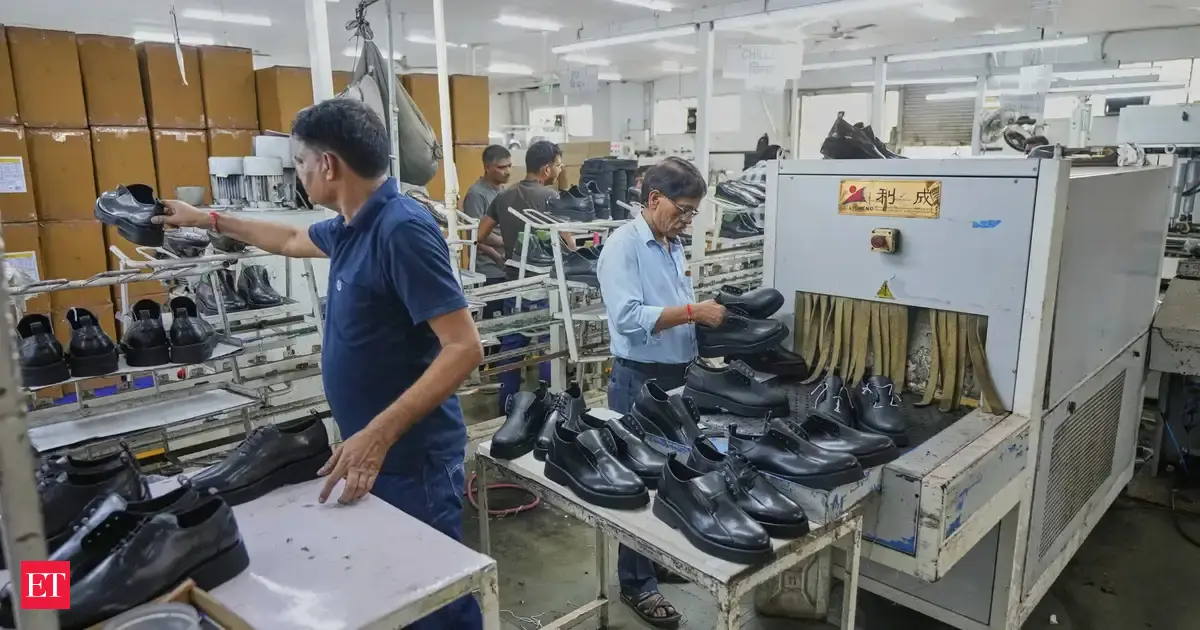
India's footwear industry combines large-scale manufacturing with hand-finished craftsmanship. Factories range from vertically integrated units that tan leather, cut, stitch and finish in-house, to specialist stitching and assembly units that work to a buyer's specification. That range is an advantage for buyers who need anything from premium hand-stitched leather shoes to high-volume synthetic trainers.
Export-oriented manufacturers are used to working to European and American specifications, including detailed tech packs, material cards and testing protocols. Lead times, minimum order quantities and prices vary widely by product and factory, so treat any quoted figure as indicative until it is confirmed in a written purchase order.
The four footwear clusters
Agra — leather footwear and handcrafted shoes
Agra, in Uttar Pradesh, is India's best-known leather footwear centre, with a tradition of handcrafted men's and women's shoes. The cluster is strong in Goodyear-welted and hand-stitched leather shoes, formal footwear and fashion lines, and it hosts a dense network of small and medium units alongside larger export houses. Agra suits buyers sourcing premium leather shoes in moderate volumes who value craftsmanship.
Kanpur — leather goods and safety footwear
Kanpur is the historic heart of India's leather industry, with tanneries, leather finishing units and footwear factories in close proximity. The cluster is strong in safety and industrial footwear, work boots and leather uppers, and it benefits from local access to tanned leather and components. Buyers sourcing safety shoes and leather uppers should include Kanpur in their search, and should check that tanneries meet environmental norms.
Chennai — large-scale export manufacturing
Chennai and its surrounding districts in Tamil Nadu host some of India's largest footwear export factories, many of them set up with foreign technical collaboration. The cluster is strong in sports and athletic footwear, casual shoes and large-volume leather footwear for global brands. Its advantages are scale, modern production lines, in-house testing laboratories and direct access to Chennai Port.
Ambur — leather footwear and tanning
Ambur, in Tamil Nadu, is a specialist leather footwear and tanning centre with a long export history. The cluster is known for quality leather uppers, women's fashion footwear and children's shoes, and it works closely with the tanneries of the Vaniyambadi–Ambur belt. Buyers sourcing leather uppers and fashion footwear in mid-size runs will find capable, export-experienced suppliers here.
Leather versus non-leather footwear
The choice between leather and non-leather footwear shapes everything from factory selection to compliance.
Leather footwear is India's traditional strength. Buyers should specify the leather type (full grain, corrected grain or suede), the tanning method (chrome or vegetable tanned), thickness, finish and colour fastness. Chrome-tanned leather dominates export production, but vegetable-tanned leather is growing for premium and sustainable lines. Ask for the tannery's environmental compliance certificates and check that effluent treatment is in place.
Non-leather footwear — synthetic, textile and sports footwear — has grown rapidly as global brands shift volume into India. These lines depend on imported or locally made synthetic uppers, EVA and PU soles, and specialised machinery for injection moulding and vulcanising. When sourcing non-leather footwear, check the factory's experience with the specific sole technology you need, because the tooling and process knowledge differ sharply from leather lines.
The Council for Leather Exports (CLE)
The Council for Leather Exports (CLE), sponsored by the Government of India, is the export promotion council for the leather and leather products industry, including footwear. CLE supports exporters through trade promotion, buyer–seller meets, market intelligence and participation in international fairs, and it helps members navigate export documentation and policy changes.
For buyers, CLE is a useful starting point for finding verified exporters. Its member directory and the exhibitor lists from its trade events give a shortlist of companies that are actively exporting. CLE also works with the government on policy issues affecting the sector, including duty structures, quality standards and market access.
BIS quality control orders for footwear
India's Bureau of Indian Standards (BIS) has brought footwear under mandatory quality control orders (QCOs). Under these orders, specified footwear products sold in India must carry the BIS standard mark and conform to the relevant Indian standard. The orders apply to the domestic market, but they affect exporters too: many factories now run BIS-compliant production lines, and buyers sourcing for the Indian market must ensure their products meet the applicable standards.
Exporters should confirm which standards apply to their product category and whether the factory holds a BIS licence for the relevant standard. Buyers should ask for test reports from BIS-recognised laboratories and check that the factory's quality system covers incoming material inspection, in-process checks and final inspection against the buyer's own acceptance quality limit (AQL) — commonly AQL 2.5 for major defects and 4.0 for minor defects, or as agreed in the contract.
Buyer markets: US, EU and UK
The United States, the European Union and the United Kingdom are the three most important markets for Indian footwear, and each buys differently.
United States. US buyers range from large retailers and brands placing high-volume orders to specialist importers sourcing premium leather shoes. US tariff policy has become a live issue for Indian exporters: tariff rates on Indian goods have risen in recent years, and the exact rate depends on the product's classification and the current tariff schedule. Treat any tariff figure as indicative and verify the live rate with your customs broker before costing an order.
European Union. EU buyers place strong emphasis on chemical compliance under REACH, on restricted substances in leather and adhesives, and on environmental and social audits. Expect detailed material declarations, restricted substance lists (RSL) testing and factory audits against standards such as amfori BSCI or Sedex SMETA.
United Kingdom. UK buyers often source fashion and premium leather footwear in smaller, more frequent runs, with shorter lead times and more design changes. The UK market rewards flexibility and quick sampling, so factories with in-house design and sampling teams have an advantage.
How buyers vet footwear factories
1. Desk review. Check the factory's export history, its main customers, its annual capacity (indicative) and its certifications, including ISO 9001 and any social compliance audits. Ask for the factory's product range and its experience with your specific product type.
2. Factory audit. Visit the plant or send an accredited inspector. Look at cutting, stitching and lasting lines, sole attachment, the in-house laboratory, and how the factory stores leather and materials to prevent damage and colour variation. Check fire safety, worker welfare and environmental controls.
3. Sampling. Start with a proto sample to confirm the design, then a salesman's sample and a pre-production sample. Check the sample against the tech pack for measurements, materials, colour, stitching and finishing, and record every deviation.
4. Production and inspection. Agree an AQL level, a final inspection protocol and a third-party inspection arrangement before production starts. Inspect the first shipment at the agreed sampling level, and hold shipment until the inspection report is approved.
Practical sourcing tips
- Provide a complete tech pack. Include last and pattern details, material specifications, colour standards, stitching and construction details, packaging and labelling requirements. Incomplete tech packs are the most common cause of sample failures.
- Agree the costing basis. Ask for a clear cost breakdown — materials, labour, overheads and profit — and agree how material price changes will be handled during the order cycle.
- Confirm the minimum order quantity. Minimums vary by product and material; leather footwear minimums are typically lower than synthetic lines because the material can be bought in smaller lots.
- Specify packaging and labelling. Export footwear needs sturdy cartons, moisture protection, correct barcoding and country-of-origin marking. Confirm the buyer's labelling and hang-tag requirements in writing.
- Plan for seasonality. Footwear orders are seasonal, and factory capacity tightens before the autumn and winter buying seasons. Place orders early and agree a production calendar.
- Use the right Incoterms. FOB Chennai or Nhava Sheva suits buyers with their own freight arrangements; CIF suits buyers who prefer the supplier to arrange shipping.
Frequently asked questions
Which Indian cluster is best for premium leather shoes?
Agra is the best-known cluster for handcrafted and premium leather shoes, while Ambur is strong in leather uppers and fashion footwear. Chennai suits high-volume leather and sports footwear programmes.
What is the Council for Leather Exports (CLE)?
CLE is the Government of India–sponsored export promotion council for leather and leather products, including footwear. It supports exporters through trade promotion, market intelligence and buyer–seller meets, and its member directory is a useful starting point for finding verified exporters.
Do Indian footwear factories need BIS certification?
BIS quality control orders make the BIS standard mark mandatory for specified footwear sold in India. Exporters should confirm which standards apply to their product and whether the factory holds the relevant BIS licence.
How do US tariffs affect Indian footwear exports?
Tariff rates on Indian goods have risen in recent years and depend on the product classification and the current schedule. Treat any tariff figure as indicative and verify the live rate with your customs broker before costing an order.
How long does it take to develop a new footwear style?
Allow several weeks for sampling and approval, plus production time that depends on order size and material availability. Complex styles with new lasts or tooling take longer.
What should buyers check during a factory audit?
Check production lines, the in-house laboratory, material storage, quality records, fire safety, worker welfare and environmental controls. Ask for recent audit reports and customer references.
Final word
Footwear exports from India offer global buyers a rare combination of craftsmanship, scale and product range — from hand-stitched leather shoes in Agra to high-volume sports footwear in Chennai. The buyers who succeed are the ones who choose the cluster that matches their product, verify certifications and compliance, audit the factory, and agree quality, packaging and payment terms in writing before production begins.
All prices, capacities and tariff figures in this guide are indicative. Verify current rates, standards and certification status with CLE, BIS, the supplier and your customs adviser before committing to an order.