
Turn shipment records into buyers — how to use trade data, customs data and HS codes to find and verify importers for your product.
Every container that crosses a border leaves a paper trail. Who shipped it, who received it, what was inside, how much it weighed and what it was worth — all of it is recorded. For an exporter, that paper trail is a map: it shows exactly which companies buy your product, in which countries, how often and in what quantities. Learning to read trade data is the closest thing to a shortcut in export marketing.
This guide explains how to use trade data, customs data and HS codes to find importers in 2026 — what the data actually shows, where to get it free, how to read a shipment record, and how to turn rows of data into a verified list of buyers worth contacting.
What trade and customs data actually show
Trade data is the record of goods moving across borders, compiled from customs declarations. A single shipment record typically shows the date, the product description, the HS code, the quantity and unit, the value, the port of loading and discharge, and — depending on the country and the data provider — the names of the exporter and the importer.
What it does not show is equally important. It does not show prices negotiated privately, the buyer's contact details, or whether the buyer is happy with their current supplier. It shows behaviour, not intent: a company that imported your product twelve times last year clearly needs it, but you still have to find the right person and win the order.
Used correctly, trade data answers the three questions that matter most: Which countries buy the most of my product? Which companies buy it regularly? And is their buying growing or shrinking? Everything else in this guide is about answering those questions reliably.
HS code basics for finding importers
The HS code — the Harmonized System code — is the international classification number for every traded product. It is the key that unlocks trade data: search the wrong code and you research the wrong buyers.
HS codes have six digits internationally, with countries adding further digits for detail. The first two digits are the chapter (for example, 09 for coffee, tea and spices), the next two are the heading, and the next two are the subheading. A spice exporter may work with different codes for whole turmeric, ground turmeric and spice mixtures; a textile exporter with different codes for fabric, made-ups and garments.
Find your product's code before you search. Your customs house agent can confirm it, your Export Promotion Council publishes code lists for its sector, and the DGFT and customs tariff schedules are available online. Note the code at four-digit and six-digit levels: the four-digit level shows the broad market, while the six-digit level shows your precise product — and a much more accurate buyer list.
Free sources: ITC TradeMap, Zauba, DGFT and others
You can start with free sources and go a long way. ITC TradeMap shows, for any HS code, which countries import the product, in what value and volume, and how trade has changed over five years — enough to choose your target markets. Registration is free for basic use in many countries.
Zauba and similar Indian shipment-data sites publish individual Indian import and export shipment records, searchable by product or HS code, showing quantities, values and ports. DGFT publishes Indian export statistics by product and destination, and APEDA publishes data for agricultural products. Your Export Promotion Council may also share market reports and buyer lists with members.
Free sources have limits: company names and contact details are often restricted, and data may be months old. Paid databases — such as ImportGenius, Panjiva, Volza and Indian shipment-data providers — add company names, shipment frequency and contact details, for an indicative subscription of a few hundred to a few thousand US dollars a year. Verify live pricing before subscribing, and start with a trial or a single-country report.
Reading a shipment record, step by step
A shipment record looks technical at first, but it reads the same way every time. Work through it field by field:
- Date. When did the shipment move? Recent activity matters more than old history.
- HS code and product description. Does it match your product exactly, or a neighbouring one? Descriptions can be vague, so check both.
- Importer and exporter names. The importer is your prospect; the exporter is your competition. Note both.
- Quantity and unit. Compare with your own capacity. If the importer buys 500 kg a month and you can supply 5,000 kg, you fit; if they buy 500 tonnes, you may not.
- Value. Divide value by quantity for an indicative unit price — a reality check on whether your pricing is in range. Treat it as indicative only: values can include freight and vary by grade.
- Port of discharge. This tells you the buyer's region and the logistics route you would use.
Read ten records for your product before you draw conclusions. Patterns appear quickly: the same importers repeat, volumes cluster in certain months, and some countries dominate. Those patterns are your shortlist.
Building a verified importer list
Turn records into a list with a simple method. First, pull all importers of your HS code in your target countries over the last twelve months. Second, rank them by frequency and recency — companies importing monthly, and within the last six months, go to the top. Third, filter by scale: match the importer's typical shipment size to your production capacity.
Then verify each company before you contact them. Check the company website, registration and address; check its LinkedIn presence and find the import or procurement manager; check whether it still imports the product by looking for the most recent shipments. A useful rule: if you cannot verify a company in ten minutes of checking, do not spend an hour chasing it.
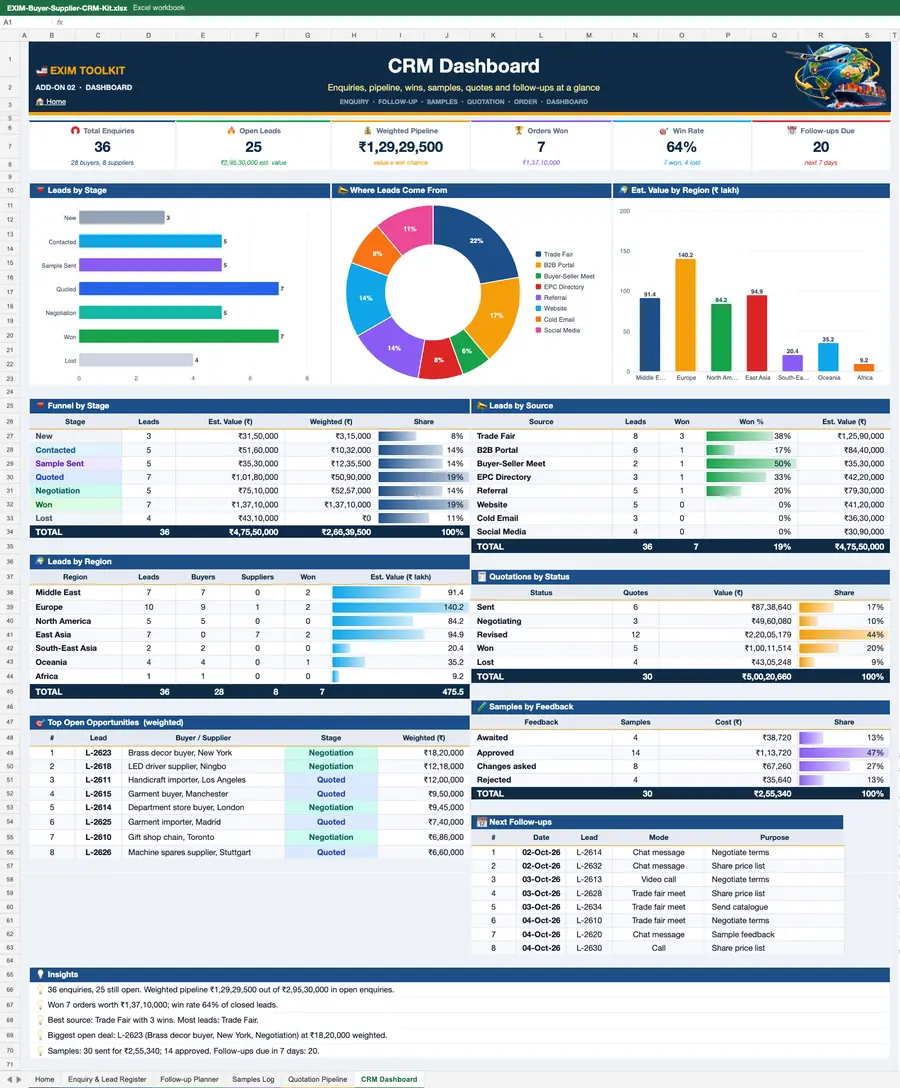
Record everything in a simple sheet: company, country, contact name, HS code, last shipment date, typical volume and next action. Aim for a shortlist of twenty to fifty verified importers rather than a thousand unverified names. Refresh the list quarterly — importers change suppliers, and new ones appear.
Outreach and buyer verification
Contact your shortlist with a short, specific message that shows you did your homework. Mention the product, the buyer's country and one fact from the data — for example, that you supply the same product category they import. Four lines is enough: who you are, what you supply, one proof point and a simple question. Follow up after four days with one useful addition, and once more after ten days.
Before you invest in samples or production, verify the buyer properly. Confirm the company's registration and trading history, prefer company email domains over free webmail, ask for trade references, and start with a trial order on advance payment or an irrevocable letter of credit (LC). Use your bank or ECGC (Export Credit Guarantee Corporation) for credit checks and cover against non-payment.
Watch for red flags: requests for upfront "registration fees" or "customs deposits", pressure to ship large first orders on open credit, and buyers who refuse every check. Genuine buyers do not charge suppliers to buy from them. Charge for large or customised samples where appropriate, and mark samples clearly for customs.
Find buyers faster with TodayAdviser
Trade data tells you who buys your product; the next step is reaching them. Combine your verified importer list with live demand: browse current import requirements on the TodayAdviser buyer directory and post your product requirement so verified buyers can find you. Data finds the buyers; a visible, credible listing wins them.
Frequently asked questions
What is customs data in export?
Customs data is the record of goods declared at borders — product, HS code, quantity, value, ports and, depending on the source, the names of the importer and exporter. It is the raw material for finding companies that already import your product.
How do I find my product's HS code?
Ask your customs house agent, check your Export Promotion Council's code lists, or search the customs tariff schedule online. Confirm the code at the six-digit level for precise buyer research, and check it against actual shipment records for your product.
Which free trade data sources are best for beginners?
Start with ITC TradeMap for market-level research (which countries import your product), Zauba or similar sites for Indian shipment records, and DGFT or APEDA statistics for Indian export trends. Move to paid databases when you need company names and contact details.
How do I find importers by HS code?
Search a shipment or trade database for companies importing under your HS code, filter by country, recency and frequency, and build a shortlist of regular importers. Verify each company, find the right contact, and approach them with a relevant offer.
How fresh is trade data?
It depends on the source. Official statistics may lag by months; commercial shipment databases are usually weeks behind. Always check the latest shipment date for each importer, and treat data more than a year old as a lead to verify rather than a fact.
Do I need to pay for trade data to find buyers?
No. Free sources are enough to choose markets and identify importing companies. Paid databases save time and add contact details, and are worth the cost once you have a clear product and market — start with a trial before committing to a subscription.