The India-EU FTA signing is set for December 2026. Here is what Indian exporters must prepare before the deal takes effect in mid-2027.
Indian exporters have a date to work towards. India and the European Union concluded negotiations on their free trade agreement on 27 January 2026 at the India-EU Summit, and the pact is now expected to be signed in mid-December 2026, with entry into force targeted for mid-2027. That leaves exporters roughly a year between signature and rollout — time that should be spent preparing, not waiting.
This guide sets out what is known about the deal from the verified facts available, what it could mean for exporters, and the practical preparation that can be done now. It uses only the confirmed facts listed here. Where details have not yet been published — such as the final tariff schedules and the detailed rules of origin — this guide says so plainly, rather than guessing.
The timeline: what is known
27 January 2026 — negotiations concluded. India and the EU concluded FTA negotiations at the India-EU Summit on 27 January 2026. Conclusion of negotiations means the two sides had agreed the substance of the deal; the text then had to be put into final legal form.
2 November 2026 — implementation talks in Brussels. Commerce Secretary Rajesh Agrawal held implementation talks in Brussels on 2 November 2026 with senior European Commission officials from DG TRADE, DG INTPA and DG TAXUD, covering customs cooperation, market access and trade facilitation. The fact that implementation — not just negotiation — was on the agenda shows both sides were already working on how the deal will operate in practice, including how goods will clear customs and how market access will be administered.
Mid-December 2026 — signing expected. The pact is in legal scrubbing, and is expected to be signed in mid-December 2026, with Prime Minister Modi expected in Brussels for the signing. Legal scrubbing is the process in which lawyers on both sides check the agreed text for consistency, correct drafting errors and confirm that the text in each language says the same thing. It is a normal stage before signature, but it means the text is not yet final until it is signed.
Mid-2027 — entry into force targeted. Entry into force is targeted for mid-2027. Between signing and entry into force, each side completes its own internal approval procedures. Exporters should treat mid-2027 as the target, not a guarantee: plan for that date, but watch official announcements for confirmation and for the exact date from which preferential treatment applies.
What preferential access means
Over 99% of India's exports to the EU by trade value will get preferential market access under the deal. Preferential access means that goods covered by the agreement can enter the EU at lower tariffs than the standard rate — in many cases at zero duty — provided they meet the agreement's rules, including the rules of origin.
Three cautions follow from that single fact. First, "over 99% by trade value" is a measure of coverage, not a promise about any single product: whether a particular product benefits depends on the tariff schedule for its HS code, which is part of the final text. Second, preferential access is conditional — a product must qualify as originating under the agreement's rules of origin, and the exporter must be able to prove it. Third, tariffs are only part of the cost of selling into the EU: standards, labelling, testing and logistics still apply in full.
The labour-intensive winners
The sectors identified as labour-intensive winners from the deal are leather, textiles, and gems and jewellery. These are sectors where India has large employment and established export capacity, and where EU tariffs have historically been a real cost. For exporters in these sectors, the deal is the most directly relevant of any in the agreement.
What should a leather exporter do now? Review the EU standards that already apply to leather goods, including chemical and labelling requirements, and confirm that suppliers and tanneries can document compliance. A textiles exporter should review product classification — the HS code determines the tariff treatment — and check that the origin of yarns and fabrics can be evidenced, since rules of origin often turn on where the inputs come from. A gems and jewellery exporter should confirm hallmarking, certification and Kimberley Process documentation where applicable, and check how the agreement treats the origin of stones and metals. In all three sectors, the exporters who benefit first will be those whose documentation is already in order when the deal takes effect.
The CBAM friction
The one clear point of friction is the EU Carbon Border Adjustment Mechanism (CBAM). India opposes CBAM. CBAM is the EU's mechanism for charging for the carbon embedded in certain imported goods, so that imports face a carbon cost comparable to that faced by EU producers under the EU's emissions trading system. India's opposition is a matter of public record, and the verified facts available do not say that the issue has been resolved.
For exporters, the practical implication is to watch this space rather than assume it away. If your product falls within the scope of CBAM, start gathering the emissions data that CBAM reporting requires — the carbon intensity of your production, your energy sources and your suppliers' data. Even if CBAM's final treatment of Indian goods is still to be settled, having the data ready is useful for EU buyers, who increasingly ask for it themselves. Do not assume that the FTA removes CBAM obligations; the two are separate instruments.
Exporter prep checklist
1. Learn the rules of origin — before you quote. Rules of origin decide whether a product counts as "Indian" for the purposes of the agreement. They typically set out how much processing must happen in India, or how much of the product's value must be added there, and which inputs count. Exporters should review the origin rules for their products as soon as the text is published, and check whether their current inputs and processes meet them. If a key input comes from a third country, the product may not qualify — and that changes the price you can offer.
2. Get certificate-of-origin ready. Preferential access is claimed with a certificate of origin, or a statement on origin, issued or made under the agreement's procedures. Find out now which authority will issue certificates for your products, what evidence it will need, and how long it takes. Keep supplier declarations on file for bought-in inputs, so that origin can be evidenced lot by lot.
3. Check EU standards and labelling. The FTA does not remove EU product standards. Review the standards, labelling and testing requirements for your products — including chemical rules, safety standards and labelling language — and confirm that your products already comply, or plan the changes needed. A product that is tariff-free but non-compliant still cannot be sold.
4. Revisit pricing and contracts. Once the tariff treatment for your HS codes is known, rework your landed-cost calculations and your EU price lists. Review existing contracts with EU buyers: do they allow for a change in duty, and who benefits from it? Discuss the timetable with buyers now, so that orders can be timed to the deal's entry into force where that is commercially sensible.
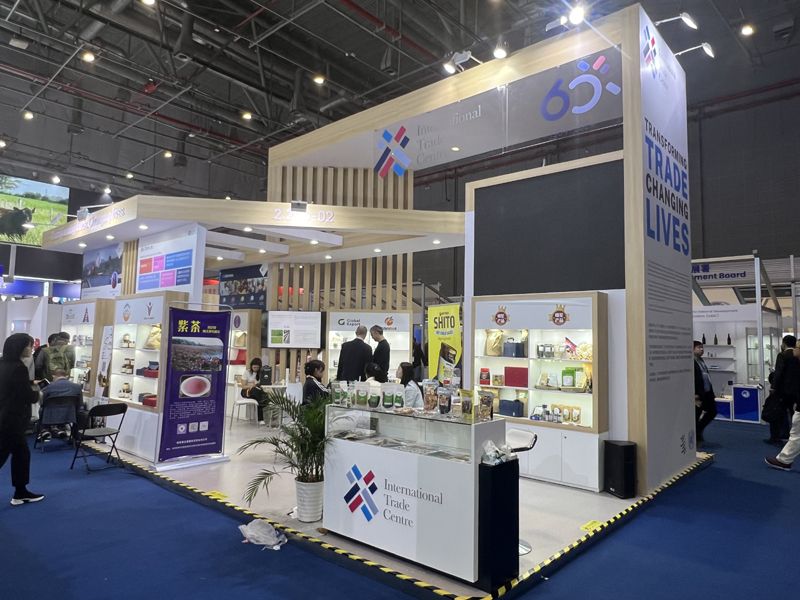
5. Do buyer outreach before rollout. The months before mid-2027 are the time to talk to EU buyers. Tell existing buyers that preferential access is coming, and use it to open conversations with new buyers who previously found Indian prices uncompetitive. Trade fairs, buyer-seller meets and the export promotion councils are the practical channels. A buyer who has already sampled and approved your product before rollout can order on day one; a buyer you first approach after rollout is months behind.
6. Sort out customs and logistics. The Brussels talks covered customs cooperation and trade facilitation, which suggests both sides intend the deal to work smoothly at the border. Exporters should still confirm their customs broker understands the new procedures, that their HS classification is correct, and that their documentation — invoice, packing list, certificate of origin — is consistent across every document.
What remains unknown
Several important details are not yet public, and exporters should not act as if they were. The final, signed text — including the tariff schedules and the detailed rules of origin — is still in legal scrubbing and has not been published in final form. The exact date of entry into force has not been confirmed beyond the mid-2027 target. And the treatment of CBAM, which India opposes, has not been settled in the facts available. Watch official announcements from the Ministry of Commerce and Industry and the DGFT, and from the European Commission, for the signed text and the implementation guidance that will follow it.
Frequently asked questions
When was the India-EU FTA concluded? Negotiations were concluded on 27 January 2026 at the India-EU Summit.
When will the FTA be signed? It is expected to be signed in mid-December 2026, with Prime Minister Modi expected in Brussels. The pact is currently in legal scrubbing.
When will the FTA take effect? Entry into force is targeted for mid-2027, after each side completes its internal approval procedures.
How much of India's exports to the EU will get preferential access? Over 99% by trade value, according to the verified facts available. Whether a particular product benefits depends on its tariff schedule and the rules of origin.
Which sectors are expected to benefit most? Labour-intensive sectors — leather, textiles, and gems and jewellery — have been identified as the winners.
What is CBAM and why does it matter? CBAM is the EU Carbon Border Adjustment Mechanism, which charges for the carbon embedded in certain imported goods. India opposes it, and its treatment has not been settled in the facts available. Exporters in scope should gather emissions data now.
What should exporters do first? Review the rules of origin for their products, prepare certificate-of-origin documentation, check EU standards and labelling, rework pricing, and start buyer outreach before the mid-2027 rollout.
The India-EU FTA is a real opportunity, but it rewards preparation. The signing in December 2026 is a milestone, not the finish line: the exporters who gain most will be those who use the months before mid-2027 to get their origin documentation, standards and buyer relationships ready.