Explore the complete guide to millets exports from India, covering top varieties, APEDA requirements, processing standards, and major buyer markets for 2026. Learn how to source, package, and export high-quality millet grains and value-added products successfully.
Millets Exports from India: APEDA, Varieties & Buyer Markets Guide (2026)
India has grown millets for thousands of years, yet for a long time they were treated at home as a humble, rain-fed crop — food for dry districts, not a premium export. That perception has changed decisively. After the International Year of Millets in 2023, which India proposed and the United Nations adopted, global buyers, chefs, retailers and food manufacturers began looking at millets with fresh eyes: as gluten-free, nutrient-dense, climate-resilient grains that fit modern diets and modern supply chains. For Indian exporters, that shift is a genuine commercial opening, not just a policy slogan. The opportunity, however, rewards exporters who understand varieties, quality, processing and documentation — and who can supply consistently, in the specifications a foreign buyer actually asked for.
This guide explains millets exports from India in practical terms: which varieties sell, where they are grown, what APEDA does for exporters, how processing and packaging work, which markets buy, what standards and documents are needed, and what prices mean in practice. Prices and market sizes mentioned here are indicative only; always verify live rates, freight and buyer specifications before quoting.
Why millets matter now
Millets are a group of small-seeded cereals that grow well with little water, in poor soils and in hot, dry conditions where rice and wheat struggle. That resilience matters to buyers for two reasons. First, it makes supply less vulnerable to drought than many other grains. Second, it gives millets a strong sustainability story: lower water use, shorter growing seasons and a smaller environmental footprint than water-intensive cereals. Retailers in Europe, North America and the Gulf increasingly ask suppliers about water use, carbon footprint and farming practices, and millets score well on all three — provided the exporter can back the story with traceability and credible certification.
Nutrition is the other driver. Millets are naturally gluten-free and rich in fibre, iron, magnesium and B vitamins, with a lower glycaemic index than refined wheat or white rice. That positions them across several fast-growing categories at once: health foods, gluten-free baking, breakfast cereals, snacks, baby food, plant-based meals and ready-to-eat products. A buyer is rarely buying "millets" in the abstract; they are buying an ingredient for a specific product — flour for a gluten-free bread, flakes for a cereal, whole grain for a salad bowl, or puffed millet for a snack bar. Exporters who understand the end use can price and process accordingly, instead of competing only on raw grain price.
The International Year of Millets in 2023 put Indian millets on the world stage. The Government of India promoted millets at trade fairs, in diplomatic channels and through APEDA, and Indian missions abroad organised tastings, buyer-seller meets and retail promotions. The year itself is over, but the awareness it created has not faded: importers who first tried Indian millets in 2023 are now repeat buyers, and new buyers in the United States, the United Arab Emirates, Saudi Arabia, Nepal and Europe continue to enquire. The task for exporters in 2026 is to convert that awareness into durable, repeatable trade — with the right varieties, the right quality and the right paperwork.
The varieties buyers ask for
India grows several millets, and each has different buyers, uses and price points. Knowing the difference is essential; sending the wrong variety is one of the fastest ways to lose a buyer.
Jowar (sorghum) is the largest-volume millet and the most versatile. It is used as whole grain, flour, flakes and popped grain, and it is a staple in parts of Maharashtra, Karnataka and Telangana. Export buyers use jowar flour in gluten-free baking, as an ingredient in breakfast cereals and in animal feed. Because volumes are large and supply is deep, jowar is often the entry product for a new millet exporter.
Bajra (pearl millet) is hardy, high in iron and widely grown in Rajasthan, Gujarat, Haryana and Uttar Pradesh. It is popular in the Gulf and in African markets, where buyers know it well, and it is increasingly used in health-food products in the West. Bajra flour has a short shelf life if it is not processed and packed well, so milling, packaging and storage matter more for bajra than for some other grains.
Ragi (finger millet) is the nutritional star: exceptionally rich in calcium and iron, and a familiar food in Karnataka and Tamil Nadu. It is in demand for baby food, health drinks, malted products and gluten-free baking. Ragi commands a premium over jowar and bajra when quality is good, and buyers often ask for specific varieties and for malted or sprouted ragi.
Foxtail millet is a small, light grain used in porridge, salads, upma-style dishes and ready-to-cook mixes. It is popular in East Asia and among health-conscious buyers in the United States and Europe. Kodo millet and little millet are smaller-volume, higher-value grains used in similar ways, often sold in retail packs rather than bulk. They suit exporters who can handle small, well-graded lots and retail-ready packaging.
Beyond whole grain, buyers increasingly ask for processed forms: flour, semolina (rava), flakes, puffed and popped millet, malt, pasta, noodles, cookies, breakfast mixes and ready-to-eat products. Value addition is where margins are better, but it also demands food-safety systems, consistent recipes and shelf-life testing. An exporter who can offer both bulk grain and a processed range has more to sell to the same buyer.
APEDA's role in millet export promotion
The Agricultural and Processed Food Products Export Development Authority (APEDA) is the main government body promoting exports of millets and other agri-products. For a new exporter, APEDA is the first institution to understand, not an optional extra. Registration with APEDA (RCMC) is a basic requirement for exporters of scheduled products, and it also opens the door to APEDA's trade promotion support.
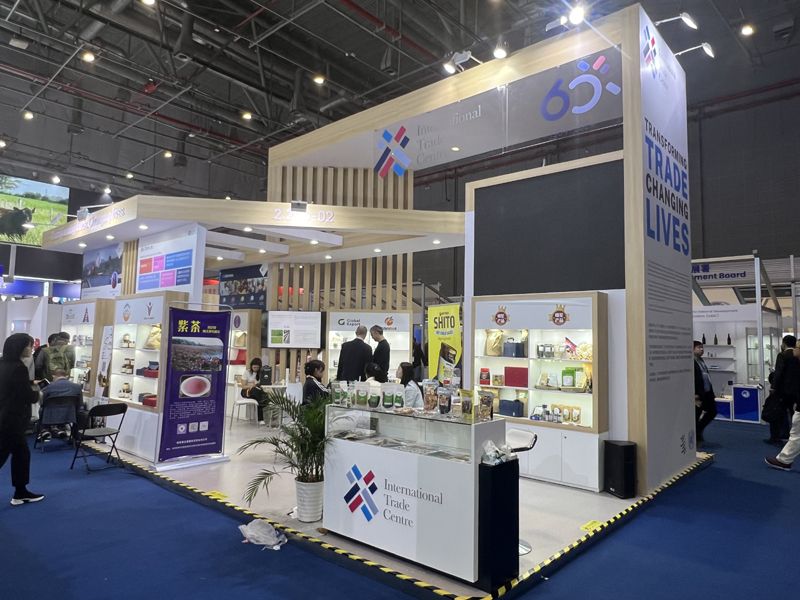
APEDA promotes Indian millets through participation in international trade fairs, buyer-seller meets, reverse buyer-seller meets and market-access work. It has supported Indian millet exporters at events such as Gulfood in Dubai, SIAL in Paris and other major food exhibitions, and it has worked with Indian missions abroad to place millets on retail shelves and in food-service channels. For exporters, the practical value is threefold: market intelligence on which countries are buying and at what specifications; introductions to vetted buyers; and financial assistance for participation in approved trade events, subject to APEDA's current guidelines.
APEDA also works with state governments, farmer producer organisations (FPOs) and processors to build export-ready supply chains — from seed and farming practices to aggregation, processing, testing and branding. Exporters should check APEDA's website and its millet promotion pages for current schemes, event calendars and registration requirements, because schemes and eligibility change. Do not rely on a scheme described in an old article; confirm the current position with APEDA before including it in a quotation or a business plan.
Other institutions matter too. The Indian Institute of Millets Research (IIMR) in Hyderabad supports research, varieties and processing technology. State agriculture departments and state millet missions — notably in Karnataka, Odisha, Maharashtra and Rajasthan — run procurement, processing and branding programmes. Exporters who build relationships with these bodies, and with FPOs in producing districts, usually secure more reliable supply than those who buy only on the spot market at harvest time.
Top producing states and sourcing clusters
Millets are grown across India, but sourcing is concentrated in a handful of states. Rajasthan is the largest producer of bajra, grown across its arid districts. Maharashtra and Karnataka lead in jowar, with strong production also in Telangana and Andhra Pradesh. Karnataka is the heartland of ragi, followed by Tamil Nadu and Uttarakhand. Madhya Pradesh, Chhattisgarh and Uttar Pradesh grow significant volumes of kodo and little millet, while foxtail millet is important in Karnataka, Andhra Pradesh and Tamil Nadu.
For an exporter, the sourcing cluster matters as much as the state. Mills and processors cluster around production areas: ragi processing in Karnataka, jowar milling in Maharashtra and Karnataka, bajra milling in Rajasthan and Gujarat. Buying near the cluster reduces transport cost, gives access to experienced processors and makes quality checks easier. It also helps to visit the cluster before committing to a large order — to see cleaning, grading, milling and storage, and to test a trial lot before scaling up.
Seasonality is real. Millets are largely kharif crops, harvested in the autumn, with some rabi production in southern states. Prices are usually lowest soon after harvest and rise as stocks thin. Exporters who contract early, or who hold stock in good storage, can quote more confidently than those who buy hand-to-mouth. Storage must be dry and pest-free: millets are vulnerable to moisture, insects and aflatoxin if stored badly, and a buyer who finds live insects or high moisture in a container will not order again.
Processing, value addition and packaging for export
Export quality starts with cleaning and grading. Whole millet grain for export is typically cleaned to remove stones, dust, husk and broken grains, graded by size, and tested for moisture, foreign matter and pesticide residues. Buyers specify these parameters in the contract, and the exporter should have a laboratory report for the lot actually shipped — not a report for a different lot from a different season.
Flour milling needs care. Millet flour, especially bajra flour, can go rancid quickly because of its fat content, so milling should be close to shipment, and packaging should be airtight and moisture-proof. Heat treatment, proper cooling and the right packaging film all extend shelf life. For retail packs, buyers expect clear labelling: product name, variety, net weight, nutritional information, allergen statements where relevant, country of origin, batch number, best-before date and storage instructions. Labelling rules differ by market — the European Union, the United States and the Gulf each have their own requirements — so check the destination's rules before printing a large run of packs.
Packaging formats vary by buyer. Bulk grain usually ships in 25 kg or 50 kg polypropylene bags, or in bulk in containers for large food manufacturers. Retail products ship in 500 g, 1 kg or 2 kg packs, often in printed pouches or boxes, sometimes with a window so the buyer can see the grain. Private-label buyers will send their own artwork and specifications; the exporter must be able to print, pack and label to that artwork without errors. A small mistake — the wrong weight, a missing allergen line, a misspelt variety — can hold a shipment at the destination port.
Value addition is the most promising direction for Indian millet exporters. Ready-to-cook mixes, breakfast cereals, millet pasta and noodles, cookies, snacks and malted drinks all sell at higher prices than raw grain, and they let the exporter build a brand rather than compete only on price. But processed foods need FSSAI licensing, food-safety certification (such as FSSC 22000 or BRCGS, depending on the buyer), nutritional testing and shelf-life studies. Start with one or two processed products, prove them with a buyer, and then expand the range.
Buyer markets and how to reach them
The United States is the largest premium market for millet-based health foods, buying flour, flakes, ready-to-eat products and private-label retail packs. The United Arab Emirates and Saudi Arabia buy both bulk grain for their large South Asian communities and retail packs for supermarkets. Nepal is a steady neighbouring market for bulk grain and flour. Europe — including the United Kingdom, Germany, the Netherlands and France — buys mainly organic and certified grain and processed foods, with strict residue and labelling rules. Other buyers include Canada, Australia, Japan, Singapore and African countries where millets are a familiar food.
Reach buyers through APEDA trade fairs, B2B marketplaces, Indian missions' buyer-seller meets and direct outreach to importers, distributors and food manufacturers. A one-page product sheet with variety, specification, packaging, minimum order quantity, certifications and an indicative price range works better than a long catalogue. Always send a sample before quoting for a large order, and agree the specification in writing — variety, moisture, purity, packaging and inspection — before shipment.
Quality standards, certification and documentation
Exporters need FSSAI registration or licensing, APEDA registration, an IEC from DGFT and GST registration. Organic exports need NPOP certification through an accredited body if the buyer asks for organic status. Common buyer requirements include a phytosanitary certificate, certificate of origin, health certificate where required, laboratory test reports for moisture, aflatoxin and pesticide residues, and a commercial invoice and packing list matching the shipment exactly. The destination country's maximum residue limits must be checked in advance; a shipment that fails residue testing at arrival can be rejected or destroyed.
Pricing is indicative and moves with harvest, variety, quality and freight. Bulk whole grain is the lowest-priced form; graded, cleaned and certified grain costs more; flour, flakes and retail packs cost more still, and organic grain commands a premium. Always verify live prices with suppliers, check current freight rates, and quote on clear Incoterms — FOB, CIF or DAP — so the buyer knows exactly what is included.
Frequently asked questions
Which millet variety should a new exporter start with? Jowar is usually the easiest start because volumes are large and buyers are familiar with it. Ragi offers higher margins but needs tighter quality control. Start with one variety, prove the supply chain, then add others.
Is APEDA registration compulsory for millet exports? Yes, exporters of APEDA scheduled products should hold APEDA registration (RCMC). Check APEDA's current requirements before your first shipment.
Do I need organic certification to export millets? Only if you sell as organic. Conventional millets sell well without it, but organic certification opens premium European and North American buyers and should be obtained through an NPOP-accredited body.
What is the shelf life of millet flour? It depends on the millet, processing and packaging, but bajra flour in particular has a short shelf life. Mill close to shipment, use airtight packaging, and state the best-before date based on your own shelf-life testing.
Which documents does a millet shipment need? Typically an invoice, packing list, certificate of origin, phytosanitary certificate, laboratory test reports and, where the buyer requires it, organic or health certificates. Confirm the destination's exact requirements before loading.
How can a buyer verify an Indian millet supplier? Check APEDA and FSSAI registration, ask for test reports for the actual lot, request samples, verify the processing facility, and start with a trial order before committing to a large contract.