Explore the complete guide to rubber products exports from India, covering top manufacturing clusters, Rubber Board regulations, quality standards, and supplier verification.
India has firmly established itself as a global powerhouse for rubber products exports from India, driven by a robust domestic raw material base, advanced manufacturing technologies, and strict adherence to international quality standards. Whether you are a global B2B buyer sourcing high-performance automotive tyres or medical-grade gloves, understanding India's manufacturing ecosystem is essential for secure trade.
This comprehensive guide explores India's rubber industry landscape, key production clusters, the pivotal role of the Rubber Board, quality compliance, and practical steps for international buyers to verify and source from verified Indian exporters on platforms like Today Adviser.
India's Natural Rubber Base: Kerala and Tripura
The foundation of rubber products exports from India lies in its thriving agricultural sector, which produces significant volumes of natural rubber (NR) annually. India consistently ranks among the top global producers and consumers of natural rubber, ensuring that domestic manufacturers have reliable, cost-effective access to raw materials without heavy reliance on volatile import markets.
Kerala: The Traditional Heartland
Kerala accounts for the lion's share of India's natural rubber production. Districts such as Kottayam, Pathanamthitta, and Ernakulam form the historic backbone of the industry. The state features thousands of smallholder rubber plantations supported by advanced processing facilities that produce high-quality Ribbed Smoked Sheets (RSS), Technically Specified Rubber (TSR), and latex concentrates.
Tripura: The Emerging North-Eastern Hub
In recent years, Tripura has emerged as India's dynamic secondary rubber basket. Backed by central government initiatives and favorable agro-climatic conditions, Tripura’s rubber cultivation has expanded rapidly. North-Eastern rubber offers excellent plasticity and clean properties, supplying raw material directly to domestic industrial units and contributing significantly to export volumes.
The Rubber Board of India: Catalyst for Growth
Operating under the Ministry of Commerce and Industry, the Rubber Board of India is a statutory body tasked with the holistic development of the rubber industry. For international buyers and domestic exporters, the Rubber Board acts as an invaluable institutional anchor.
- Export Licensing and Registration: Every exporter of rubber products from India must register with the Rubber Board to obtain a valid export license and certificate of registration.
- Quality Certification: The board conducts rigorous inspections and issues quality certificates, assuring global buyers that shipments meet international benchmarks.
- Research and Development: Through the Rubber Research Institute of India (RRII), the board continually develops high-yielding clones and eco-friendly processing techniques, directly impacting the durability and performance of finished export goods.
- Market Intelligence: The board publishes regular statistical updates on production, consumption, pricing trends, and global trade dynamics, helping buyers time their procurement cycles effectively.
Diverse Product Range in Rubber Exports
India’s manufacturing sector has evolved far beyond basic commodities, offering a diversified basket of value-added finished goods that cater to demanding global industrial sectors.
Automotive Tyres and Tubes
Accounting for the largest share of rubber products exports from India, the tyre sector features globally recognized brands alongside agile Tier-2 manufacturers. India exports robust commercial vehicle tyres, passenger car radials (PCR), off-the-road (OTR) tyres, and agricultural tractor tyres designed to withstand rugged terrains.
Gloves (Medical, Surgical, and Industrial)
India is a leading exporter of latex and nitrile gloves. Stringent hygiene protocols and automated dipping lines in manufacturing units across Southern India ensure low protein content, high tensile strength, and compliance with ASTM and EN standards for healthcare and cleanroom applications.
Footwear and Components
From molded EVA-rubber hybrid footwear to specialized outsoles, rubber sheets, and Hawai sandals, Indian footwear components are prized for their flexibility, slip resistance, and competitive pricing across African, Middle Eastern, and European markets.
Industrial and Automotive Rubber Goods
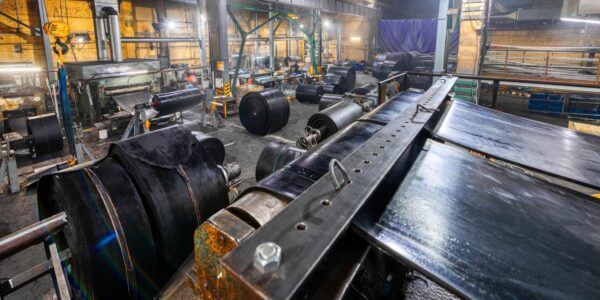
Precision-engineered mechanical rubber goods (MRG) form a critical segment of exports. This category includes high-pressure hydraulic hoses, conveyor belts, automotive oil seals, vibration mounts, custom gaskets, and bridge bearings used in heavy civil engineering projects.
Major Manufacturing Clusters
Rubber manufacturing in India is concentrated in specific geographic clusters, each specializing in distinct product categories and export logistics.
| Cluster Region | Primary Specialization | Key Logistics Advantage | Typical Buyer Profile |
|---|---|---|---|
| Kottayam (Kerala) | Latex concentrate, RSS sheets, footwear, rubber bands | Proximity to Cochin Port | Raw material traders, consumer goods distributors |
| Chennai / Tamil Nadu | Automotive tyres, heavy industrial belts, molded goods | Direct access to Chennai and Ennore ports | Automotive OEMs, heavy machinery aftermarket |
| Delhi NCR / Haryana | Rubber hoses, auto components, extruded profiles | Well-connected inland container depots (ICDs) | Industrial distributors, construction contractors |
| Jalandhar / Punjab | Sports goods rubber parts, footwear, bladders | Proximity to Northern manufacturing corridors | Sporting goods brands, retail chains |
Quality Standards and BIS Compliance
Navigating regulatory compliance is critical when sourcing rubber products exports from India. Global buyers typically demand specific international certifications to ensure product safety, durability, and environmental compliance.
- Bureau of Indian Standards (BIS): Many domestic and export rubber goods must carry ISI marks, ensuring they meet rigorous national standards.
- ISO Certifications: Reputable Indian manufacturers maintain ISO 9001 (Quality Management), ISO 14001 (Environmental Management), and IATF 16949 (Automotive Quality Management).
- REACH and RoHS Compliance: For exports to the European Union, manufacturers must prove that their rubber compounds are free from restricted heavy metals, phthalates, and hazardous chemical softeners.
- ASTM / EN Standards: Medical gloves and industrial safety goods must comply with American Society for Testing and Materials (ASTM) or European Norms (EN) regarding puncture resistance, elongation, and biocompatibility.
Key Buyer Markets and Trade Channels
Indian rubber goods reach over 120 countries. Understanding traditional trade lanes helps buyers optimize shipping lead times and freight costs.
Top Destination Markets
- North America: High demand for industrial hoses, agricultural tyres, and surgical gloves.
- European Union: Steady importer of specialized automotive gaskets, conveyor belts, and eco-certified footwear.
- Middle East and Africa: Major buyers of commercial vehicle tyres, bicycle tyres, and general rubber sheets.
- ASEAN Region: Expanding market for industrial raw rubber, natural latex, and mechanical components.
B2B Trade Channels
Global buyers typically source through three primary channels:
- Direct Manufacturer Sourcing: Engaging medium-to-large enterprises directly for custom-molded OEM parts.
- Export Houses and Merchant Exporters: Ideal for smaller volume orders or mixed-container shipments combining diverse rubber goods.
- Verified B2B Marketplaces: Platforms like Today Adviser connect verified global buyers with pre-screened Indian suppliers, streamlining inquiries and RFQ management.
Export Incentives and Documentation Basics
India’s foreign trade policy offers several support mechanisms to maintain the global competitiveness of rubber products exports from India.
- RoDTEP (Remission of Duties and Taxes on Exported Products): Reimburses embedded central, state, and local duties that are not rebated elsewhere, lowering effective FOB costs.
- MEIS Successor Schemes: Periodic updates to export promotion capital goods (EPCG) schemes allow duty-free import of advanced machinery for export-oriented units.
Essential Export Documentation
To ensure smooth customs clearance at Indian ports and destination ports, exporters must furnish:
- Commercial Invoice and Packing List
- Bill of Lading (B/L) or Air Waybill
- Certificate of Origin (often preferential under bilateral trade pacts)
- Rubber Board Export Permit/Certificate
- Test Reports (Certificate of Analysis for chemical composition and physical properties)
How Buyers Verify Indian Suppliers
Mitigating counterparty risk is vital in international trade. Global B2B buyers should follow a structured due diligence checklist before finalizing contracts with Indian exporters:
- Verify Registration: Check the supplier’s IEC (Importer-Exporter Code), GST registration, and valid Rubber Board membership number.
- Inspect Factory Credentials: Request third-party audit reports (such as SGS, Bureau Veritas, or TÜV) covering production capacity, machinery age, and labor standards.
- Sample Testing: Always order physical pre-production samples (PPS) and test them against agreed ASTM/ISO specifications in an independent laboratory.
- Trade References: Ask for verifiable references from existing international clients in your region.
- Secure Payment Terms: Utilize Letter of Credit (LC) or secure escrow mechanisms for initial transactions until a reliable trading history is established.
Frequently Asked Questions
What are the main categories of rubber products exported from India?
India exports a diverse range of rubber goods, led by automotive tyres and tubes, followed by medical and industrial gloves, footwear components, conveyor belts, mechanical rubber goods (hoses and seals), and raw natural rubber forms like RSS and latex.
How does the Rubber Board of India assist international buyers?
The Rubber Board acts as a regulatory and developmental body. It registers bona fide exporters, issues quality certificates, monitors grade standards, and provides transparent trade statistics to ensure buyers receive compliant and high-grade rubber goods.
Are Indian rubber manufacturers compliant with international environmental standards?
Yes, leading Indian rubber exporters comply with strict international norms such as REACH, RoHS, and ISO 14001. Many factories use eco-friendly accelerators and sustainable energy sources to meet stringent EU and North American import requirements.
What documents are required to import rubber products from India?
Essential documentation includes the Commercial Invoice, Packing List, Bill of Lading, Certificate of Origin, Rubber Board Export Certificate, and relevant laboratory test reports verifying physical and chemical properties.
What are the primary manufacturing clusters for rubber in India?
The main production clusters are located in Kottayam (Kerala) for raw rubber and latex goods, Chennai (Tamil Nadu) for heavy tyres and industrial belts, and Delhi NCR/Haryana for automotive hoses and molded components.
How can international buyers verify the reliability of Indian rubber suppliers?
Buyers should verify the supplier's IEC, GST, and Rubber Board registration, request independent factory audit reports, insist on pre-shipment sample testing, and utilize verified B2B marketplaces like Today Adviser to connect with pre-screened exporters.
What export incentives are available for rubber manufacturers in India?
Exporters benefit from schemes like RoDTEP (Remission of Duties and Taxes on Exported Products), which refunds embedded central and state taxes, alongside EPCG schemes that facilitate duty-free import of advanced manufacturing machinery.
Conclusion
Sourcing rubber products exports from India offers global B2B buyers a compelling combination of raw material security, manufacturing versatility, and competitive pricing. By partnering with verified suppliers who adhere to stringent international standards, importers can build resilient, long-term supply chains.
Ready to source high-quality rubber products? Post your detailed requirement today or connect directly with verified Indian exporters and manufacturers on Today Adviser.