A practical 2026 guide to exporting spices from India — top varieties, Spices Board registration, quality standards buyers demand, and the markets paying best.
India grows, processes and ships more spices than any other country. From the chilli fields of Andhra Pradesh and Telangana to the cardamom hills of Kerala, the cumin belts of Gujarat and Rajasthan, and the turmeric farms of Tamil Nadu and Maharashtra, Indian spices reach kitchens, food factories and pharmaceutical buyers on every continent. For an importer, that scale is both an opportunity and a risk: choice is enormous, quality varies widely, and the difference between a reliable supplier and a costly mistake usually comes down to registration, testing and paperwork done properly before the order is placed.
This guide explains how spices exports from India work in 2026 — the varieties that sell, the Spices Board registration every exporter needs, the quality standards serious buyers insist on, the markets that pay best, and how to check a supplier before sending money. Prices here are indicative only; spice prices move with harvests, weather and freight, so always verify live prices before committing.
India, the world's spice bowl
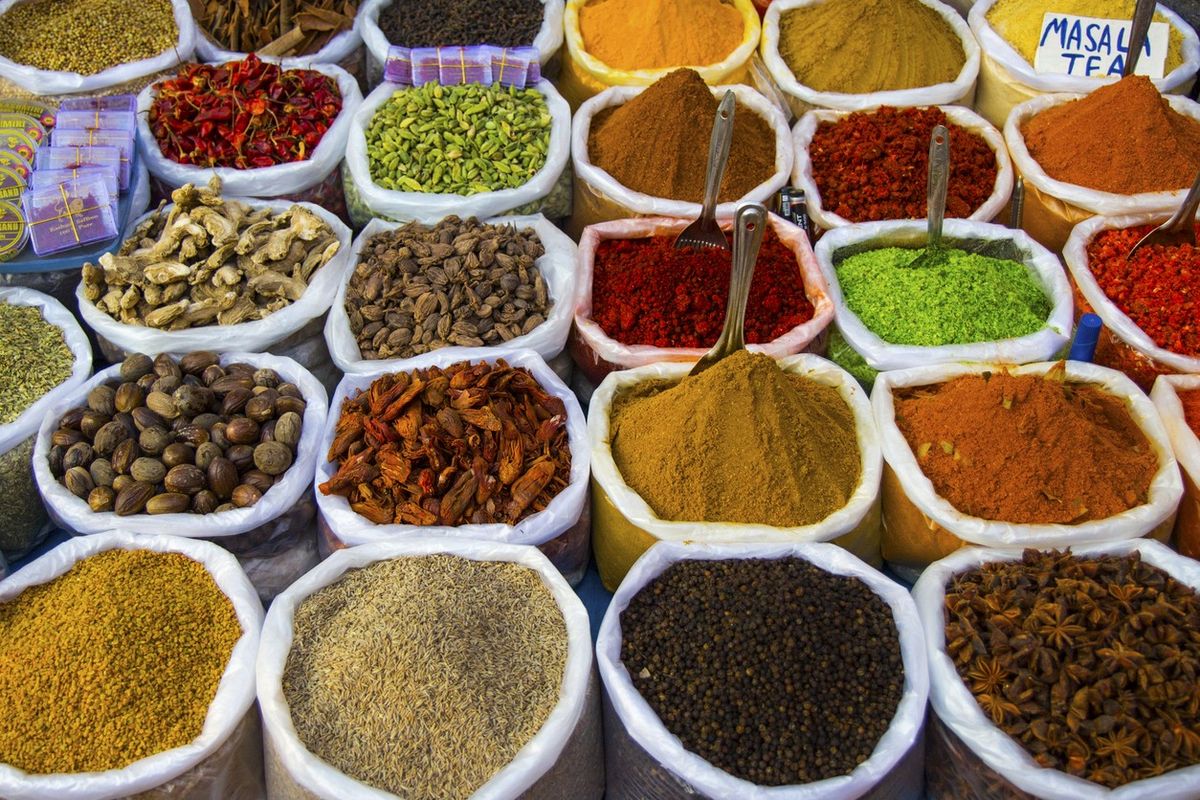
India is the world's largest producer, consumer and exporter of spices. It exports whole spices, ground spices, spice oils and oleoresins, and blended seasonings to more than 150 countries. Chilli, turmeric, cumin, cardamom, black pepper and coriander dominate export volumes, supported by ginger, fenugreek, fennel, mustard seed, nutmeg, cloves and curry powders.
A single Indian exporter can often supply a full basket — whole and ground forms, steam-sterilised material, and custom blends — which simplifies sourcing. But compare suppliers on the same specification, not on price alone: a quote for turmeric powder can describe anything from a 2% curcumin product to a 5% curcumin product, and the price difference is large. Always ask for the specification sheet, the test report and a pre-shipment sample before agreeing a price.
The varieties buyers ask for first
Chilli. India is the largest exporter of dried chillies, led by Teja, Sannam and Byadagi. Teja is hot and bright red, widely used in sauces and oleoresin extraction; Sannam is a workhorse for grinding; Byadagi is prized for deep colour and mild heat. China, Vietnam, Bangladesh and Thailand buy heavily for processing, while the United States and Europe buy ground chilli for retail and food service.
Turmeric. Erode and Salem turmeric are known for high curcumin content, and demand comes from food manufacturers, supplement makers and the natural-colour industry. Check curcumin percentage, moisture and the absence of adulterants such as lead chromate on the certificate of analysis.
Cumin. Gujarat and Rajasthan produce most of India's cumin. Whole cumin seed is the standard export form, with ground cumin for retail packs. Purity, volatile oil content and freedom from foreign matter are the key checks.
Cardamom. Small green cardamom from Kerala and Tamil Nadu commands premium prices, especially the 8mm bold grades. Gulf buyers, particularly in Saudi Arabia and the UAE, are the largest market, using it in coffee, sweets and cooking. Size grading, colour and aroma decide the price.
Black pepper and coriander. Malabar pepper from Kerala remains a benchmark, sold as whole berries, ground pepper and pepper oil; density, moisture and piperine content are the commercial markers. Whole coriander seed and coriander powder are steady, high-volume exports, with the EU and the Gulf among the main buyers.
Spices Board registration and CRES
Every exporter of spices from India must register with the Spices Board of India, the statutory body under the Ministry of Commerce and Industry that promotes spice exports. Registration is done through a Certificate of Registration as Exporter of Spices, known as CRES.
To apply, an exporter needs an Importer Exporter Code (IEC) from the Directorate General of Foreign Trade, GST registration, and a bank certificate. Applications are filed online through the Spices Board portal, and the certificate is issued for a fixed validity period and renewed before expiry.
For a buyer, the practical check is simple: ask the supplier for its CRES number and verify that it is current. A supplier that cannot produce a valid CRES is not a registered spice exporter — a reason to stop, not to negotiate. The Spices Board also runs quality evaluation laboratories and issues quality certificates for consignments.
Quality standards buyers actually check
Spices are food, and food safety rules decide whether a shipment clears a port or is rejected. The standards below most often cause rejections, so build them into the purchase contract.
ASTA cleanliness specifications. The American Spice Trade Association sets limits for extraneous matter, insect fragments and rodent hairs. Most US buyers write ASTA cleanliness into their contracts, and reputable Indian processors test against it before shipment.
EU maximum residue levels (MRLs). The European Union enforces strict limits on pesticide residues. A consignment that exceeds the MRL for a single pesticide can be rejected at the border. Ask for residue test reports from an accredited laboratory for the pesticides relevant to the spice and destination.
Aflatoxin limits. Chilli, turmeric and other spices can carry aflatoxins if dried or stored badly. The EU sets tight limits, particularly for aflatoxin B1, and tests consignments at the border. Proper drying, moisture control and storage are the exporter's responsibility, and the test report is the buyer's proof.
Steam sterilisation. Microbial load — total plate count, salmonella, E. coli — is a frequent cause of rejection, especially for ground spices. Steam sterilisation is the standard treatment Indian processors use to reduce microbial load without chemicals. Specify steam-sterilised material, a maximum moisture level, and a microbiological specification in the contract.
Also expect a certificate of analysis for each lot, a health or phytosanitary certificate where the destination requires one, and, for organic spices, a valid organic certificate under India's National Programme for Organic Production (NPOP) or the destination's own organic regime.
Buyer markets and what each one buys
United States. The largest single market for Indian spices by value. US buyers want ground spices and blends for retail and food service, and enforce ASTA cleanliness and FDA food safety rules. Consistency and documentation matter more than the lowest price.
European Union. A quality-first market. EU buyers pay premiums for tested, traceable spices with full residue and aflatoxin reports, and expect compliance with EU labelling and additive rules. Germany, the Netherlands and the UK are among the main destinations.
China and Vietnam. Large-volume buyers of whole dried chilli, turmeric and cumin, often for re-processing and re-export. Volumes are high and prices are keen; contracts are usually for whole spices rather than ground.
Bangladesh and the Gulf. Bangladesh is a major buyer of chillies, turmeric, cumin and coriander, with frequent, smaller shipments. Saudi Arabia and the UAE buy premium cardamom, black pepper, cumin and spice blends, often in retail packs, where grading and packing carry a real premium.
Packing, fumigation and labelling
Spices are usually packed in multi-wall paper bags or poly-lined jute bags of 25 kg or 50 kg for bulk trade, or in retail pouches and jars for branded sales. Ground spices need moisture-proof, airtight packing; whole spices need clean, dry, pest-free bags. Vacuum packing and nitrogen flushing are used for premium retail products.
Fumigation may be required by the destination country or the shipping line. Methyl bromide fumigation is restricted in many markets, so phosphine fumigation under controlled conditions is more common, and the fumigation certificate must accompany the shipment. Labelling should state the product name, grade, net weight, country of origin, batch number, best-before date, and the exporter's name and address, plus destination-specific declarations such as allergen statements.
Pricing: how to read indicative quotes
Spice prices are set by harvest size, quality grade, exchange rates and freight. A quote is only meaningful when it states the variety, grade, curcumin or volatile oil content, moisture, packing, Incoterm and port of loading. As a rough, indicative guide, whole dried chillies and turmeric fingers are among the lower-priced lines, while small green cardamom is several times more expensive per kilogram. These are indicative figures only — always request a live quotation and confirm the specification in writing before ordering. For first orders, use advance payment or a letter of credit; for larger orders, use a letter of credit until the relationship is proven.
How buyers verify a genuine supplier
Start with the basics: a current CRES, an IEC, GST registration, and a verifiable business address. Then ask for a recent certificate of analysis from an accredited laboratory, a Spices Board quality certificate, customer references in your market, and samples from the same lot you will receive. Confirm the factory's processing facilities, including steam sterilisation and laboratory testing.
A third-party inspection before shipment is the single most effective protection for a first order. Inspect the lot, check the packing and labelling, and compare the sample with the shipment. If a supplier resists inspection, treats testing as optional, or offers a price far below the market without a credible explanation, walk away. Genuine suppliers welcome verification.
Frequently asked questions
Do I need a Spices Board registration to export spices from India? Yes. Exporters must hold a Certificate of Registration as Exporter of Spices (CRES) from the Spices Board of India, alongside an IEC from DGFT and GST registration.
Which spice does India export most? Chilli is the largest by volume and value, followed by turmeric, cumin, cardamom and black pepper.
What is steam sterilisation and why do buyers ask for it? It is a heat treatment that reduces microbial load in spices without chemicals. Buyers ask for it because untreated ground spices are often rejected for high bacterial counts.
What documents should accompany a spice shipment? A commercial invoice, packing list, certificate of origin, certificate of analysis, bill of lading, and, depending on the destination, a phytosanitary certificate, fumigation certificate and Spices Board quality certificate.
How can I check a spice exporter's credentials? Ask for the CRES number, IEC and GST details, recent test reports, customer references and a pre-shipment sample, and arrange a third-party inspection of the first order.
Are spice prices in guides like this reliable? Only as a rough indication. Prices move with harvests, weather, currency and freight, so always verify live prices with a current quotation before ordering.
India's spice trade rewards buyers who do their homework. Choose the right variety and grade, insist on registered exporters and proper testing, and verify before you pay.