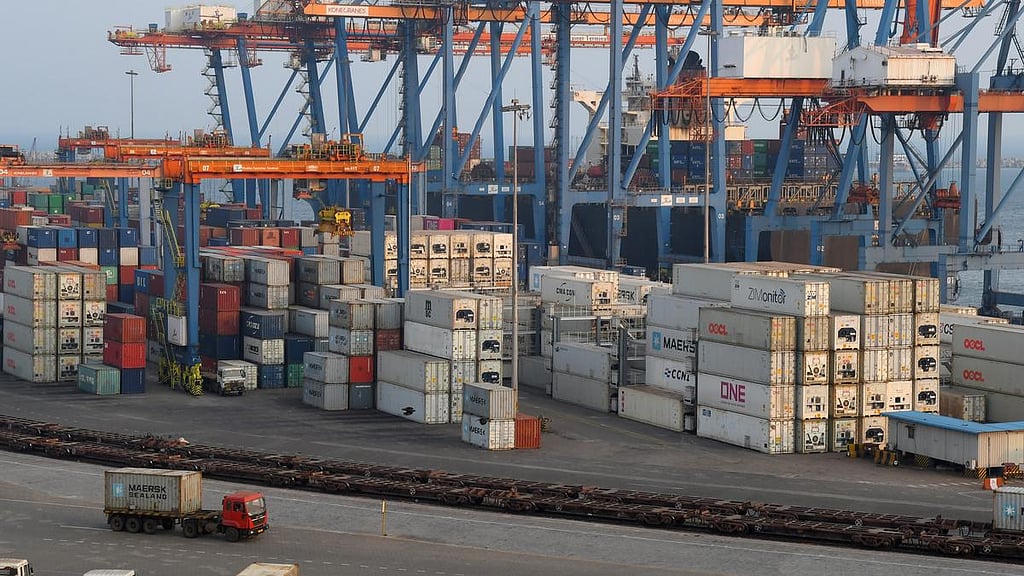
Discover how the Indian Authorised Economic Operator (AEO) programme accelerates cross-border trade for trusted exporters through deferred duties, DPE, and priority customs clearance. Learn the application steps, tier structures, and compliance rules for 2026.
Every hour a consignment waits at a port costs an exporter money — in demurrage, missed vessel connections and strained buyer relationships. For Indian exporters shipping regularly, customs examination queues are one of the most persistent sources of delay. The Authorised Economic Operator (AEO) programme, run by the Central Board of Indirect Taxes and Customs (CBIC), is India's answer: a trusted-trader scheme that rewards compliant businesses with faster clearance, fewer inspections and recognition by customs authorities abroad. This guide explains the T1, T2 and T3 tiers, the benefits each unlocks, who can apply, how to apply on ICEGATE, and what it takes to stay certified.
What Is the AEO Programme?
The AEO programme is a voluntary trade-facilitation scheme built on the World Customs Organization's SAFE Framework of Standards. The core idea is simple: instead of treating every trader as an unknown risk, customs identifies businesses with strong internal controls and a clean compliance record, and clears their cargo on a trust basis.
In India, the programme is administered by CBIC. It is open to anyone in the international supply chain — exporters, importers, and logistics operators such as custodians, terminal operators and transporters (who apply under the AEO-LO category). AEO status is essentially a government-backed trust badge: it tells every customs formation in India, and partner customs administrations overseas, that your business is low-risk and security-conscious.
For exporters, that trust converts directly into speed. AEO consignments are risk-managed rather than routinely examined, which means fewer red-channel referrals, shorter dwell times and more predictable delivery schedules — the things overseas buyers value most.
The Three Tiers: AEO-T1, AEO-T2 and AEO-T3
CBIC structures exporter/importer accreditation into three progressive tiers. Each tier demands more from the applicant — and gives more in return.
AEO-T1: the entry level
AEO-T1 is granted on the basis of documentary verification. Customs reviews your application, financials and compliance history on paper, without visiting your premises. It is designed for MSMEs and growing exporters taking their first step into trusted-trader status. Certification is valid for three years.
AEO-T2: verified on the ground
AEO-T2 adds physical verification. A customs team visits your factory, warehouse and office to check that the security procedures described in your application actually exist — cargo handling controls, access restrictions, personnel screening and IT safeguards. In return, T2 holders get deeper facilitation benefits, including access to deferred duty payment. Certification is valid for three years.
AEO-T3: the highest trust tier
AEO-T3 is the top tier, generally available to businesses that have held AEO-T2 status and maintained an exemplary compliance record. T3 holders receive the maximum facilitation Indian Customs offers — near-automatic clearance and priority treatment across formations. Certification is valid for five years.
Choosing a tier is a business decision: T1 suits exporters who want faster clearance with minimal compliance investment, while T2 and T3 suit high-volume exporters for whom every hour of dwell time has a direct cost.
Benefits That Matter to Exporters
Fewer examinations, faster clearance
The single biggest benefit is risk-based processing. AEO cargo is far less likely to be selected for physical examination or detailed scrutiny. Your shipments move through the green channel while non-certified cargo waits in the queue. For exporters shipping on tight letter-of-credit timelines, that reliability is worth more than any single duty saving.
Direct Port Entry for exports
AEO exporters can use Direct Port Entry (DPE), moving factory-stuffed containers straight into the port terminal without routing through a container freight station. That eliminates CFS handling charges and a full handling leg — saving both money and one to two days per shipment. On the import side, the mirror benefit is Direct Port Delivery (DPD), which similarly cuts costs on imported inputs.
Deferred payment of customs duty
Eligible AEO holders (T2 and T3) can defer payment of customs duty on their imports instead of paying consignment by consignment at the time of clearance. For exporters importing raw materials or components under schemes like Advance Authorisation, this is a genuine cash-flow benefit — duty is settled on a deferred cycle rather than upfront per shipment. Confirm current tier-wise eligibility on ICEGATE, as facilitation circulars are updated periodically.
Lower bank guarantees
Where customs requires security — for provisional assessments, warehousing or scheme-related bonds — AEO holders benefit from reduced or waived bank guarantee requirements, freeing up working capital that would otherwise sit locked with a bank.
Recognition abroad through MRAs
India has signed Mutual Recognition Arrangements with several partner customs administrations, including the United States (C-TPAT), South Korea, Hong Kong and Taiwan. Under an MRA, your AEO status is recognised by the partner country, so your exports receive priority processing and fewer inspections on arrival — a real competitive edge when buyers compare Indian suppliers with rivals from other countries.
A single point of contact
Higher-tier AEO holders get a dedicated client relationship manager in customs — one officer to approach when a shipment is held up or a procedural question arises, instead of navigating the system cold.
Who Is Eligible?
The eligibility bar is deliberately set around demonstrated trustworthiness:
- Active trader: you must hold an Importer Exporter Code (IEC) and have been engaged in international trade for at least three years.
- Clean record: no prosecution or major customs offence in the preceding three years. Pending serious disputes can disqualify an application.
- Financially solvent: audited financial statements showing a viable, going-concern business.
- Documented processes: for T2 and T3, written security procedures covering premises, cargo handling, personnel, business partners and IT systems.
- All locations covered: the application must cover every business premises involved in the supply chain.
If your business is younger than three years or has recent compliance issues, the practical advice is to build a clean track record first and apply for T1 when eligible.
How to Apply on ICEGATE: Step by Step
The entire application is digital, filed on the ICEGATE portal, and Indian Customs charges no application fee.
Step 1 — Prepare your dossier. Before logging in, assemble the annexures: general business information, a legal-compliance self-declaration, three years of audited financials, and (for T2/T3) your security manual with site layouts and process maps.
Step 2 — File on ICEGATE. Log in with your IEC-linked credentials, select the AEO application, choose your tier, and complete the structured annexures. Upload supporting documents in the prescribed formats.
Step 3 — Scrutiny. CBIC's AEO team examines the application and may raise queries seeking clarification or additional documents. Respond promptly — most delays at this stage come from slow or incomplete responses.
Step 4 — Verification visit (T2/T3). A customs team schedules an on-site verification of your premises against the security criteria in your application. They check cargo areas, access controls, CCTV coverage, seal management and record-keeping.
Step 5 — Certification. On successful verification, CBIC issues the AEO certificate with a unique AEO code. Your status is flagged in customs systems nationwide, and facilitation benefits apply from the date of issue.
Indicative timelines vary with application volumes — T1 decisions are typically faster since there is no site visit — so check current processing times on ICEGATE before committing to customer delivery dates.
Staying Certified: Ongoing Compliance
AEO status is not a one-time award; it is a continuing obligation. Certified businesses must:
- Notify customs of material changes — new warehouses, shifts in key personnel, mergers or changes in business activity.
- Maintain the security procedures and records described in the application, and keep them audit-ready.
- Cooperate with periodic monitoring and re-validation checks by customs.
- Report any security incident affecting the supply chain.
Serious or repeated non-compliance can lead to suspension or revocation of the certificate — which immediately removes all facilitation benefits. Treat the AEO manual as a living document, not a filing-cabinet formality.
Validity and Renewal
AEO-T1 and AEO-T2 certificates are valid for three years; AEO-T3 is valid for five years. Renewal applications are filed on ICEGATE before expiry, and for higher tiers may involve a fresh round of verification. Businesses can also apply to upgrade — for example, moving from T1 to T2 once their volumes and compliance systems justify it — rather than waiting for the renewal cycle.
Frequently Asked Questions
Is AEO certification mandatory for exporters?
No. It is entirely voluntary. But for regular exporters, the time and cost savings usually justify the effort of applying — particularly once shipment volumes make dwell-time delays expensive.
Can an MSME apply, or is this only for large exporters?
MSMEs are explicitly welcome. AEO-T1 was designed as the entry tier for smaller businesses: verification is documentary, the compliance burden is lighter, and there is no application fee.
Does AEO status mean my cargo is never examined?
No. AEO cargo is risk-managed, not exempt. Selection rates for examination drop sharply, but intelligence-based or random checks can still occur. The benefit is far fewer routine examinations, not zero examinations.
How long does the application take?
Timelines depend on the tier and on how complete your application is. T1 moves faster because there is no site visit; T2 and T3 take longer due to physical verification. Treat published timelines as indicative and verify current processing times on ICEGATE.
Is there an application fee?
No — Indian Customs does not charge an application fee for AEO certification. Be cautious of intermediaries who demand large upfront fees; the filing itself on ICEGATE is free of cost.
Can AEO status be suspended?
Yes. Customs can suspend or revoke certification for compliance failures, security lapses or loss of financial solvency. Affected businesses get an opportunity to respond before final action in most cases.
Conclusion
For Indian exporters competing on delivery reliability, AEO certification is one of the highest-return compliance investments available: faster clearance, lower handling costs, deferred duty payment, reduced bank guarantees and recognition in key overseas markets. Start with an honest assessment of your compliance maturity, aim for AEO-T1 if you are early in the journey, and build towards T2 or T3 as volumes grow. The application is free, digital and entirely on ICEGATE — the only real cost is the discipline of running a compliant, well-documented operation.