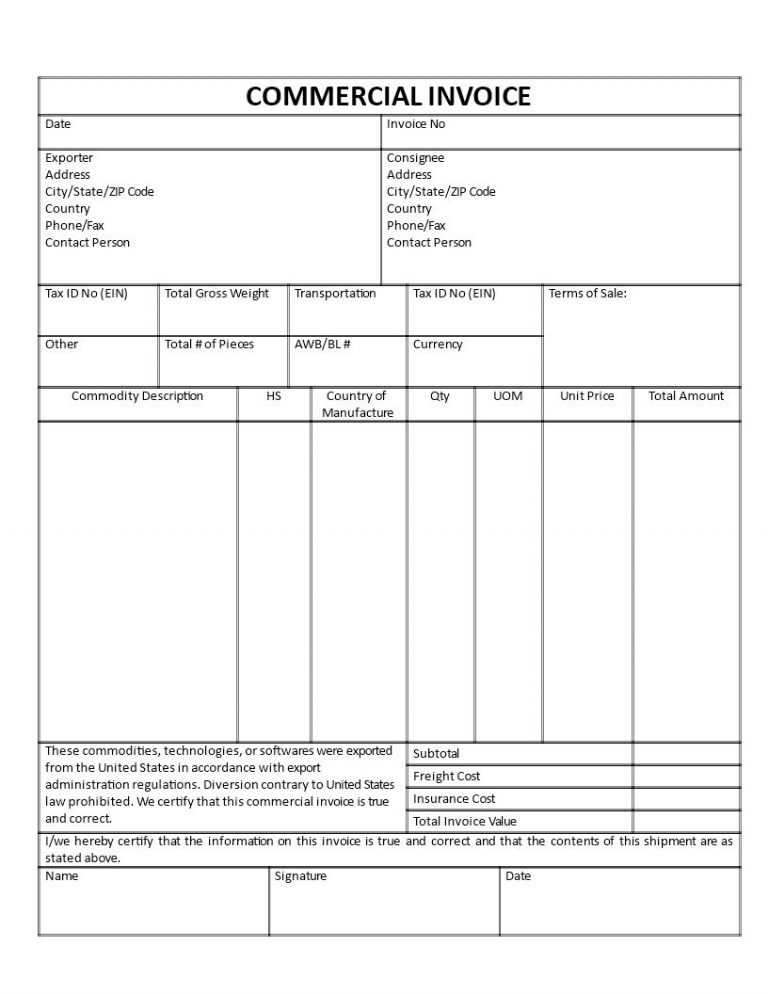
A practical guide to the export commercial invoice: every mandatory field explained, a filled sample for a typical Indian consignment, 5 clearance-delaying mistakes, and news of TodayAdviser's upcoming free invoice generator.
A commercial invoice is the definitive financial and legal transaction document between an exporter and a buyer, serving as the primary baseline for customs authorities worldwide to assess import duties, verify trade compliance, and validate product valuation. Whether you are scaling an established international trade operation or preparing your very first international shipment, mastering the exact commercial invoice format for export is non-negotiable. Without a pristine, accurate document, your cargo faces severe port delays, unexpected demurrage charges, and potential regulatory fines.
For modern global B2B suppliers and buyers navigating complex cross-border logistics, utilizing a reliable commercial invoice generator streamlines documentation and eliminates costly manual entry errors. In this practical guide, we break down everything you need to know about crafting a legally bulletproof export invoice, complete with mandatory fields, a detailed walkthrough of a real-world export sample, and a checklist of fatal customs mistakes to avoid.
What is a Commercial Invoice and Why Do Customs Demand It?
A commercial invoice is much more than a simple payment request; it is a legally binding contract and declaration between the seller and the buyer that details the sale of goods from one country to another. When your shipment arrives at the port of destination, customs officials do not look at your purchase order or your internal emails—they look directly at your commercial invoice.
Customs authorities worldwide demand a commercial invoice for three primary reasons:
- Customs Valuation: Border agencies use the stated invoice value to determine the exact duty, tariff, and tax rates applicable to the incoming merchandise.
- Regulatory Compliance & Safety: The description of goods, quantities, and origin data allow authorities to screen shipments for restricted items, intellectual property violations, and trade sanctions.
- Legal Declaration: The invoice acts as a signed affidavit by the exporter certifying that the commercial transaction details, pricing, and origin declarations are entirely truthful.
Mandatory Fields in an Export Commercial Invoice
To pass customs inspection without a hitch, every commercial invoice must contain specific mandatory data points. Leaving any of these fields blank or ambiguous is an open invitation for customs to halt your cargo.
Exporter Name and Address
The complete legal business name, physical street address, and contact details of the selling entity.
Importer / Consignee Name and Address
The full legal name, physical delivery address, and contact information of the buying entity or ultimate receiver.
Invoice Number and Date
A unique alphanumeric invoice tracking number and the exact date of issue.
Country of Origin
The nation where the goods were manufactured, grown, or produced, which dictates tariff preferences.
Detailed Goods Description
A clear, plain-language description explaining what the item is, what it is made of, and its intended use.
HS Codes (Harmonized System Codes)
The internationally standardized numerical code used by customs to classify the traded product.
Quantity and Unit
The exact count, weight, or volume of the goods being shipped, matched with appropriate measurement units.
Unit Price and Total Value
The agreed price per individual unit and the aggregate financial value of the line item.
Currency
The agreed international currency code (e.g., USD, EUR, GBP) in which the transaction is settled.
Incoterms 2020
The designated trade term (e.g., FOB, CIF, EXW) that explicitly defines shipping risk and cost allocation.
Payment Terms
The agreed financial settlement schedule, such as Letter of Credit (LC), Documentary Collection, or Advance Payment.
Freight and Insurance Cost Split
A clear itemization separating the cost of goods from international freight and transit insurance fees.
Declaration Statement and Authorised Signature
A legally binding declaration of truthfulness, signed and stamped by an authorized company representative.
Filled Sample Walkthrough: India to Germany Export Consignment
To see how these mandatory elements come together in practice, let us examine a typical filled sample commercial invoice for a textile exporter based in Tiruppur, India, shipping cotton garments to a retail buyer in Hamburg, Germany.
| Invoice Field | Practical Entry Example | Notes for Exporters | ||
|---|---|---|---|---|
| Exporter Details | Apex Apparels Pvt. Ltd, 14 Industrial Nagar, Tiruppur, Tamil Nadu 641601, India | Must match IEC and bank records. | ||
| Consignee Details | Nordics Retail GmbH, Speicherstadt 12, 20457 Hamburg, Germany | Ultimate buyer receiving the goods. | ||
| Invoice Number / Date | INV-2026-042 | Dated March 15, 2026. | ||
| Country of Origin | India | Where the cotton garments were manufactured. | ||
| Goods Description | 100% Combed Cotton Men's Short Sleeve T-Shirts, GSM 180, Reactive Dyed | Avoid generic terms like "garments." | ||
| HS Code | 6109.10.00 | Standard 6 to 8 digit Harmonized System code for cotton knit T-shirts. | ||
| Quantity & Unit | 500 Pieces | Total shipped unit volume. | ||
| Unit Price & Total | Unit Price: $4.50 USD \ | Total Value: $2,250.00 USD | Total equals quantity multiplied by unit price. | |
| Currency | USD (United States Dollars) | Agreed settlement currency. | ||
| Incoterms 2020 | CIF Hamburg Port, Germany | Cost, Insurance, and Freight included to destination port. | ||
| Payment Terms | 30% Advance, 70% against Scanned Bill of Lading via TT | Clear financial terms protect the seller. | ||
| Cost Split | FOB Value: $2,100 \ | Freight: $100 \ | Insurance: $50 | Customs requires itemized values to calculate duties correctly. |
| Declaration | "We declare that this invoice shows the actual price of the goods described..." | Signed and stamped by the Export Director. |
5 Common Mistakes That Delay Customs Clearance
First-time exporters frequently stumble on documentation nuances that trigger intensive customs audits or cargo holds. Avoiding these five critical errors will save you time, money, and stress.
1. Vague Goods Descriptions
Writing "samples," "parts," or "merchandise" on your invoice is an immediate red flag for customs officials. Every line item must clearly state what the product is, its material composition, and its commercial application.
2. Missing or Incorrect HS Codes
Using an outdated or incorrect Harmonized System code leads to misclassification. If customs disagrees with your HS code, your buyer may be slapped with higher duty rates or severe administrative penalties.
3. Incorrect Incoterms Application
Failing to specify the correct Incoterms 2020 rule alongside the named place creates ambiguity regarding who pays for port handling, customs clearance, and transit insurance.
4. Currency Mismatches
Invoicing in a currency that differs from your banking channels or your sales contract creates reconciliation nightmares for foreign exchange regulators and commercial banks.
5. Missing Declarations or Signatures
An unsigned or unstamped commercial invoice lacks legal standing. Customs authorities routinely reject unsigned documents, treating them as unverified drafts.
Frequently Asked Questions
What is the difference between a commercial invoice and a proforma invoice?
A proforma invoice is a preliminary quotation sent by an exporter before a sale is finalized, detailing estimated costs and quantities. A commercial invoice is the final, binding legal bill issued after the order is confirmed and shipped, serving as the official record for customs and accounting.
Do I need to include HS codes on my commercial invoice?
Yes. While some countries do not strictly mandate HS codes on every single invoice, including them is standard global best practice. It ensures customs officers instantly identify the correct tariff bracket, preventing costly classification delays at the border.
Can I issue a commercial invoice in my local currency?
You can issue an invoice in any currency agreed upon with your buyer, but it must match the currency stated in your sales contract, letter of credit, and banking documentation to prevent foreign exchange and customs clearance complications.
What happens if the commercial invoice value does not match the packing list?
Customs authorities routinely cross-reference commercial invoices with packing lists to verify gross weights, net weights, and piece counts. Discrepancies trigger physical cargo inspections, holding up your container and incurring expensive demurrage fees.
Who is responsible for generating the commercial invoice?
The exporter or the authorized freight forwarder acting on the exporter's behalf is entirely responsible for drafting, signing, and issuing an accurate commercial invoice before the shipment departs.
Is a digital signature acceptable on an export commercial invoice?
Most modern customs authorities accept digital or scanned signatures on commercial invoices, provided the document is clear, legible, and accompanied by company stamps where legally required by destination regulations.
Conclusion and Next Steps
Mastering the commercial invoice format for export is a foundational skill for any B2B enterprise engaged in international trade. By ensuring every mandatory field is completed accurately, applying precise HS codes, and aligning your documentation with Incoterms 2020 rules, you protect your supply chain from costly customs bottlenecks.
To make this process effortless, TodayAdviser will soon launch a dedicated free commercial invoice generator tool designed specifically for global exporters. Until then, explore our platform to connect with verified suppliers, source reliable global buyers, and scale your cross-border trade operations with absolute confidence.