
New Delhi hosted the 3rd India–Brunei Joint Trade Committee on 14 October 2026, naming agricultural goods, animal products, pharmaceuticals, healthcare and energy as priority sectors. A practical read for Indian exporters on what opened up — and how to act on it.
The third meeting of the India–Brunei Joint Trade Committee (JTC), held in New Delhi on 14 October 2026 and co-chaired from the Indian side by Amit Verma of the Department of Commerce, will not make front pages. For Indian exporters, though, it is exactly the kind of development worth reading closely. Bilateral trade committees are where market access is negotiated in practice — standards recognised, certifications discussed, sectors prioritised — long before the results show up in export statistics.
A Joint Trade Committee is the working-level engine of a bilateral trade relationship: officials from both countries review trade flows, iron out regulatory friction and agree on sectors to push. Three rounds in, this is a relationship acquiring commercial substance. The New Delhi round put five sectors on the table: agricultural goods, animal products, pharmaceuticals, healthcare and energy. For exporters in these segments, the message is simple — the government is opening doors, and early movers get to shape buyer relationships first.
What the JTC Actually Does
It is worth demystifying the format. A JTC typically covers four things: a review of bilateral trade performance; market-access issues, meaning the specific duties, licences or standards blocking shipments; sectoral cooperation in areas such as agriculture, pharma and energy; and trade facilitation, from customs procedures to standards recognition. Outcomes are recorded in agreed minutes with action points for both sides.
Why does this matter to a single exporter? The issues on the table — recognition of Indian testing certificates, faster veterinary clearances — directly lower the cost and risk of your next shipment. And the sectors a JTC names are the sectors where embassies, export promotion councils and trade fairs focus next. Aligning with that push is simply efficient.
Sector by Sector: Reading the Five Priorities
Agricultural goods
Brunei imports much of its food — a structural reality for a small, high-income economy with limited farmland. The JTC's emphasis on agricultural goods points squarely at categories where India is globally competitive: rice, spices, tea, pulses and processed and packaged foods. Indian agri exporters already sell these across Southeast Asia; what the JTC adds is government-level attention that can ease regulatory friction, from plant-quarantine procedures to labelling norms.
The practical watchpoint is halal. Brunei is a Muslim-majority country with halal requirements for food products — treat halal certification as a core part of the product plan rather than an afterthought: certify early, label clearly and keep documentation ready for customs inspection.
Animal products
Animal products — poultry, dairy, eggs and processed meat — were named as a separate head, which suggests specific market-access discussion rather than a passing mention. India is among the world's largest producers of milk and a significant poultry producer, with established export channels to the Gulf and Southeast Asia. For exporters here, the JTC is a signal to begin compliance homework now: veterinary health certificates, processing hygiene standards, cold-chain integrity and halal slaughter certification are typically the gating items for animal-product shipments into Brunei.
Pharmaceuticals
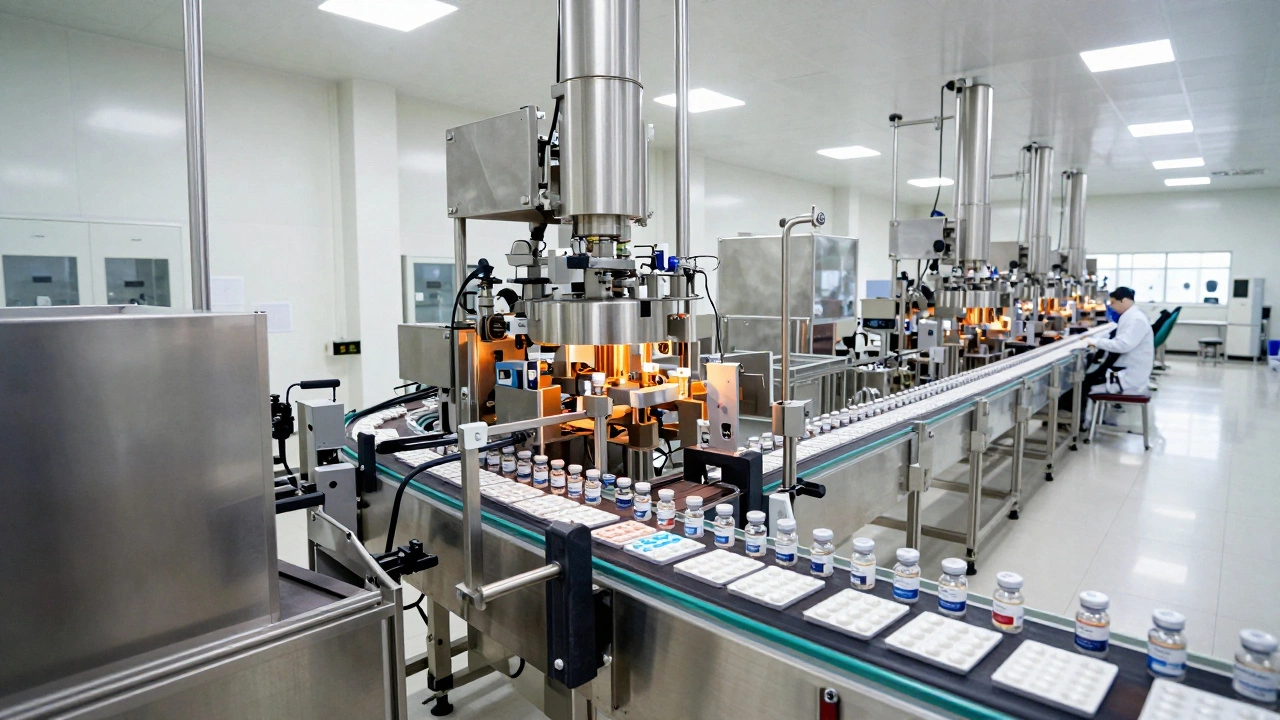
This may be the most concrete opening of the five. India is the world's largest supplier of generic medicines by volume, and Brunei's healthcare system sources much of its pharmaceutical requirement through imports. The JTC's inclusion of pharmaceuticals signals interest in putting this channel on a firmer institutional footing — which in practice can mean clearer registration pathways for Indian formulations.
For Indian pharma exporters, market entry into Brunei is registration-led: products generally require approval from the country's health authorities before commercial sale. Companies with dossiers already filed in other ASEAN markets will find much of the documentation reusable; first-timers should work through a local distributor or regulatory consultant who handles registrations.
Healthcare
Beyond medicines, the healthcare head covers medical devices, diagnostics, hospital consumables and possible collaboration in health services. Indian manufacturers of syringes, catheters, surgical consumables and diagnostic kits compete strongly on price and quality in emerging Asian markets. The JTC gives these exporters a reason to add Brunei to their ASEAN outreach now.
Energy
The energy discussion chiefly reflects the existing hydrocarbons relationship — Brunei is an established producer and exporter of oil and gas, and India is a major energy importer. For Indian exporters, the direct openings sit in energy-adjacent categories: equipment, engineering services, safety gear, instrumentation and industrial consumables used across the oil and gas value chain. Indian engineering-goods firms already serve Gulf energy markets operating to similar international standards, so the adaptation cost for Brunei is low.
Brunei as a Market: A Realistic Read
Enthusiasm needs a reality check. Brunei is a small Southeast Asian nation — its population is under half a million — with a high-income, hydrocarbon-driven economy. It imports most of what its consumers and industries use, from food to medicines to machinery. That import dependence is the opportunity: in a compact market, a single strong distributor relationship can deliver meaningful national coverage.
The constraints are equally plain. Order volumes will be modest; with no high-frequency direct shipping services from most Indian ports, freight usually moves via regional transhipment hubs — confirm current routings with your forwarder; and the buyer universe is small, which means reputation and reliability carry outsized weight. Treat Brunei as a margin-friendly niche and a relationship market, not a volume play. It also works well as a low-risk ASEAN beachhead: the regulatory and commercial lessons transfer to larger neighbours.
The Act East Backdrop
The JTC does not sit in isolation. It fits within India's Act East Policy — the sustained push to deepen economic engagement with Southeast Asia — and a broader diversification effort as Indian firms look beyond traditional Western markets. Brunei is a member of ASEAN, and the ASEAN–India Free Trade Area already provides the tariff framework for goods trade between the two countries; the JTC builds bilateral specificity on top of that foundation by naming sectors, assigning follow-ups and scheduling the next round in Brunei itself.
The policy signal for exporters: government trade infrastructure — embassies, export promotion councils, buyer-seller meets — will keep tilting toward Southeast Asia. Firms that plug into that infrastructure early get market intelligence and buyer access at a fraction of the cost of going alone.
A Practical Playbook for Exporters
1. Map your product to the five sectors. If you export rice, spices, tea, processed foods, poultry or dairy products, formulations or APIs, medical devices and consumables, or energy-sector equipment and services, Brunei now has an official welcome mat. Check where your HS codes sit against the priority list and note which need registration or certification.
2. Start halal certification early. For food and animal products this is non-negotiable. Certification audits take time; begin before you have a buyer, not after the purchase order arrives.
3. Assemble regulatory dossiers. Pharma and medical-device exporters should pull together manufacturing licences, GMP or ISO certificates and product dossiers now, so distributor conversations can move at commercial speed.
4. Use the institutional route. Talk to your export promotion council — APEDA for agri and processed food, Pharmexcil for pharma — and track Department of Commerce announcements on delegations, buyer-seller meets and the next JTC round. Business events often travel with these dialogues.
5. Meet buyers face to face. In a small, relationship-driven market, trade fairs and business delegations still close deals faster than email. ASEAN-wide exhibitions are the most efficient hunting ground if Brunei-specific events are thin.
6. Structure payment for a new market. Until a buyer relationship is proven, insist on letters of credit or ECGC-backed payment terms. Small markets do not justify large unsecured exposures.
7. Price for the real landed cost. Get current freight quotes including transhipment, factor in certification and registration costs, and quote on that basis.
Frequently Asked Questions
What is the India–Brunei Joint Trade Committee?
It is the bilateral intergovernmental mechanism through which India and Brunei review trade ties and agree on steps to expand them. The third round was held in New Delhi on 14 October 2026, co-chaired on the Indian side by Amit Verma of the Department of Commerce.
Which sectors were prioritised at the latest round?
Agricultural goods, animal products, pharmaceuticals, healthcare and energy.
Why should Indian exporters care about such a small market?
Because it is high-income and import-dependent: a compact market where early entrants can build strong distributor relationships with modest investment, and a useful low-risk beachhead for wider ASEAN expansion.
What is the biggest compliance hurdle?
For food and animal products: halal certification plus veterinary and sanitary documentation. For pharmaceuticals and medical devices: product registration with Brunei's health authorities. Start both processes early — they take longer than the commercial negotiation.
Does a free trade agreement cover India–Brunei trade?
Yes. Brunei is a member of ASEAN, and the ASEAN–India Free Trade Area is in force, providing the tariff framework for goods traded between the two countries.
When is the next JTC round?
Both sides agreed the next round will be held in Brunei. Dates have not been announced; exporters should watch Department of Commerce and export promotion council announcements, since business events often accompany the dialogue.
How do I find buyers in Brunei?
Through your export promotion council, the Indian embassy in Bandar Seri Begawan, ASEAN-focused trade fairs and verified B2B platforms. Distributor-led entry is the norm in a market of this size.
Conclusion
The third India–Brunei JTC will not move India's export needle by itself, and it would be a mistake to judge it on that metric. Its value is directional: five named sectors, an agreed next round on Bruneian soil, and a policy backdrop actively steering exporters toward Southeast Asia. For exporters in agri, animal products, pharma, healthcare and energy-adjacent lines, the rational response is groundwork — certifications, dossiers, distributor outreach — started now, so that when the next round convenes, your company is already in the room.