From India — the world's largest milk producer — to the USA, Pakistan, China and Brazil: explore the largest milk producing countries for 2026, the White Revolution story, key dairy export products and buyer sourcing notes.
Milk is one of the world's most valuable agricultural commodities — the raw material for a dairy industry spanning fresh milk, powders, butter, cheese and ghee. For importers, distributors and food manufacturers, understanding which countries produce the most milk — and how their dairy sectors are organised — is essential for sourcing strategy. This 2026 guide ranks the largest milk producing countries in the world, explains India's White Revolution, profiles key dairy export products, and gives buyers practical sourcing notes.
A note on figures: production rankings below follow widely-reported global order and are kept indicative. Always verify current statistics from official sources before quoting them commercially.
Largest Milk Producing Countries in the World: Ranked
1. India — the largest milk producer in the world
India is the world's largest milk producer, a position it has held since the late 1990s following the White Revolution. Production comes overwhelmingly from smallholder farmers — millions of rural households keeping a few buffaloes or cows each — organised through village cooperative societies. Buffalo milk accounts for a large share of output, giving Indian milk its characteristic richness. Major dairy states include Uttar Pradesh, Rajasthan, Madhya Pradesh, Gujarat, Punjab and Andhra Pradesh.
Buyer note: India's dairy strength is in milk powders, ghee, butter and casein rather than liquid milk exports. The cooperative system (epitomised by Amul) provides scale and quality aggregation. See the White Revolution section below.
2. United States — the efficiency leader
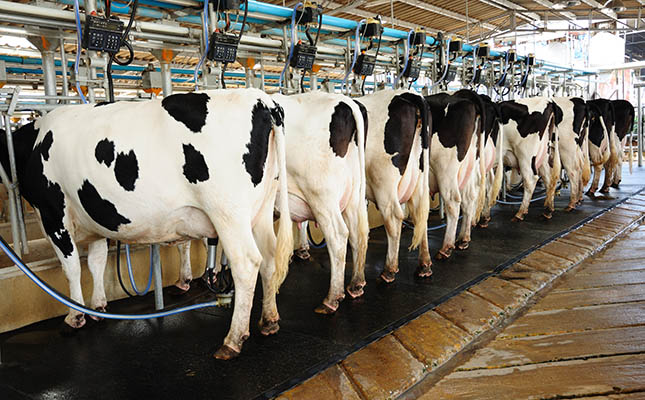
The United States is the world's second-largest milk producer, with output concentrated in states such as California, Wisconsin, Idaho, New York and Texas. The US industry is characterised by large, highly mechanised dairy farms, advanced genetics and strong processing infrastructure. America is a major exporter of skimmed milk powder, whey products, cheese and lactose.
Buyer note: US dairy exporters are reliable suppliers of milk powders and whey for food manufacturing, with well-documented quality systems.
3. Pakistan — the smallholder giant
Pakistan ranks among the world's top milk producers, with production dominated by smallholder farmers keeping buffaloes and cows. Buffalo milk is central to the country's dairy culture. While most output is consumed domestically as fresh milk, Pakistan's dairy processing sector is gradually formalising.
4. China — the fast-growing producer
China's milk production has grown rapidly over recent decades, supported by large-scale modern dairy farms in Inner Mongolia, Heilongjiang and other northern regions, alongside major processors. Domestic demand growth has been the primary driver, though China also imports significant dairy volumes.
5. Brazil — the tropical producer
Brazil is among the world's largest milk producers, with dairy farming spread across Minas Gerais, Rio Grande do Sul, Paraná and Goiás. Production ranges from small family farms to large confinement operations. Most Brazilian milk serves the domestic market, one of the world's largest dairy consumers.
6. Germany — Europe's dairy engine
Germany is the largest milk producer in the European Union, with a highly organised sector of family farms and cooperatives, particularly in Bavaria and Lower Saxony. German dairy is a powerhouse exporter of cheese, milk powders and butter within and beyond Europe.
7–10. Russia, France, New Zealand and the Netherlands
Russia maintains large-scale dairy production rooted in its agricultural heritage. France is famed for its cheese industry, producing hundreds of recognised varieties from a strong regional dairy base. New Zealand, though modest in total volume, is the world's leading dairy exporter by share of production — its pasture-based system and cooperatives (notably Fonterra) ship milk powder, butter and cheese worldwide. The Netherlands combines high farm productivity with a major dairy processing and re-export trade.
India's White Revolution: How India Became #1
The White Revolution — India's Operation Flood programme, launched in 1970 — is the world's largest dairy development programme and the reason India tops global milk production rankings.
- The cooperative model: Village dairy cooperative societies collect milk twice daily from member farmers, test it for quality, and transport it to district unions for processing. Farmers are paid transparently based on fat and SNF (solids-not-fat) content.
- Amul: The Gujarat Cooperative Milk Marketing Federation, marketing the Amul brand, is the best-known face of the movement — a farmer-owned organisation that became one of India's most recognised food brands.
- National Dairy Development Board (NDDB): The institutional backbone that replicated the Anand (Gujarat) model across India.
- Impact: India moved from milk scarcity in the 1960s to the world's largest producer, with dairying providing livelihoods to millions of rural households.
Buyer note: The cooperative structure means Indian dairy exports come through organised federations and private processors with aggregated, tested milk — a quality advantage for powders and ghee.
Dairy Export Products: What the World Trades
Skimmed milk powder (SMP)
SMP is the most-traded dairy commodity globally — used in confectionery, bakery, infant formula and recombined milk. India, the US, the EU and New Zealand are key suppliers. Quality parameters include protein content, solubility and microbiological standards.
Ghee (clarified butter)
Ghee is India's signature dairy export — shelf-stable clarified butter central to South Asian and Middle Eastern cuisines. Indian ghee exports serve diaspora markets and a growing global audience for traditional fats. Granular (danedar) texture and aroma are key quality markers.
Butter
Butter trade flows from surplus regions (New Zealand, the EU, the US) to deficit markets. Salted and unsalted variants serve retail and food-service channels.
Cheese
Cheese is the highest-value dairy export category, led by the EU, the US and New Zealand. Cheddar, mozzarella and processed cheese dominate industrial trade, while specialty cheeses command premiums.
Whey products and casein
Whey protein concentrates and isolates serve sports nutrition and food manufacturing; casein from India and others serves industrial and food applications.
Buyer Notes for Sourcing Dairy Products
1. Prioritise food safety certifications
Dairy is a sensitive food category. Look for HACCP, ISO 22000 or FSSC 22000 certification, plus compliance with your destination market's import requirements (such as EU or US FDA standards). Verify certificates with issuing bodies.
2. Understand the cold chain
Fresh dairy needs unbroken refrigeration; powders, ghee and UHT products are shelf-stable and far easier to ship internationally. Match the product format to your logistics capability.
3. Specify quality parameters in contracts
For SMP, define protein, fat, moisture, solubility and microbiological limits. For ghee, define flavour, texture, packaging and shelf-life expectations. Reference Codex Alimentarius standards where applicable.
4. Plan around seasonality
Milk production follows lactation cycles and, in India, the flush (winter) and lean (summer) seasons affect availability and pricing of powders and ghee. Contract strategically.
5. Work with established exporters
Dairy exporting requires export health certification and market access compliance. Established processors and cooperatives handle documentation routinely — verify their export track record before committing.
Frequently Asked Questions
Which is the largest milk producer in the world?
India is the world's largest milk producer, a position it has held since the late 1990s following the White Revolution. Figures are indicative — verify current FAO or national statistics before quoting.
What was the White Revolution in India?
Operation Flood (1970 onwards) — the world's largest dairy development programme — built India's village cooperative dairy network, moving the country from milk scarcity to the world's top producer.
What dairy products does India export?
Primarily skimmed milk powder, ghee, butter, casein and whey products, serving markets in the Middle East, South Asia, Africa and beyond.
Which country exports the most dairy overall?
By share of production exported, New Zealand is the world's leading dairy exporter; the EU and the US are the largest exporters by absolute volume across product categories.
What certifications should I ask a dairy supplier for?
HACCP/ISO 22000 or FSSC 22000, plus destination-market compliance (EU, US FDA). Verify all certificates with the issuing body.
How is milk powder quality specified in trade?
Through protein and fat content, moisture, solubility index, scorched particle content and microbiological parameters — agreed in the sales contract against standards like Codex.
Conclusion
The largest milk producing countries in the world — India at #1, followed by the USA, Pakistan, China, Brazil and Germany — each bring distinct dairy systems, from India's smallholder cooperatives to America's large-scale farms and New Zealand's export machine. For buyers, the opportunity lies in matching product formats (powders, ghee, cheese) to reliable, certified suppliers with proven export documentation.
Looking to source dairy products in bulk? Post your requirement on Today Adviser and connect with verified dairy suppliers and exporters.