From facial and toilet tissue to kitchen towels, napkins and jumbo rolls: a commercial and industrial guide to the types of tissue paper — GSM and ply explained, bulk buying specifications and export packaging essentials.
Tissue paper looks like a simple commodity — until you have to buy it in bulk. For facility managers, distributors, hospitality buyers and exporters, the differences between grades, GSM, ply and packaging formats directly affect cost, performance and customer satisfaction. This commercial and industrial guide explains the types of tissue paper, decodes the specifications that matter in bulk buying, and covers export packaging essentials.
A note on figures: all specification ranges below are indicative and vary by manufacturer. Always confirm exact specs with your supplier before ordering.
The Main Types of Tissue Paper
1. Facial tissue
Facial tissues are soft, low-strength sheets designed for nose and face contact — typically 2-ply, sold in pop-up boxes or pocket packs. Key quality markers are softness, low lint and gentle strength when damp. Commercial buyers (offices, hospitality, airlines) usually purchase by case counts, while private-label brands specify sheet size, ply and embossing patterns.
Buyer note: Softness is subjective — request physical samples and compare sheet feel, not just GSM. Lotion-infused variants cost more and suit premium positioning.
2. Toilet tissue (bathroom tissue)
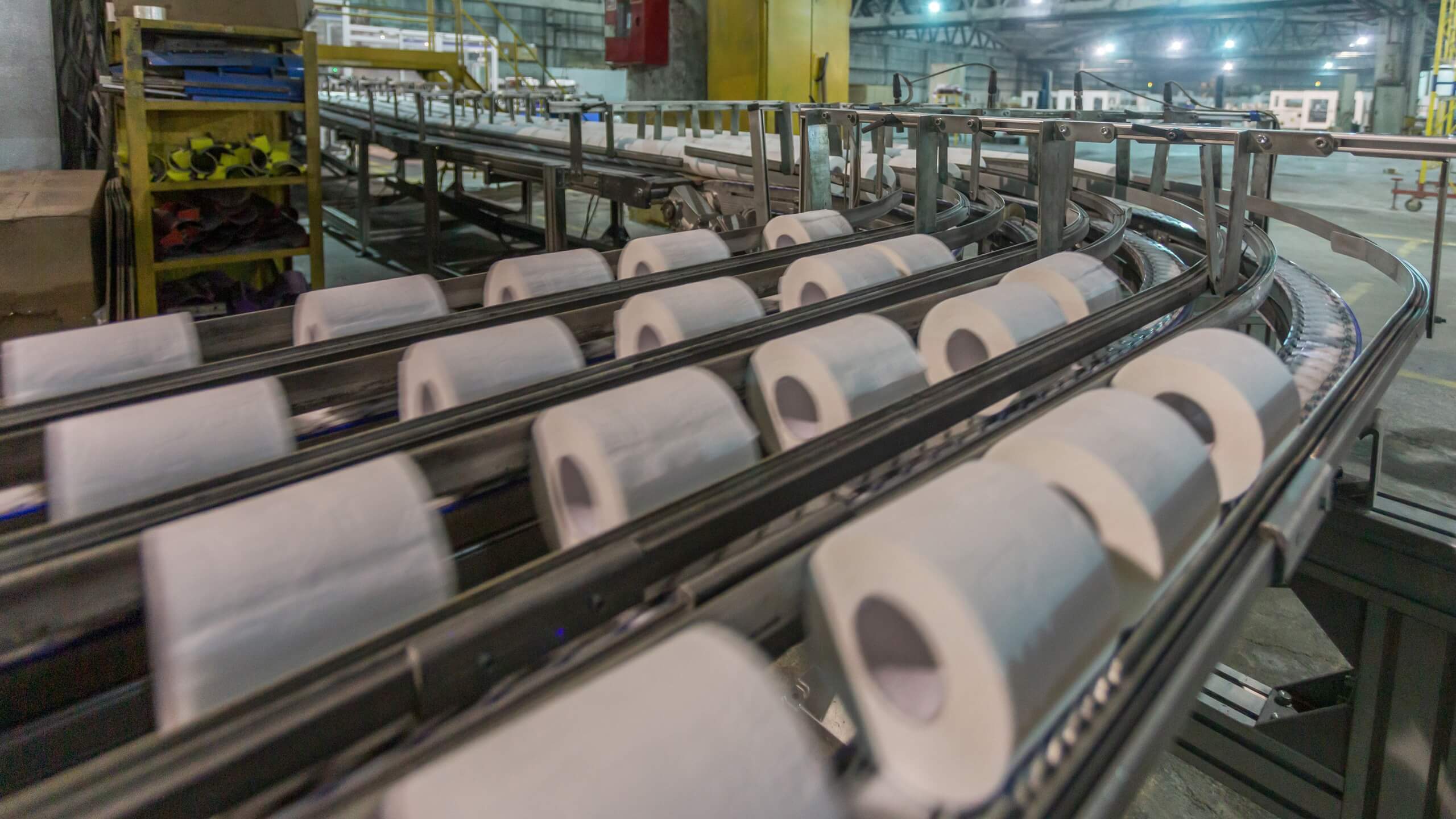
Toilet tissue is the highest-volume tissue category globally. It ranges from 1-ply economy rolls for high-traffic public washrooms to 3-ply and 4-ply premium rolls for hospitality and retail. Sheet count per roll, roll diameter and core size are the critical commercial specs — a "longer" roll with more sheets reduces changeover labour in facilities.
Buyer note: For away-from-home (AFH) contracts, cost per use matters more than cost per roll. Compare sheet counts and dispense efficiency, not just unit price.
3. Kitchen towels (kitchen rolls)
Kitchen towels are stronger, more absorbent 2-ply sheets designed to handle spills, grease and wet tasks. Absorbency and wet strength are the defining performance attributes. Commercial kitchens, food processors and cleaning contractors buy in bulk cases; retail packs emphasise sheet count and quilted texture.
4. Napkins (serviettes)
Napkins span 1-ply dispenser napkins for quick-service restaurants to 3-ply and 4-ply luxury dinner napkins for fine dining. Size (commonly around 33 cm square unfolded), ply, embossing and colour options define the range. Food-service distributors typically buy by the case in standard counts.
5. Jumbo rolls (industrial toilet rolls)
Jumbo rolls are large-diameter toilet rolls designed for high-traffic washrooms — airports, malls, factories, hospitals. They fit proprietary dispensers and dramatically reduce refill frequency. Roll length (often several hundred metres), core diameter and compatibility with dispenser systems are the key specs.
6. Industrial wiping grades
Beyond hygiene tissue, industrial wipers include centre-feed rolls, folded hand towels (C-fold, Z-fold, V-fold) and heavy-duty wiping paper for workshops. These prioritise wet strength, absorbency and low lint over softness. Automotive, printing and food-processing plants are typical users.
7. Specialty grades
Specialty tissues include medical and examination table paper, wrapping tissue for garments and footwear, and interleaving tissue for fragile goods. Each is specified to its application — medical grades prioritise hygiene certifications, while wrapping tissue prioritises smoothness and printability.
GSM and Ply, Explained
What is GSM?
GSM stands for grams per square metre — the weight of one square metre of the paper. Higher GSM generally means a thicker, more substantial sheet, but GSM alone does not define quality. A well-made lower-GSM sheet can outperform a poorly made heavier one on softness and strength.
Indicative GSM ranges (verify with your supplier):
- Facial tissue: often around 13–15 GSM per ply
- Toilet tissue: often around 14–18 GSM per ply
- Kitchen towels: often around 18–25 GSM per ply
- Napkins: often around 15–22 GSM per ply
- Industrial wipers: often around 20–40 GSM depending on grade
What does ply mean?
Ply is the number of layers bonded together — 1-ply, 2-ply, 3-ply or 4-ply. More plies generally mean greater thickness, strength and absorbency, but also higher cost and bulk. The right ply depends on the use case: 1-ply suits high-traffic economy washrooms; 2-ply is the commercial standard; 3-ply and above target premium segments.
Virgin vs. recycled fibre
Tissue is made from virgin wood pulp, recycled fibre, or blends. Virgin fibre gives the softest, brightest sheets; recycled fibre is more economical and environmentally positioned. Many commercial buyers specify recycled content for sustainability credentials — ask for chain-of-custody documentation if making green claims.
Bulk Buying Specifications: What to Put in Your RFQ
A complete tissue RFQ should specify:
- Product type and grade: e.g. 2-ply facial tissue, pop-up box
- Sheet size: length × width in cm or inches
- Ply and GSM: per-ply GSM and total ply count
- Roll/sheet count: sheets per roll or box; rolls per case
- Roll dimensions: outer diameter, core inner diameter, roll width
- Packaging: individual wrap, poly pack, case count
- Private label requirements: printed film, box design, barcodes
- Certifications: ISO, food-contact compliance, recycled content claims
- Delivery terms: Incoterms, lead time, MOQ per SKU
Buyer note: Always request pre-production samples and approve a golden sample before bulk production. Check sheet count claims by weighing — short-sheeting is a common quality issue in low-cost supply.
Export Packaging of Tissue Paper
Tissue is bulky relative to its value, so export packaging focuses on volume efficiency and moisture protection:
- Compression: Finished goods are compressed to reduce volume; confirm compression ratios don't damage embossing or softness.
- Moisture barriers: Poly-wrap individual units and line cartons — tissue absorbs humidity in transit, especially on long sea routes.
- Carton strength: Use export-grade corrugated cartons; specify burst strength for stacking.
- Palletisation: Standard pallet footprints (EUR or ISO) with stretch wrap; maximise container fill with CAD-based loading plans.
- Container loading: 20ft vs 40ft/HQ container choice depends on volume; tissue's low density means you typically cube out before you weigh out.
- Labelling: Carton marks with SKU, count, GSM/ply, manufacturing date and destination-market labelling compliance.
Buyer note: Ask suppliers for container loading reports with photos. Tissue damaged by moisture or crushing is unsellable — packaging is not the place to cut costs.
Quality Checkpoints for Incoming Goods
- Sheet count verification: Count sheets in sample rolls against spec.
- GSM testing: Weigh cut samples; compare against agreed per-ply GSM.
- Ply adhesion: Plies should stay bonded in normal use, not delaminate.
- Absorbency and wet strength: Simple dip-and-hold tests for kitchen and wiping grades.
- Lint and dust: Shake and wipe tests — critical for food and industrial users.
- Packaging integrity: Check poly seals, carton condition and pallet stability on arrival.
Frequently Asked Questions
What are the main types of tissue paper?
Facial tissue, toilet tissue, kitchen towels, napkins, jumbo rolls, industrial wiping grades and specialty tissues (medical, wrapping, interleaving) — each engineered for its end use.
What does GSM mean in tissue paper?
Grams per square metre — the weight of one square metre of paper. Higher GSM generally means a thicker sheet, but it is only one of several quality indicators alongside ply, fibre type and manufacturing quality.
What is the difference between 1-ply, 2-ply and 3-ply tissue?
The number of bonded layers. More plies mean greater thickness, strength and absorbency at higher cost. 2-ply is the standard for most commercial applications; 1-ply suits economy high-traffic use; 3-ply targets premium segments.
How do I specify tissue paper for bulk purchase?
Define product type, sheet size, ply and per-ply GSM, sheets per roll/box, roll dimensions and core size, packaging format, private-label needs, certifications and delivery terms in your RFQ.
How should tissue paper be packed for export?
Compressed to save volume, poly-wrapped against moisture, packed in export-grade cartons, palletised and stretch-wrapped, with container loading optimised for tissue's low density and carton marks meeting destination requirements.
Is recycled tissue as good as virgin tissue?
Recycled tissue is more economical and environmentally positioned; virgin fibre gives softer, brighter sheets. Blends balance the two. Choose based on your application's softness needs and sustainability goals.
Conclusion
The types of tissue paper — from facial and toilet tissue to kitchen towels, napkins, jumbo rolls and industrial wipers — each serve distinct commercial needs defined by GSM, ply, fibre and format. Buyers who specify precisely, sample rigorously and protect goods in export packaging consistently get better value than those who buy on price alone.
Looking to source tissue paper in bulk? Post your requirement on Today Adviser and connect with verified tissue manufacturers and exporters.